Your digging level
Description
Nordic folk is a contemporary umbrella for the traditional music of the Nordic region—principally Sweden, Norway, Finland, Denmark, and Iceland—revived and reimagined since the 1960s folk revival.
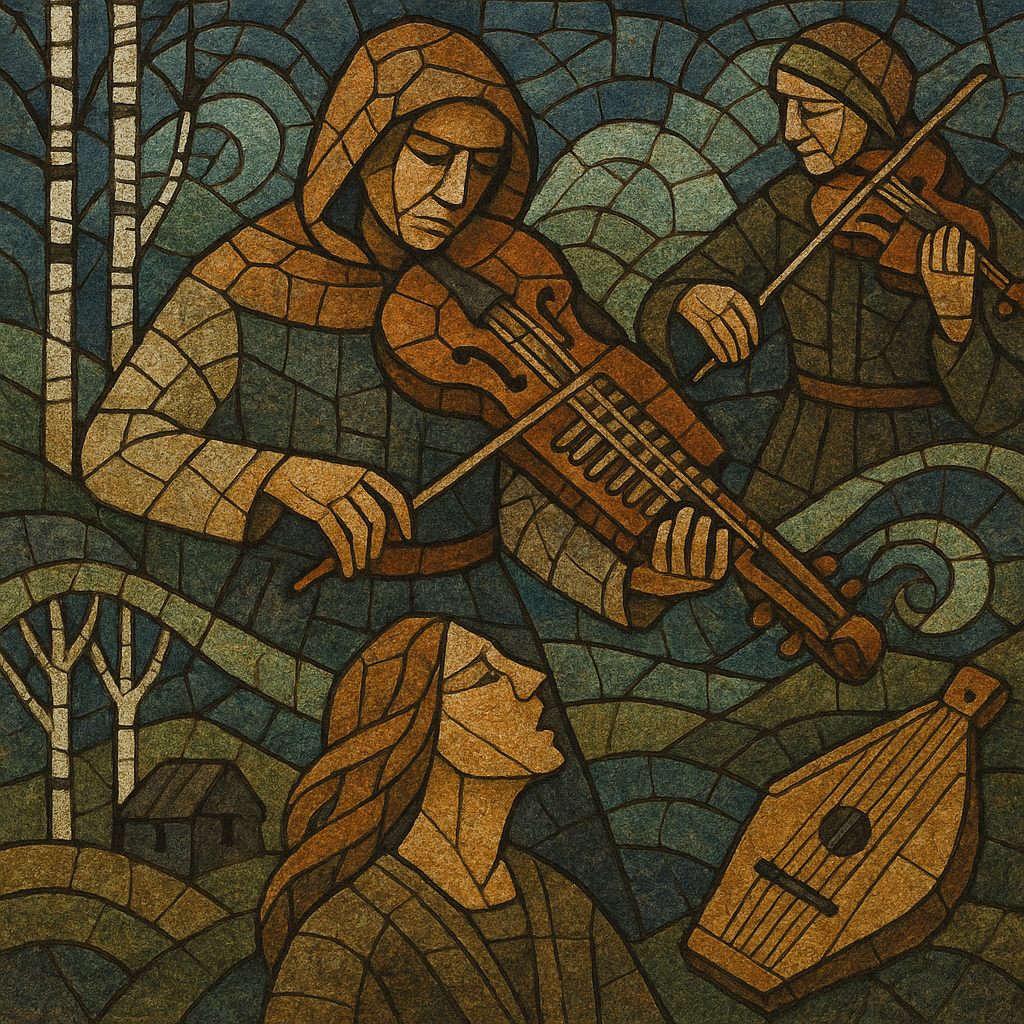
It draws on dance tune repertories (polska, hambo, schottische, polka, waltz), epic and ballad traditions, Sámi joik, and rural vocal techniques such as kulning and open “white voice.” Rhythmically, it is notable for asymmetric three-beat meters (e.g., polska and springar families) and groove-oriented bowing styles, while sonically it centers on timbres like nyckelharpa, Hardanger fiddle, kantele, jouhikko, willow flute, and drones.
Modern Nordic folk spans acoustic tradition-keeping ensembles to experimental, amplified, and atmospheric projects that intersect with folk rock, ambient, and even metal—yet it remains grounded in modal melody, dance function, strong ornamentation, and place-rooted storytelling.
History
The musical foundations of Nordic folk are centuries old, comprising village dance repertoires (e.g., polska, hambo, schottische, polka, waltz), narrative ballads, and powerful rural vocal practices (kulning/herding calls and open “white voice”). Regional timbres—nyckelharpa in Sweden, Hardanger fiddle in Norway, kantele and jouhikko in Finland, and willow flute and horn instruments across the region—shaped a distinct modal and drone-rich sound.
A broad folk revival in the 1960s reignited interest in local repertoires and instruments. Archival fieldwork, tune collecting, and new folk festivals (e.g., Finland’s Kaustinen Folk Music Festival, founded 1968) provided infrastructure for teaching, publishing, and performance. Ensembles began arranging traditional sets for concert stages, codifying bowing styles, dance grooves, and ornamentation while embracing contemporary ensemble craft.
Groups like Väsen, Hedningarna, Garmarna, Värttinä, and Gjallarhorn helped export the sound worldwide, marrying traditional dance grooves with modern arrangement, studio production, and sometimes rock instrumentation. Labels, conservatories, and cross-Nordic collaborations strengthened a shared identity without erasing regional nuance.
The scene now spans tradition-bearers and innovators. Some artists foreground archival repertoire and dance function; others fold in ambient textures, electronics, cinematic writing, or ritual atmospheres. Nordic folk has also informed adjacent genres such as viking folk/rock/metal and folk-influenced black metal, while film and game composers borrow its drones, modal writing, and folk timbres to signal landscape, myth, and memory.