Your digging level for this genre

0/8
🏆
Sign in, then listen to this genre to level up

Description

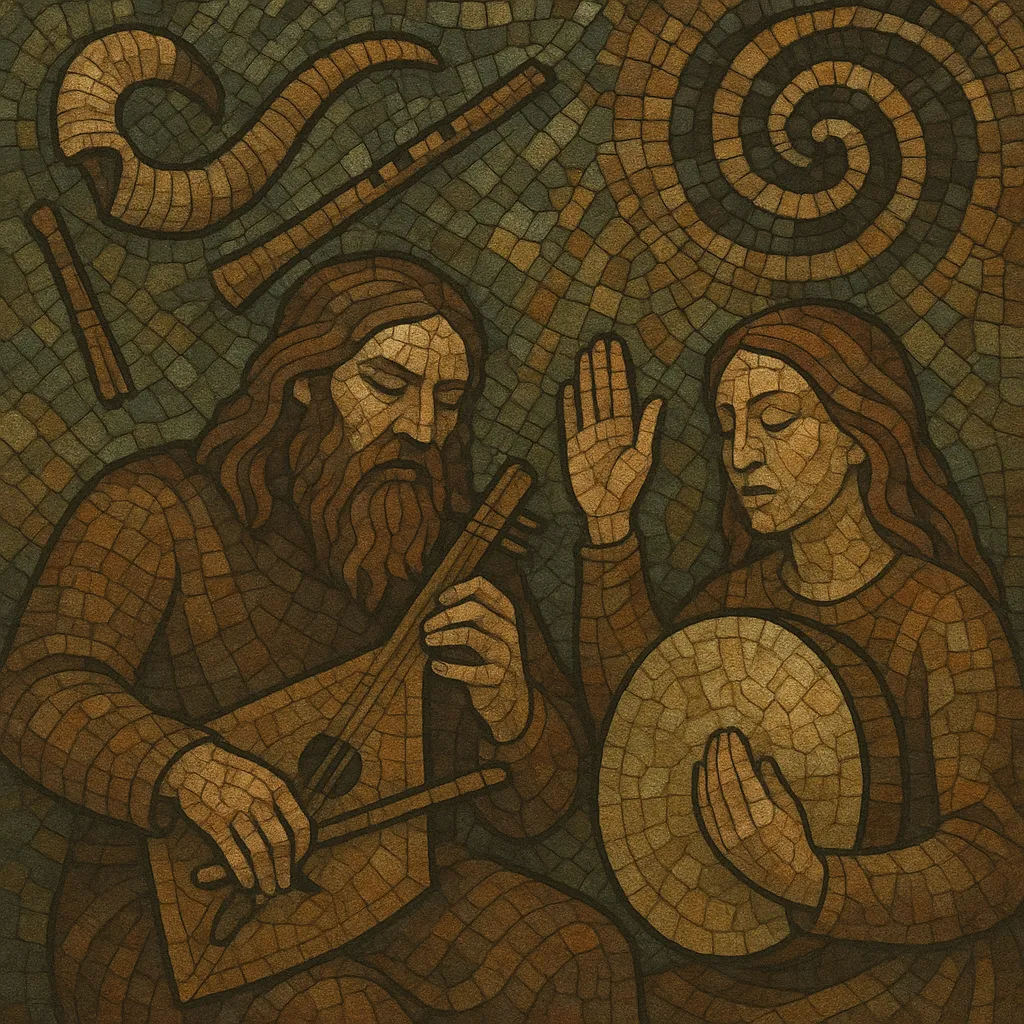
Rune folk is a contemporary Nordic-rooted folk style that centers on runic poetry, ritual percussion, and ancient Scandinavian timbres. It blends archaic instruments (tagelharpa, bukkehorn, bone and wooden flutes, frame drums, jaw harp) with chant-like vocals and drones to evoke Iron Age and Viking-era soundscapes.

The music often uses steady, trance-inducing drum patterns, call-and-response vocals, and modal melodies (Aeolian/Dorian) that sit over sustained drones. Producers favor raw, natural acoustics—wood, leather, stone—and environmental ambience to create an immersive, ceremonial atmosphere. Lyrically, performers draw from Old Norse texts, mythic themes, and reconstructed rune chants.

History

Origins (2000s)

Rune folk emerged in the 2000s as artists in Scandinavia began fusing traditional Nordic instruments, runic texts, and ritual percussion with modern recording techniques. Building on 1990s neofolk and dark folk, early practitioners aimed to reconstruct pre-Christian sound worlds through historically inspired instrumentation and vocal practice.

Breakthrough (2010s)

The genre reached a global audience in the 2010s. Albums and live rituals by acts such as Wardruna and Heilung popularized immersive, ceremonial performances—complete with frame drums, tagelharpa, horns, antlers, and group chanting. High-profile syncs and collaborations for television, film, and games helped establish the sound as the contemporary aural language of Norse themes.

Consolidation and Aesthetic

By the late 2010s and 2020s, a distinct aesthetic had formed: layered hand percussion; modal chants; drones; traditional horns and flutes; and lyrics referencing runes, sagas, and nature. New artists across Europe adopted similar approaches, sometimes integrating field recordings, throat-like overtone techniques, and kulning-inspired calls, while maintaining a focus on raw, organic timbres and communal rhythm.

Today

Rune folk now spans intimate studio recordings to theatrical large-ensemble rituals. While historically informed, it remains contemporary in production, influencing soundtrack work and informing the palette of modern folk-metal and media scores that seek an authentic "Old North" atmosphere.

How to make a track in this genre

Instrumentation
•   Core percussion: large frame drums and hand percussion (skin-on-wood), sticks, antlers, and foot stomps for earthy transients. •   Melodic colors: tagelharpa (bowed lyre), Nordic lyres, jaw harp, bone/wooden flutes, bukkehorn, and simple horns for haunting calls. •   Textures: sustained drones (voice, shruti/organ-like pads, bowed strings) and natural ambience (wind, fire, water, room tone) for space.
Rhythm and Form
•   Favor steady, trance-inducing pulses at moderate tempos (often 70–110 BPM), with layered ostinatos that lock together. •   Use simple polyrhythms (e.g., 3 over 4) and cyclic forms that evolve by addition/subtraction of parts rather than chord changes.
Melody and Harmony
•   Write modal melodies (Aeolian, Dorian, occasionally Mixolydian). Keep ranges narrow and intervals stepwise for chant-like lines. •   Harmony is drone-based: hold a tonic or fifth throughout, allowing modal color from melody rather than chord progressions.
Voice and Language
•   Lead with grounded, chest-voice chants; add group responses for call-and-response. •   Incorporate Old Norse/Proto-Norse phrases, rune poems, or reconstructed syllabic chants; minimal, repetitive texts emphasize ritual. •   Ornament with overtone/tone-blending techniques and, where appropriate, kulning-inspired high calls for contrast.
Production and Atmosphere
•   Record percussion and voices in reflective spaces (halls, barns, caves) to capture natural reverb; use close mics plus room mics. •   Layer environmental sounds subtly; mix with warm saturation, gentle compression, and wide but natural stereo fields. •   Keep arrangements sparse but tactile: let wood, leather, and breath noises remain audible to preserve immediacy.
Arrangement Tips
•   Start with a single drum pulse and drone; introduce voice and melodic fragments gradually. •   Build intensity via additional drums, claps, shakers, horns, and crowd chants; drop to drone/voice for dynamic contrast. •   End with decays and ambience, allowing the ritual to "breathe" after the final hit.

Main artists

Top tracks

Locked
Share your favorite track to unlock other users’ top tracks
Influenced by
Has influenced
Challenges
Digger Battle
Let's see who can find the best track in this genre
© 2025 Melodigging
Melodding was created as a tribute to Every Noise at Once, which inspired us to help curious minds keep digging into music's ever-evolving genres.
Buy me a coffee for Melodigging