Your digging level
Description
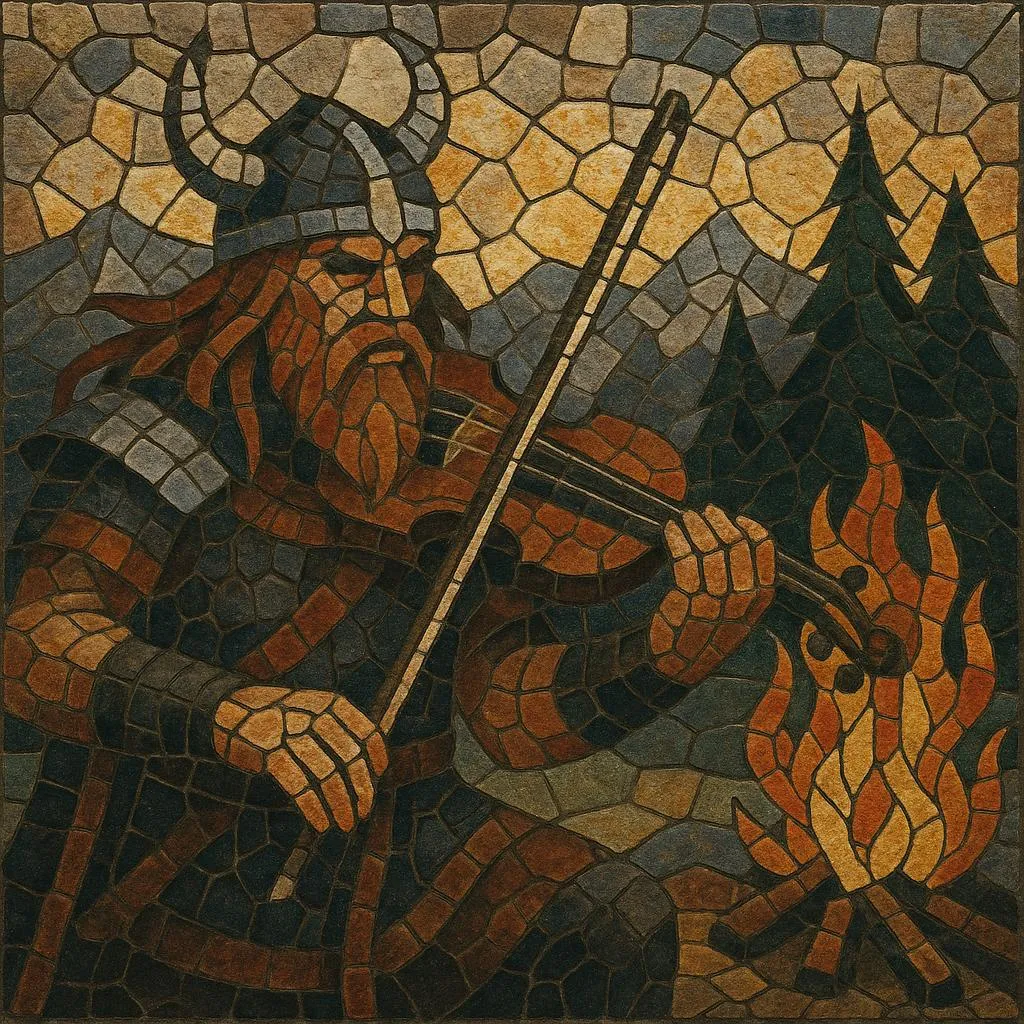
Nordic folk metal is a style of heavy metal that fuses metal riffing and song structures with Nordic traditional/folk musical elements.
It commonly blends distorted guitars, bass, and punchy drums with folk melodies, dance rhythms, and timbres associated with Scandinavia (such as fiddles, flutes, and sometimes nyckelharpa or tagelharpa-like bowed lyres).
Lyrically and aesthetically, it often draws on Norse mythology, pre-Christian history, nature imagery, seasonal rituals, and regional folklore, while musically ranging from upbeat, dance-like energy to grand, epic atmosphere.
Compared with broader folk metal, the “Nordic” emphasis usually means Scandinavian melodic language, rhythms reminiscent of regional dances, and themes rooted in Norse/Scandinavian cultural memory rather than pan-European folk references.


History
Nordic folk metal grows out of the wider European folk metal movement and earlier Viking-themed metal. In the Nordic countries, bands began intensifying the use of local folk melody, modal inflections, and traditional instruments, while keeping metal’s amplified power and rhythmic drive.
During this period, the style gained clearer identity: Scandinavian bands incorporated more explicit traditional dance rhythms, communal chorus writing, and instrumentation beyond keyboards, often moving from occasional folk interludes to full-song integration.
The sound broadened into multiple directions: some acts leaned into black-metal harshness, others into melodic/death metal precision, and others into festive, dance-forward arrangements with prominent fiddles and whistles. Production became more polished, and international audiences increasingly associated “Nordic folk metal” with both pagan/Viking storytelling and folk-dance energy.
Alternate between two main feels:
-
•
Driving metal (straight 4/4 with double-kick or gallops).
•Folk-dance pulses (lilting 6/8, brisk 2/4, or bouncy 3/4-like dance patterns).
Use “stomp” sections built for crowd chants: simplify the drum pattern, emphasize downbeats, and leave space for vocals.
A practical template:
•Intro (folk motif stated on fiddle/whistle)
•Verse (metal groove + restrained folk counterline)
•Chorus (anthemic melody, thicker instrumentation, gang vocals)
•Bridge (tempo change into a dance section or an atmospheric interlude)
•Solo (fiddle and/or guitar, often trading phrases)
•Final chorus (bigger choir/gang layer, added harmonies)