Your digging level
Description
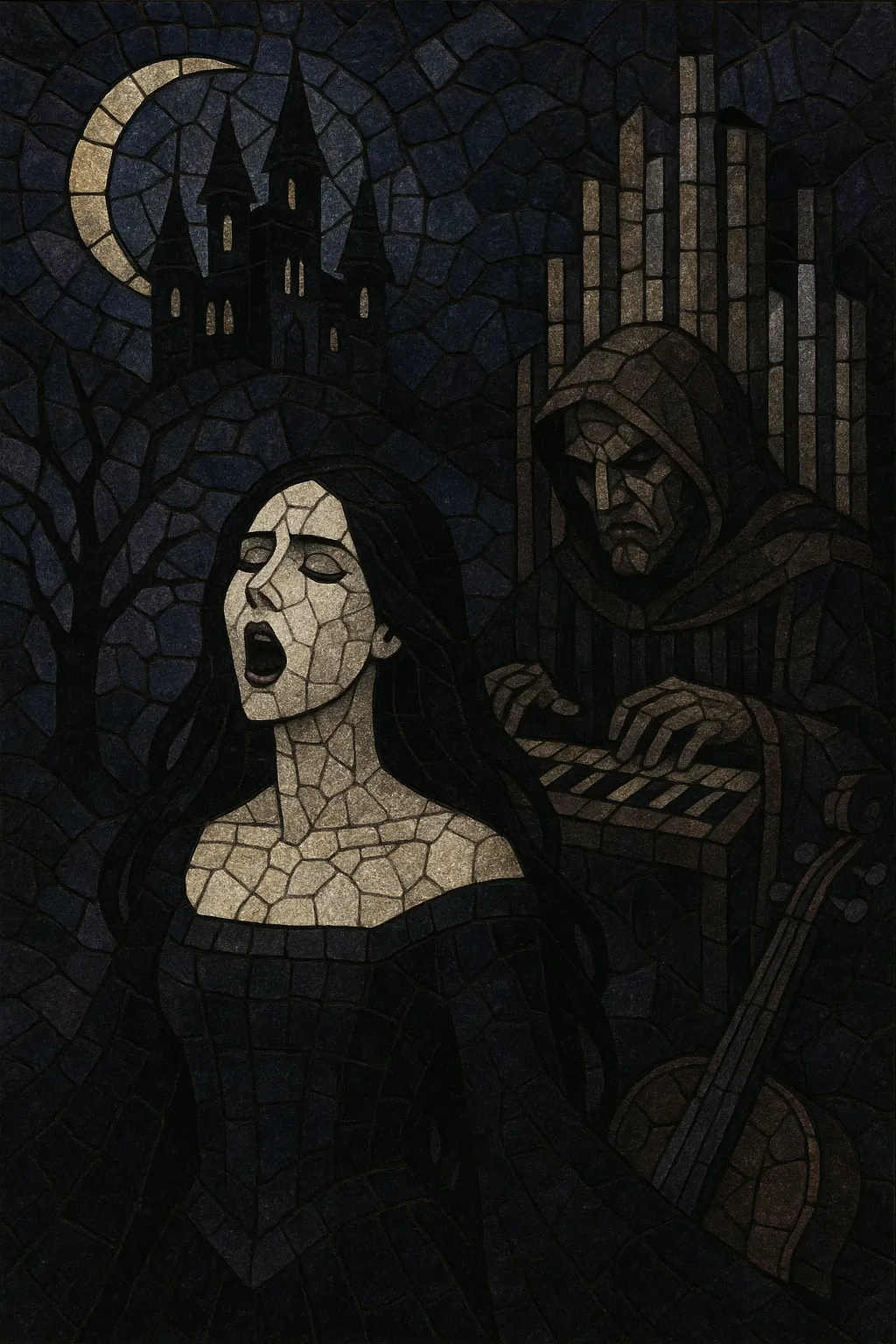
Gothic symphonic metal blends the brooding atmosphere and romantic darkness of gothic metal with the orchestral grandeur and cinematic scale of symphonic metal. It typically features soaring, often classically trained female vocals contrasted with harsh growls or baritone male voices (“beauty-and-the-beast” style), layered choirs, and full string and brass arrangements supporting distorted guitars and double‑kick drums.
The harmony favors minor keys, modal colors (Aeolian, Phrygian), and chromatic lines, while the arrangements borrow from classical and operatic writing: overture‑like intros, leitmotifs, and dynamic crescendos. Lyrically, it leans toward myth, fantasy, romance, spirituality, melancholy, and gothic literature, delivered with a dramatic, theatrical sensibility.
History
Gothic symphonic metal emerged in Northern Europe in the mid to late 1990s as bands began merging the doom‑tinted melancholy and dual‑vocal approach of gothic metal with the orchestral scope of the nascent symphonic metal scene. Pivotal early steps include Therion’s move toward operatic/orchestral metal, Nightwish’s debut (1997) fusing power‑influenced riffing with classical voice and keys, and Within Temptation’s early gothic-doom foundations. Norwegian acts like Tristania and Sirenia cemented the “choir + strings + harsh/clean vocal” template.
Through the early 2000s, the style solidified: larger budgets and improved sampling/orchestration tools allowed fully realized symphonic textures. After Forever, Epica, Delain, and Xandria expanded the palette with live choirs, cinematic percussion, and concept‑album structures. Thematically, bands drew on folklore, sacred texts, and gothic literature, while production moved toward polished, high‑contrast mixes balancing metal rhythm sections with dense orchestration.
Releases from Nightwish and Within Temptation became global reference points, bringing the sound to large festivals and mainstream charts. Touring networks across Europe, Latin America, and Asia fostered scenes in Germany, the Netherlands, Finland, Norway, and beyond. Labels invested in orchestral recordings and multi‑mic choirs, and the studio role of arrangers/orchestrators became central.
Contemporary acts continue to integrate film‑score techniques, extended choral writing, and hybrid orchestral/electronic layers. The genre’s orchestral language influenced heavier subgenres (e.g., deathcore variants adopting cinematic strings and choirs) and inspired collaborations with classical ensembles. While aesthetics remain gothic—romantic, dramatic, and melancholic—the production now often rivals soundtrack work in depth and clarity.