

Your digging level

For this genre
0/8
🏆
Sign in, then listen to this genre to level up

Description

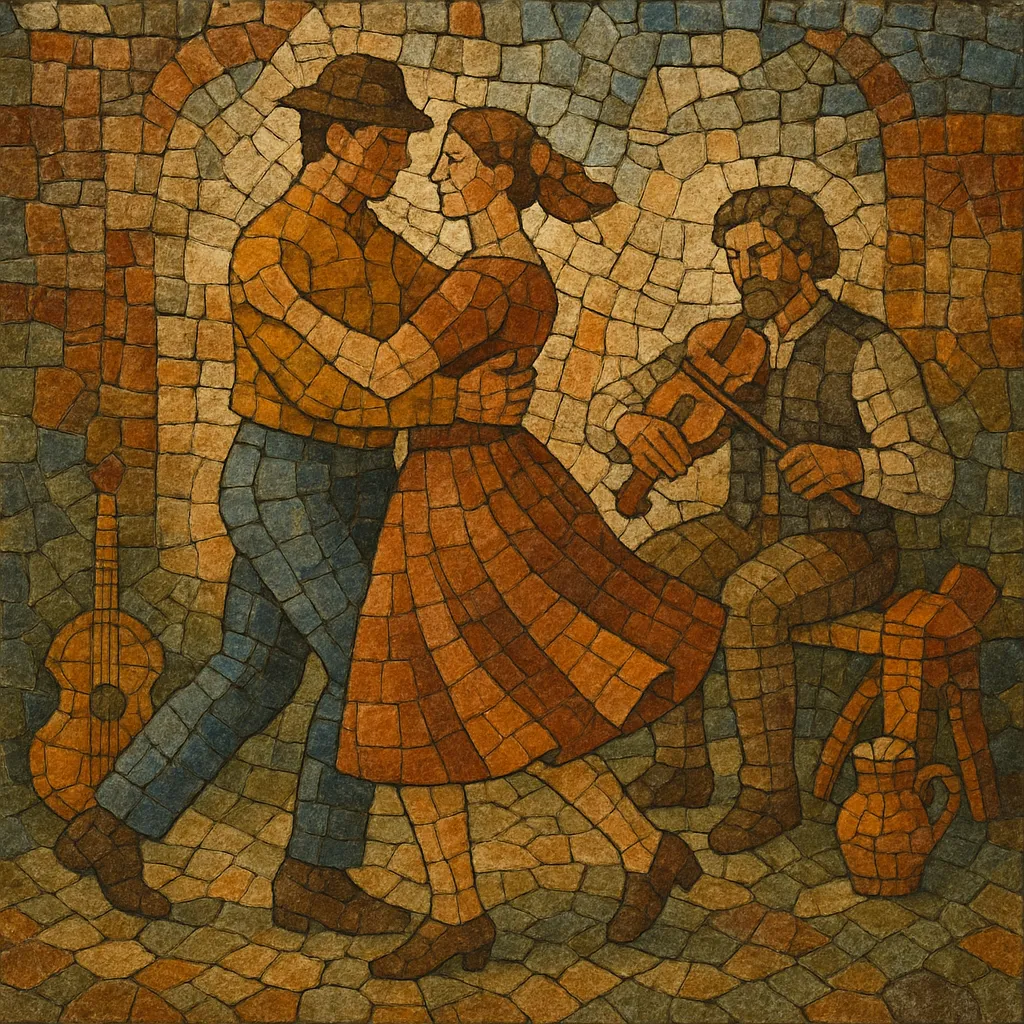
Hambo is a Swedish traditional couple-dance music in 3/4 time, played with a pronounced accent on the first beat and a steady, danceable pulse.

Tunes typically follow a fixed eight‑bar strain structure (often AABB), with a moderate to fast tempo that supports the characteristic turning step of the dance.

It is a core “gammaldans” form and is commonly performed by spelmän (folk musicians) on fiddle, nyckelharpa, and accordion, often accompanied by guitar or bass. Melodies are largely diatonic (major, Dorian, or Mixolydian), ornamented tastefully, and phrased to match the eight‑measure dance figures.


Sources: Spotify, Wikipedia, Discogs, RYM, MB, user feedback and other online sources

History

Origins (late 19th–early 20th century)

Hambo crystallized in Sweden in the late 1800s as part of the broader wave of couple dances that adapted older regional polska practices to a more standardized, social‑dance format. Borrowing the 3/4 lilt and turning motion from polska while streamlining phrase structure and accentuation, hambo emerged with a clear eight‑bar strain design and a strong beat‑1 emphasis that made it easy to learn and widely danceable.

Spread and standardization

By the early 20th century, hambo was firmly embedded in the Swedish "gammaldans" repertoire (alongside schottis, waltz, polka, and mazurka). Community bands and spelmanslag (fiddlers' ensembles) helped codify stylistic norms—moderate to brisk tempos, AABB or similar 16–32 bar forms, and phrasing aligned to the dance’s fixed step pattern. Printed collections and early recordings further unified the style across regions.

Folk revival and contemporary practice

During the post‑war folk revival, hambo remained a staple of dance floors and festivals, taught in folk‑dance clubs and featured by leading Swedish folk groups. Today, it continues to thrive in both traditional settings—played on fiddle, nyckelharpa, and accordion—and in modern ensembles that blend traditional repertoire with contemporary arrangements, keeping its social function and distinctive rhythmic feel intact.

How to make a track in this genre

Rhythm and meter
•   Use 3/4 time with a clear, weighty accent on beat 1; keep beats 2 and 3 lighter to encourage the couple’s turning step. •   Maintain a moderate to brisk tempo (traditional dance contexts favor a steady, energetic pulse rather than extreme speed).
Form and phrasing
•   Write in fixed eight‑measure strains; common designs are AABB or AAB, yielding 16–32 bar tunes that loop for dancing. •   Align cadences to the 8‑bar structure so dancers feel phrase endings predictably.
Melody and modality
•   Favor diatonic contours in major, Mixolydian, or Dorian; keep ranges comfortable for fiddle/nyckelharpa. •   Include tasteful ornaments (cuts, grace notes, small turns) that fit bowing and fingering patterns without disrupting the pulse.
Harmony and accompaniment
•   Use simple functional harmony (I–IV–V, occasional II or flat‑VII in modal contexts). Avoid dense chromaticism that blurs the downbeat. •   Accompany with guitar (steady bass‑note + light strum), accordion (left‑hand oom‑pah with stronger beat 1), or bass doubling roots on beat 1.
Instrumentation and texture
•   Lead with fiddle or nyckelharpa; accordion is common for both melody and chords. Ensemble settings (spelmanslag) can double the tune in octaves or thirds. •   Keep textures clear so the beat‑1 accent and 8‑bar phrasing remain unmistakable.
Dance feel and articulation
•   Prioritize a grounded, steady groove; slight lift into beat 1 helps the turn. •   Articulate bowing to underline bar beginnings and cadences; avoid syncopations that obscure the dancers’ step pattern.

Best playlists

Top tracks

Locked
Share your favorite track to unlock other users’ top tracks

Upcoming concerts

in this genre
Influenced by
Has influenced

Download our mobile app

Get the Melodigging app and start digging for new genres on the go
© 2026 Melodigging
Melodding was created as a tribute to Every Noise at Once, which inspired us to help curious minds keep digging into music's ever-evolving genres.
Buy me a coffee for Melodigging
