Your digging level
Description
British folk is the modern revival and continuation of traditional song and dance music from England, Scotland, Wales, and associated islands. It centers on narrative ballads, dance tunes, and communal singing traditions, refreshed in the mid‑20th century by collectors, performers, and folk clubs.
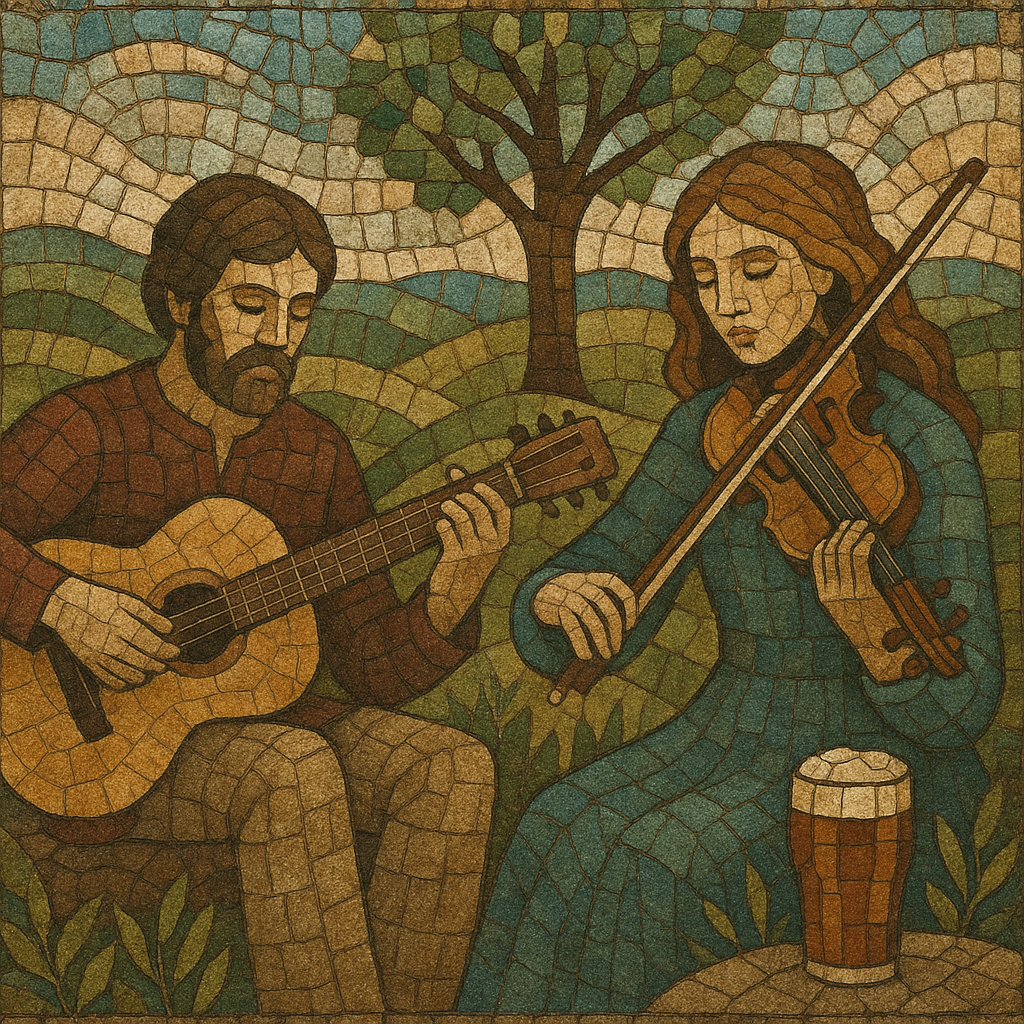
Characterized by modal melodies, unaccompanied or sparsely accompanied vocals, and acoustic instrumentation (guitar, fiddle, concertina, melodeon), British folk emphasizes storytelling drawn from history, work, and everyday life. Contemporary practitioners often blend archival repertoire with new compositions that retain traditional forms, dialects, and ornamentation.
While it overlaps with Celtic and English regional traditions, “British folk” usually denotes the post‑1950s revival scene that codified repertoire, performance practice, and a club-based culture, and later intersected with folk‑rock, singer‑songwriter, and experimental “wyrd folk” currents.
Sources: Spotify, Wikipedia, Discogs, Rate Your Music, MusicBrainz, and other online sources
History
Traditional song in Britain dates back centuries through ballads, work songs, sea shanties, and dance tunes. In the late 19th and early 20th centuries, collectors such as Cecil Sharp, Lucy Broadwood, and Ralph Vaughan Williams notated rural repertoires, while Francis James Child’s ballad scholarship became foundational. These efforts preserved melody variants, modes, and texts that later performers would draw upon.
After World War II, the skiffle craze encouraged acoustic, do‑it‑yourself performance. From the mid‑1950s, Ewan MacColl, A. L. Lloyd, and Topic Records helped catalyze a revival centered on folk clubs, radio, and publications. Singers such as Shirley Collins, Anne Briggs, and The Watersons championed unaccompanied balladry and chorus songs, while Martin Carthy and others reintroduced traditional repertoire with guitar accompaniment and historically minded modal sensibility.
British folk interfaced with jazz and rock through artists like Bert Jansch, John Renbourn, and the Pentangle, developing intricate fingerstyle (“folk baroque”) and expanded tunings (e.g., DADGAD). Folk‑rock bands such as Fairport Convention and Steeleye Span electrified traditional material, bringing ballads and dance tunes to larger stages without abandoning core melodies and modal colors. Sandy Denny’s songwriting illustrated how contemporary themes could inhabit traditional forms.
The club network, festivals, and institutions like Topic Records sustained the tradition through the 1980s and 1990s. Singers and instrumentalists such as Nic Jones, June Tabor, and Norma Waterson shaped an intimate, text‑forward approach. Meanwhile, regional studies (Northumbrian piping, Yorkshire ballads, Cornish repertoire) deepened stylistic diversity, and field recordings continued informing performance practice.
A newer generation—including Kate Rusby, Eliza Carthy, and The Unthanks—reinvigorated traditional song with fresh arrangements and contemporary production. British folk continues to intersect with indie folk, experimental “wyrd folk,” and ambient textures while remaining anchored by storytelling, modal harmony, and communal performance norms at sessions, clubs, and festivals.
How to make a track in this genre
Write songs that foreground story and image: ballads, work songs, and lyrical snapshots of place. Prioritize clear vocal delivery, natural prosody, and chorus refrains that invite communal singing.
Favor modal centers (Dorian, Mixolydian, Aeolian) and pentatonic inflections. Keep harmony sparse—often a drone or simple I–VII or i–VII motions. Ornament with grace notes and small melodic turns rather than large leaps.
Alternate between narrative ballads (simple duple or free rhythm) and dance‑derived forms (jigs in 6/8, reels in brisk 4/4, waltzes in 3/4). Verses typically follow strophic forms with repeating refrains; call‑and‑response or communal choruses are common.
Use voice, acoustic guitar, fiddle, melodeon, concertina, mandolin, and occasionally bouzouki or cittern. For guitar, explore DADGAD, CGCGCD, or dropped‑D to support drones and modal bass lines. Fingerstyle patterns (alternating bass, cross‑picking) complement narrative pacing.
Lean into dialect and historical vocabulary when appropriate. Let the melody carry the text; employ subtle ornamentation, natural vibrato, and unison or close‑harmony choruses. Consider unaccompanied performance for stark ballads.
Start with solo voice or guitar and layer in fiddle or concertina for countermelodies, then add light percussion (frame drum, foot tapping) to suggest dance origins. Keep dynamics organic—build intensity through storytelling and harmony rather than heavy backbeats.
Record dry and intimate to preserve room tone and articulation. Place microphones to capture acoustic warmth and vocal nuance; avoid excessive compression or reverb that obscures lyrics and ornamentation.