Your digging level
Description
Welsh folk is the traditional vernacular music of Wales, rooted in rural song, dance, and instrumental practices that predate written documentation but were widely collected from the 18th century onward.
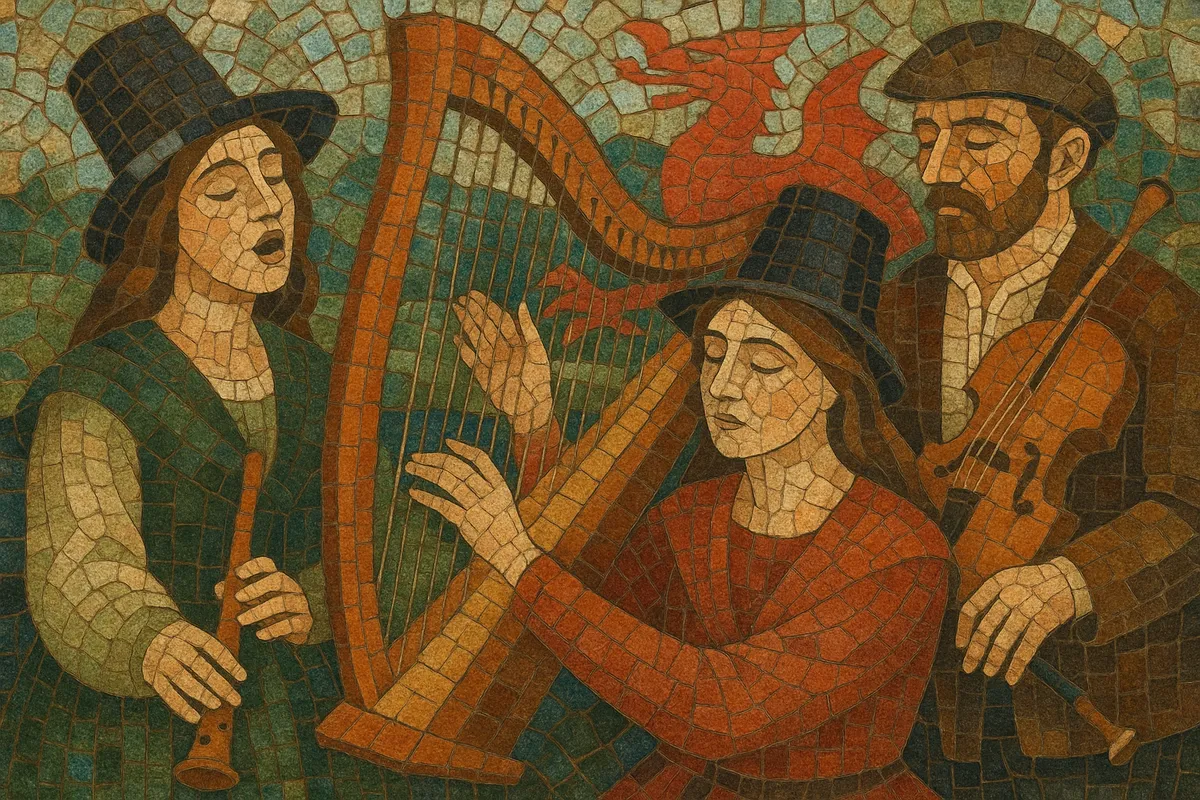
It is characterized by the prominence of the Welsh language, intricate vocal traditions such as penillion (cerdd dant) singing over harp counter-melodies, and distinctive instruments including the triple harp (telyn deires), crwth (bowed lyre), pibgorn (hornpipe), and fiddle.
Repertoires span narrative ballads, work and seasonal songs, plygain carols, and lively dance tunes for clog dancing and social folk dance, often using modal melodies (Dorian and Mixolydian) and drones.
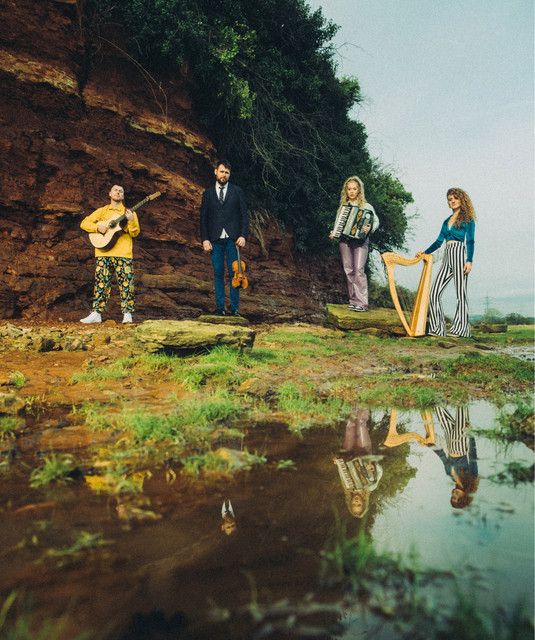
Modern Welsh folk maintains these features while incorporating guitar, bouzouki, accordion, and contemporary arrangements, linking deeply felt nostalgia and community identity with energetic, danceable sets.
History
Welsh folk music draws from medieval court and rural practices, with the harp at its core and singing traditions that predate extensive written records. By the 1700s, collectors and musicians began notating tunes and song texts, helping to stabilize repertoires of narrative ballads, dance melodies, and devotional songs. Vocal idioms such as cerdd dant (penillion singing) developed as a distinctive practice in which a singer improvises or fits verses over a pre-existing harp ground, creating elegant counterpoint.
The triple harp (telyn deires) became a national emblem in the 18th and 19th centuries, while the crwth (a bowed lyre) and pibgorn maintained older timbres. Dance music accompanied clog dancing and social folk dance (dawnsio gwerin), and seasonal traditions such as plygain carols fostered robust communal singing. Eisteddfodau (festivals of literature and music) provided focal points for performance, preservation, and innovation.
The 20th century saw scholars, collectors, and performers document and revive songs and styles, intersecting with hymnody and choral culture. From the 1960s onward, a pan-British folk revival energized Welsh-language songwriting and ensemble performance. The formation of professional groups (e.g., Ar Log in the 1970s) and the work of notable singers and harpists helped renew public interest.
From the 1990s to the present, bands such as Fernhill, Carreg Lafar, Calan, and 9Bach modernized arrangements while retaining core idioms like modal melody and penillion aesthetics. International touring, media support (including S4C), and awards (e.g., 9Bach’s BBC Folk Awards recognition) expanded the genre’s profile. Today, Welsh folk thrives in sessions, festivals, and recordings, balancing tradition-bearers with forward-looking fusions.
Compose primarily in Welsh to capture phonetic flow and poetic cadence; draw on traditional verse forms (including cynghanedd in lyrics where appropriate) and penillion practice, where sung verses are set against a fixed harp ground.
Favour modal melodies (Dorian, Aeolian, and Mixolydian) with stepwise motion, ornamental turns, and sustained notes over drones. For dance tunes supporting clog and social dances, use clear binary forms and lively tempos akin to polkas, hornpipes, and marches common in Welsh repertoires.
Keep harmony supportive and spare: drones, parallel thirds, or open fifths work well. In penillion/cerdd dant, write a contrapuntal harp line independent of the sung tune. Employ vocal heterophony for carols and choruses to evoke communal singing traditions.
Use the Welsh triple harp (or Celtic harp) as the anchor. Add crwth (or fiddle as a timbral analogue), pibgorn/woodwinds, accordion, and guitar/bouzouki for modern ensembles. Percussion can be minimal; let rhythmic drive emerge from harp/fiddle articulation and dance-oriented bowing patterns.
Balance narrative ballads and seasonal songs (e.g., plygain) with instrumental sets (alawon gwerin). Structure sets as medleys that modulate energy—start with a moderate air, accelerate into a dance tune, and conclude with a rousing final strain.
Record vocals closely to preserve Welsh diction and story clarity. Keep arrangements intimate, foregrounding acoustic timbres and natural room ambience. If fusing contemporary elements, ensure electronics support rather than mask harp and voice.