

Your digging level
Description
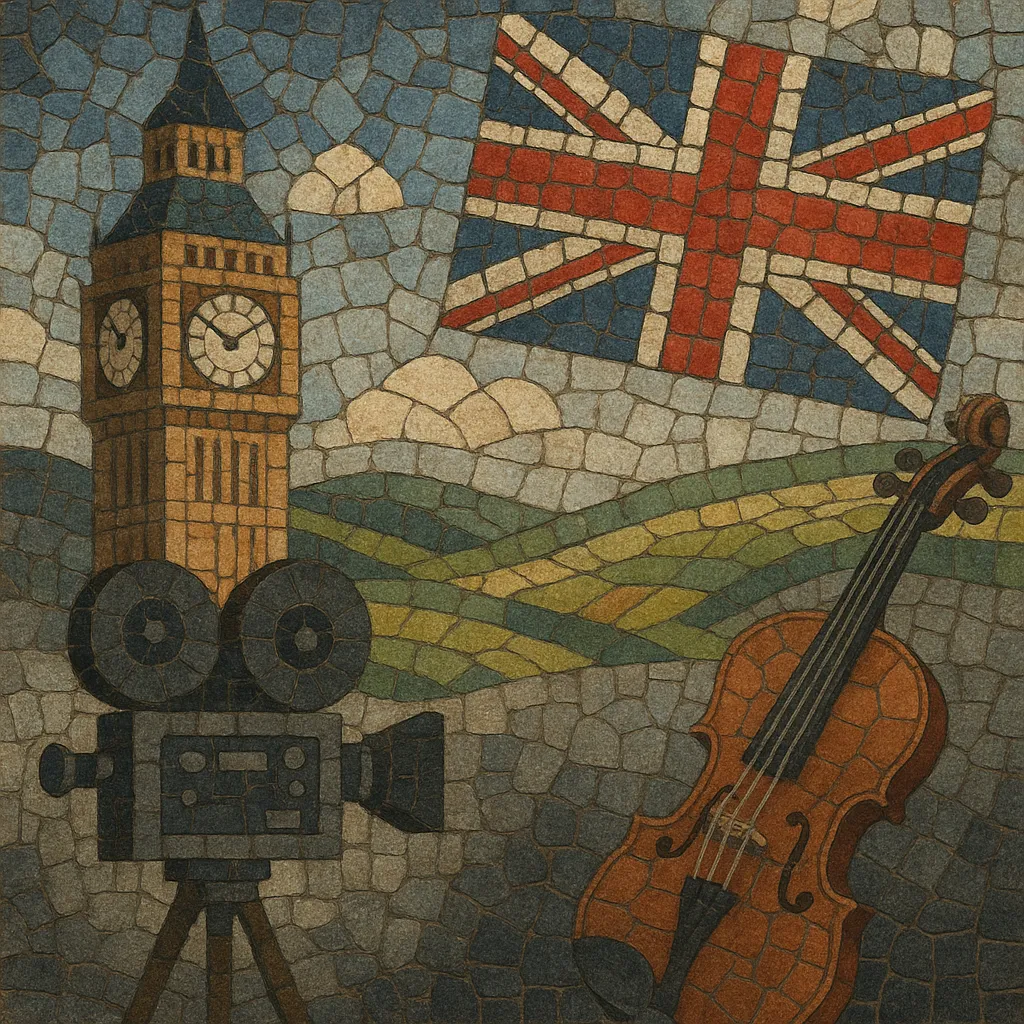
British soundtrack refers to film and television scoring created in the United Kingdom, spanning orchestral concert-hall traditions, jazz-inflected cues, experimental tape and synth techniques, and pop/rock idioms. It is distinguished by its blend of pastoral, modal harmony and a penchant for distinctive leitmotifs, as well as a long history of innovative sound design from the BBC Radiophonic Workshop.
From William Walton and Ralph Vaughan Williams’s symphonic scores to John Barry’s sleek, jazz-tinged Bond sound and the BBC’s pioneering electronic themes, British soundtrack style balances lyrical melody with mood-forward atmospherics. Modern practitioners continue the lineage with hybrid orchestral-electronic palettes, refined dramatic pacing, and clear narrative signposting.
History
With the rise of British talkies and studios such as Gaumont‑British and Ealing, composers trained in the concert hall shaped the first distinctive sound of British film. William Walton, Ralph Vaughan Williams, and Arthur Bliss brought symphonic craft, pastoral color, and modal harmony into scores that could stand alone in the concert repertoire. Music directors like Muir Mathieson professionalized the field, linking composers, orchestras, and studios. By the 1950s, Malcolm Arnold’s vivid orchestration (e.g., The Bridge on the River Kwai) showcased a confident, internationally recognized British voice.
The 1960s forged a second pillar: a sleek, jazz-tinged, pop-literate idiom led by John Barry for the James Bond franchise—brass-forward, riff-driven, and harmonically cool. In television, the BBC Radiophonic Workshop (Daphne Oram, Delia Derbyshire, Brian Hodgson) pioneered musique concrète, tape manipulation, and early synthesis; Derbyshire’s realization of the Doctor Who theme (1963) became a landmark in electronic TV music. Composers including Ron Goodwin, John Addison, Richard Rodney Bennett, and Carl Davis bridged cinema, TV, and classical concert stages, while the era’s rock and electronic currents began to seep into screen scoring aesthetics.
From the 1990s onward, British soundtrack diversified into hybrid orchestral-electronic writing and intimate chamber textures. Michael Nyman’s minimalism (for Peter Greenaway), Rachel Portman’s lyrical classicism (the first woman to win an Original Score Oscar), and David Arnold’s action-driven Bond reinventions exemplified evolving voices. The UK’s TV renaissance brought strong thematic scoring to series, with Murray Gold reimagining Doctor Who for the 2000s. British-born and UK-based composers (e.g., Clint Mansell, Harry Gregson‑Williams, John Powell, Craig Armstrong) expanded globally, while Radiophonic-era experimentation informed modern sound design, trailer music, and synth-forward scoring.



