Your digging level

For this genre
0/8
🏆
Sign in, then listen to this genre to level up

Description

Northumbrian folk music is the traditional music of Northumbria in northern England, especially Northumberland and County Durham.

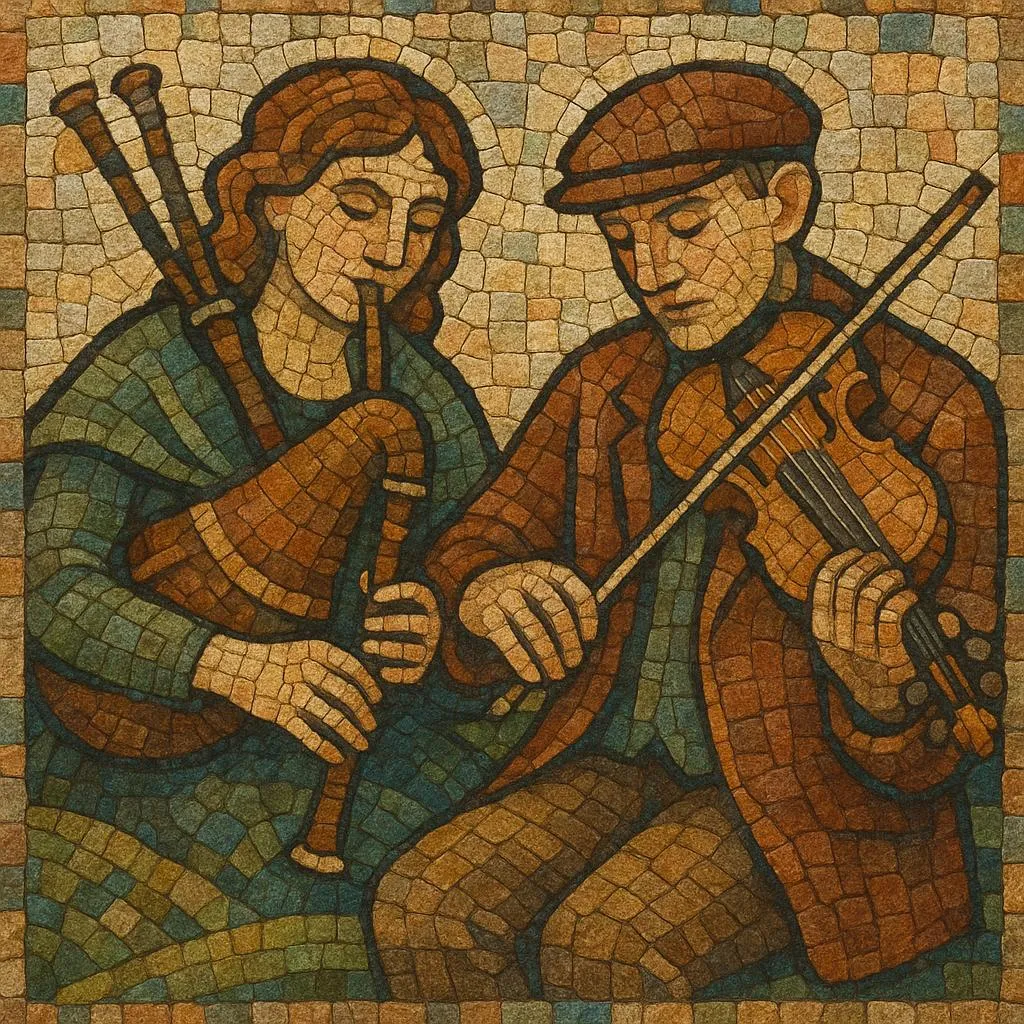
It is strongly identified with distinctive local instruments such as the Northumbrian smallpipes and the region’s fiddle style, and with dance-driven forms like jigs, reels, hornpipes, and local “rants.”

The repertoire includes instrumental dance tunes, slow airs, and songs in local dialects. Compared with some other British regional traditions, it is often noted for finely ornamented melody, clear rhythmic lift for dancing, and a deep connection to community social music-making.


Sources: Spotify, Wikipedia, Discogs, Rate Your Music, MusicBrainz, and other online sources

History

Roots and early formation (1700s)

Northumbrian folk music took recognizable form as a regional tradition during the 18th century, when local dance music and song repertoires were actively circulated in towns, villages, and rural communities.

A key musical marker is the development and popularization of the Northumbrian smallpipes, whose closed-ended chanter encourages a crisp, articulated style well suited to intricate ornamentation and dance tunes.

Documentation and tune collections (1800s)

In the 19th century, collectors, musicians, and publishers helped stabilize and disseminate the repertoire through manuscripts and printed tune collections. This period strengthened the idea of a specifically “Northumbrian” tune tradition, including well-known hornpipes, jigs, reels, and airs.

20th-century revival and institutional support (1900s)

Like many British folk traditions, Northumbrian music benefited from 20th-century folk revival activity. Local clubs, sessions, competitions, and organizations supported continuity of repertoire and technique, and increased visibility for the smallpipes and regional fiddle styles.

Contemporary scene (2000s–present)

Today the tradition is sustained through festivals, pub sessions, teaching networks, and recordings. Contemporary performers frequently balance historical material with new compositions that retain Northumbrian stylistic fingerprints, especially in piping ornamentation, tune forms, and dance feel.

How to make a track in this genre

Core instrumentation
•   Use Northumbrian smallpipes for a highly idiomatic sound; write melodies that benefit from articulation and ornament. •   Fiddle is central; pair it with guitar, bouzouki, accordion, or piano for modern ensemble settings while keeping the tune clearly foregrounded. •   Consider minimal, supportive percussion (or none) so the tune’s rhythmic lift stays crisp.
Rhythm and forms
•   Compose in dance-tune forms: jigs (6/8), reels (4/4), hornpipes (often swung or dotted), and rants. •   Write in common tune structures such as AABB (two strains repeated), often 8-bar phrases per strain. •   Keep a strong “lift” for dancing: emphasize clear downbeats and phrase endings; avoid overly free rubato in dance numbers.
Melody and ornament
•   Build melody from stepwise motion and arpeggiated figures that sit well on pipes and fiddle. •   Add idiomatic ornamentation: cuts, taps, rolls, short grace notes, and repeated-note articulations. •   For smallpipes-led writing, favor melodies that can be cleanly tongued and articulated; repeated notes and tight turns can sound especially characterful.
Harmony and accompaniment
•   Keep harmony functional and folk-oriented: I–IV–V progressions are common, with occasional modal color. •   Use drones or sustained tonic/dominant tones when you want an older, pipe-friendly texture. •   Accompaniment should reinforce pulse rather than dominate it; use rhythmic guitar or piano patterns that underline the dance step.
Songwriting and lyrics (if writing songs)
•   Themes often reflect local life: mining and industrial history, rural landscapes, sea and border country imagery, community stories, and local identity. •   Consider using Northumbrian/Geordie dialect vocabulary sparingly and clearly, so the narrative remains understandable while still sounding local.
Performance practice
•   Prioritize steady tempo for set-dancing; group tunes into sets that share key and rhythmic feel. •   In sessions, keep endings tight and repeat counts consistent. •   Balance ornament with clarity: the melody should remain singable even when decorated.

Top tracks

Locked
Share your favorite track to unlock other users’ top tracks
Influenced by
Has influenced
Challenges
Digger Battle
Let's see who can find the best track in this genre
© 2026 Melodigging
Melodding was created as a tribute to Every Noise at Once, which inspired us to help curious minds keep digging into music's ever-evolving genres.
Buy me a coffee for Melodigging