Your digging level for this genre

0/8
🏆
Sign in, then listen to this genre to level up

Description

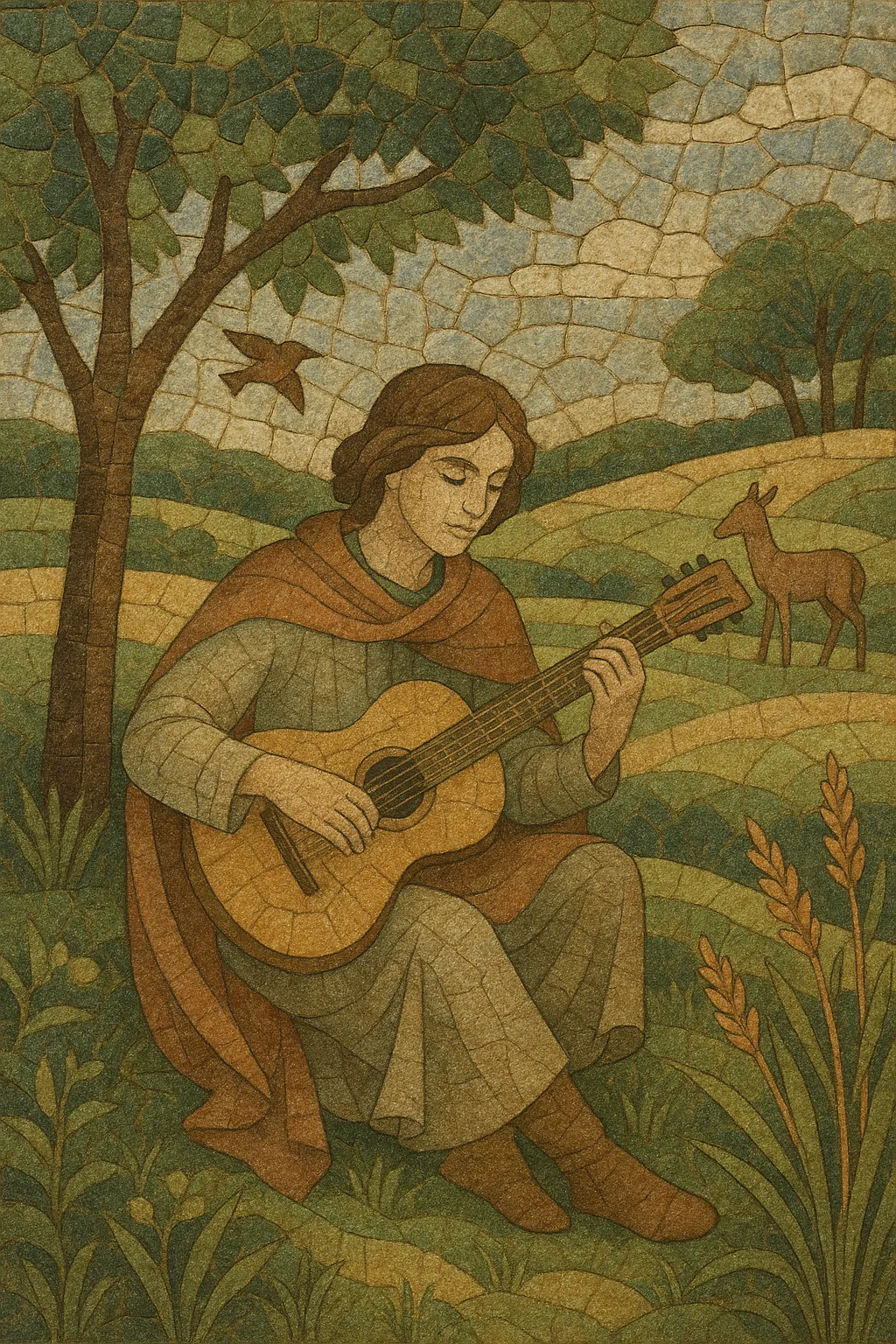
Pastoral is a gentle, nature-evoking style that blends acoustic folk idioms with airy chamber textures and softly luminous ambient coloration.

It favors fingerpicked guitars, hush-toned vocals, rustic strings and woodwinds, drones, and field recordings (birds, wind, streams) to conjure images of open fields and rural quiet. Harmonies often lean modal (Dorian, Mixolydian) or pentatonic, and rhythms are unhurried, allowing tones to bloom and decay.

Though its roots reach back to the British pastoral classical tradition and 1960s UK folk, the tag today also encompasses contemporary indie, ambient-folk, and neoclassical pieces that share a calm, bucolic sensibility.

History

Roots and antecedents

Pastoral draws aesthetic cues from the British pastoral classical lineage (think of composers who celebrated landscape and folk modality) and from traditional English folk song. These currents established the soft-focus timbre, modal harmony, and landscape imagery that would define the style.

1960s: Folk revival and bucolic psychedelia

The 1960s UK folk revival and psychedelic folk movement supplied the modern blueprint: intimate acoustic guitar, diatonic/modal writing, and lyrics about seasons, fields, and daily rural life. Recording approaches favored warmth, room ambience, and minimal processing, which reinforced a sense of place.

1980s–1990s: Ambient and minimalist colors

Ambient and minimalist practices added drones, sustained strings, and spacious production. Chamber instrumentation—strings, oboe, clarinet, piano—began to mingle with folk guitars and harmonium, producing a soft neoclassical sheen while retaining rustic imagery.

2000s–present: Indie, neoclassical, and field recording

Indie and neoclassical scenes absorbed pastoral sensibilities: gentle fingerpicking meets small-ensemble arrangements, tape hiss, and environmental sound. Contemporary artists often weave field recordings into harmony-rich textures, maintaining the genre’s central aim: to evoke calm, open air, and an unforced connection to the land.

How to make a track in this genre

Instrumentation
•   Start with fingerpicked acoustic guitar in a low-to-moderate register. Add soft strings (violin/viola/cello), woodwinds (flute/oboe/clarinet), harmonium or pump organ, and light piano. •   Layer unobtrusive drones (bowed guitar, sustained strings, or synth pads) and subtle field recordings (wind, birdsong, distant water) to anchor space and mood.
Harmony and melody
•   Favor modal centers (Dorian, Mixolydian, Aeolian) and simple diatonic progressions with occasional modal mixture. Pedal tones and open-string voicings enhance an airy feel. •   Write singable, stepwise melodies with narrow range. Allow phrases to breathe; avoid dense melismas.
Rhythm and form
•   Keep tempos unhurried; use gently pulsing patterns (e.g., 6/8 or lilting 3/4) or free-time passages. •   Forms can be strophic (folk song) or through-composed (chamber/ambient). Leave room for sustained tones and natural decay.
Arrangement and production
•   Record close and warm, capturing room ambience; minimal compression. Let tape hiss or light saturation add warmth. •   Pan elements to mimic a small ensemble around the listener; place field recordings in the distance to suggest landscape depth.
Lyrics and imagery
•   Draw on seasonal cycles, weather, rural craft, and small observations of daily life. Use concrete natural imagery and gentle metaphors; avoid irony and urban bustle.
Performance practice
•   Play softly with legato articulation. Use brushes or hand percussion sparingly. Prioritize blend and space over virtuosity.

Top tracks

Locked
Share your favorite track to unlock other users’ top tracks
Influenced by
Has influenced
Challenges
Digger Battle
Let's see who can find the best track in this genre
© 2025 Melodigging
Melodding was created as a tribute to Every Noise at Once, which inspired us to help curious minds keep digging into music's ever-evolving genres.
Buy me a coffee for Melodigging