Your digging level
Description
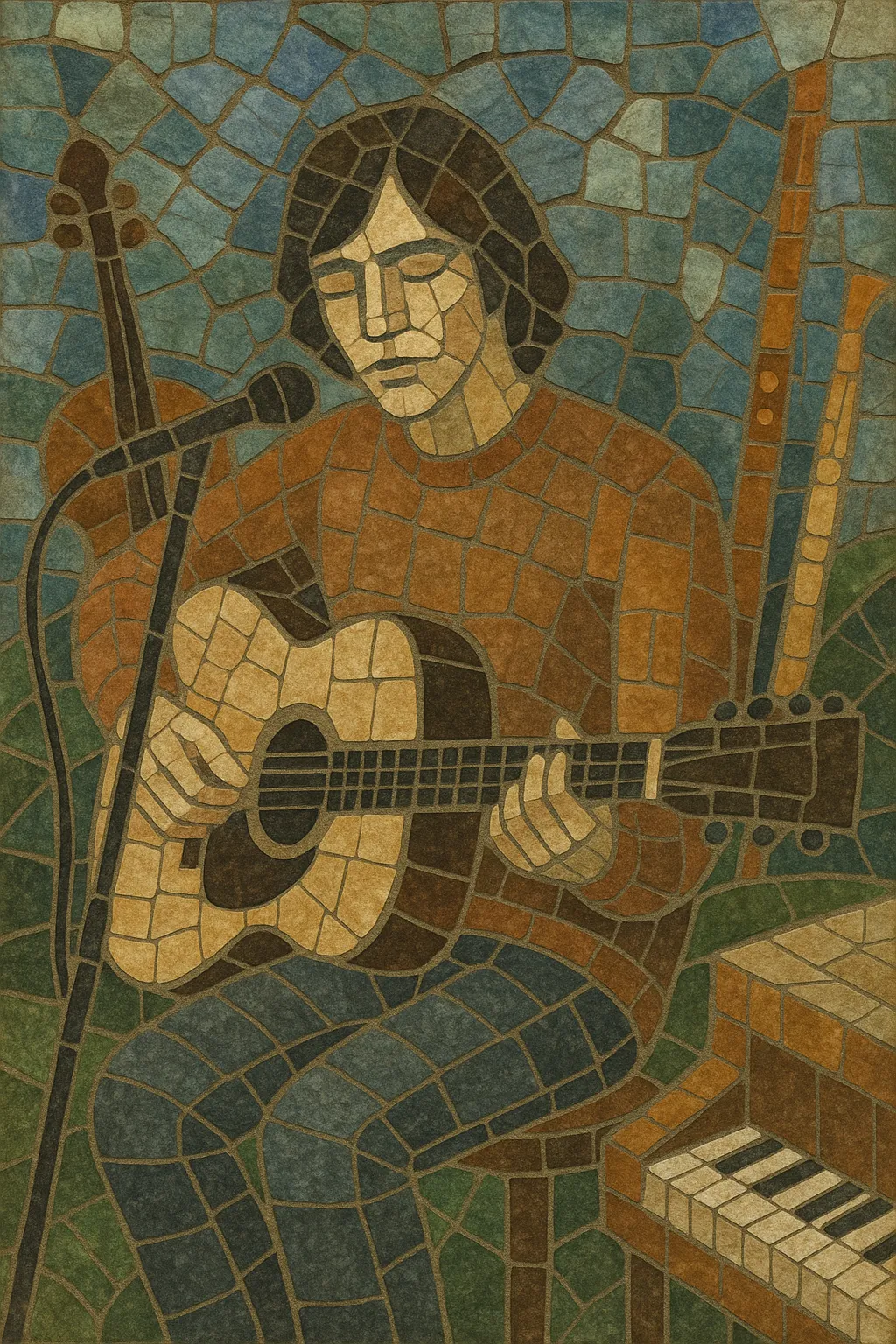
British singer-songwriter is a strand of the singer-songwriter tradition rooted in the United Kingdom, distinguished by literate, often understated lyricism and arrangements that draw on British folk, folk-baroque guitar techniques, and melodic pop craft.
While acoustic guitar and piano remain central, the palette commonly expands to tasteful strings, woodwinds, and subtle rock rhythm sections. Compared to the American lineage, the British approach often leans toward introspection, pastoral imagery, modal folk colors, and a reserved vocal delivery, yet it readily embraces pop hooks and artful production when the song demands it.
History
The British singer-songwriter tradition crystallized in the late 1960s as UK artists fused the confessional focus of the emerging singer-songwriter movement with local folk idioms. Fingerstyle guitar informed by folk-baroque techniques (often using altered tunings) met Beatles-era melodic sophistication, creating a distinctly British sensibility. Early exemplars such as Donovan and Cat Stevens bridged folk clubs and the pop charts.
The 1970s brought a golden run of deeply personal albums and sophisticated songwriting. Nick Drake’s intimate recordings and John Martyn’s atmospheric, jazz-tinged approach set new standards for subtlety and mood. Elton John demonstrated how piano-led, lyrically rich songs could scale to global pop without losing craft, while Richard Thompson connected electric folk’s storytelling to incisive, modern songwriting.
The aesthetic broadened in production and scope. Kate Bush wove art-pop, chamber textures, and literary themes into a singer-songwriter core, influencing generations with her inventive studio work. Meanwhile, Thompson’s solo albums and other UK writers sustained a tradition of sharp narratives and folk-rooted harmony amidst changing pop fashions, from new wave to Britpop.
A new wave, from Laura Marling and Ben Howard to Adele and Ed Sheeran, reasserted the commercial and cultural centrality of the form. These artists balanced confessional writing with contemporary pop sonics, streaming-era intimacy, and festival-scale choruses. The style now comfortably intersects with indie folk, modern indie pop, and acoustic pop while retaining its hallmarks: detailed lyrics, melodic clarity, and tasteful, song-first arrangements.
Start with voice plus acoustic guitar or piano. Add light rhythm section (brushes, soft kick, subdued bass), and consider chamber colors: strings, woodwinds, or harmonium. Keep the arrangement supportive of the vocal and lyric.
Use diatonic progressions with color tones: add9, sus2/sus4, and occasional modal mixture. Common guitar tunings include standard, DADGAD, and drop D; fingerpicking patterns (Travis-style with British folk inflections) add motion without crowding the vocal. Explore modal flavors (Dorian, Mixolydian) drawn from British folk for a subtly distinctive sound.
Write in a personal, observational voice. Blend intimate confessions with vivid imagery—pastoral scenes, urban snapshots, and literary references. Favor precise, evocative phrasing over ornate metaphor; aim for lines that read well on the page and sing naturally.
Verses carry narrative detail; choruses crystallize the emotional thesis; bridges reframe perspective or introduce harmonic contrast. Tempos often sit between 60–110 BPM, supporting reflective delivery and clear diction.
Deliver vocals close-miked, articulate, and dynamic—intimate but not fragile. Use warm, minimal processing: gentle compression, tape/transformer saturation, room or plate reverbs. If leaning art-pop, experiment with layered harmonies or textural motifs, but keep the song’s core uncluttered.