Your digging level
Description
Traditional British folk refers to the orally transmitted songs and dance tunes of Britain (England, Scotland, and Wales), shaped over centuries by rural life, maritime culture, seasonal rituals, and local histories.
Its core features include narrative ballads (often strophic and modal), work songs, shanties, laments, and celebratory choruses, alongside instrumental dance music such as jigs, reels, hornpipes, polkas, and waltzes. Melodies frequently use modal scales (especially Dorian and Mixolydian), narrow vocal ranges, and memorable refrains that invite communal singing.
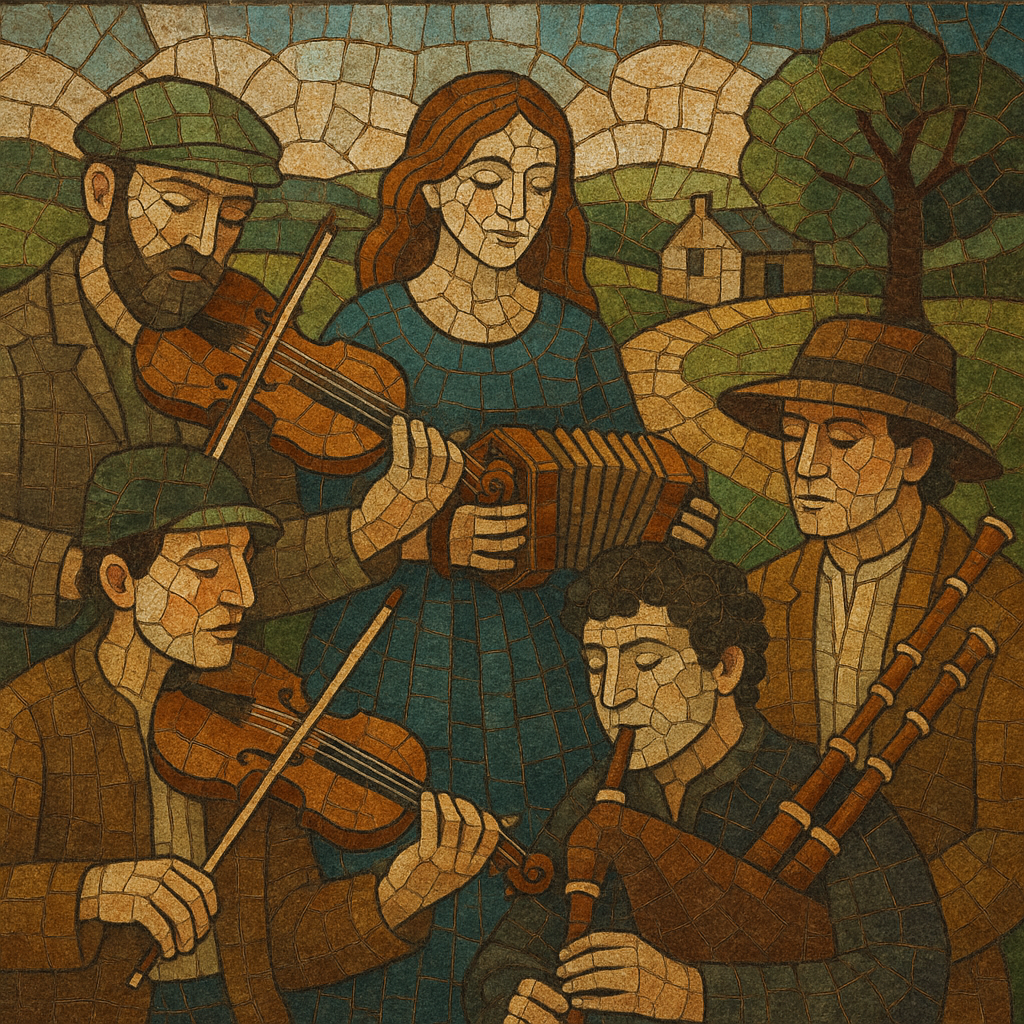
Performance practices range from unaccompanied solo singing to small acoustic ensembles. Typical instruments include voice, fiddle, melodeon (diatonic button accordion), concertina (English/Anglo), whistle, flute, cittern/mandolin, guitar (a later addition), and regional pipes (e.g., Northumbrian smallpipes). Texts foreground storytelling, plain speech, and local dialect, with themes of love, work, war, supernatural encounters, and moral caution, preserved in sources like the Child Ballads and cataloged in the Roud Folk Song Index.
Sources: Spotify, Wikipedia, Discogs, Rate Your Music, MusicBrainz, and other online sources
History
Traditional British folk emerges from medieval and early modern oral traditions, where itinerant singers, community gatherings, and rural dances sustained a living repertoire. Narrative ballads (later canonized as the Child Ballads) circulated by memory and through broadsides in the 16th–18th centuries. Dance tunes coalesced in village festivities and assembly rooms, with regional variants developing distinctive rhythms and ornamentation.
The industrial era threatened local song-cultures, prompting collectors to preserve them. Francis James Child assembled his landmark collection of ballads (1882–98). In the UK, Sabine Baring-Gould, Lucy Broadwood, and later Cecil Sharp, Ralph Vaughan Williams, and George Butterworth collected songs from source singers, notating modes, texts, and variants. Institutions such as the English Folk Dance and Song Society (EFDSS) formed to teach dances, publish collections, and foster community practice.
After WWII, a second revival grew around folk clubs, radio, and labels like Topic Records. Singers such as Ewan MacColl and A. L. Lloyd advocated for repertoire fidelity and social engagement, while harmony groups (e.g., The Watersons) re-centered unaccompanied singing and chorus songs. Guitar, concertina, and melodeon accompaniments became common, and archives expanded (culminating in tools like the Roud Folk Song Index). Parallel to this, folk-rock interpreters brought traditional songs to new audiences, even as purist and progressive approaches debated authenticity.
England, Scotland, and Wales each nurtured distinct styles: Northumbrian piping and song traditions; Scots balladry and bothy songs; English chorus singing and dance tune sessions; and Welsh song traditions integrated into modern revival contexts. Today, traditional sessions in pubs, festivals, and folk clubs coexist with scholarship and digital archives, ensuring continuity while inviting new interpreters to learn directly from field recordings, printed collections, and living communities.