Genres
Artists
Albums
Make Music
Sign in
Sign in
Artists
Drain
Artists
Drain
Ecco2k
2017–2021
·
5 albums
Listen
4
/5
Genres
Dark Plugg
Dark plugg is a moody, minimalist offshoot of the plugg/pluggnb branch of trap that emphasizes ominous pads, minor-key motifs, and sparse, bouncy drum programming. It keeps the signature plugg swing—skittering hi‑hat triplets, clap on beat three, and rubbery 808 glides—but replaces the sunny or dreamy palette with cold bells, choirs, and horror‑tinged textures. The result is a floating, nocturnal feel that leaves lots of negative space for vocals, often paired with deadpan deliveries, whispered ad‑libs, and introspective or nihilistic themes. Producers favor short, loopable melodies (two to four bars), subtle detuning, and lush reverb/delay tails that blur around tightly side‑chained low end. Tempos commonly sit between 130–150 BPM, preserving plugg’s bounce while deepening the atmosphere.
Discover
Listen
Mandible
Mandible is an internet-born, experimental microgenre whose name evokes the jawbone: brittle, gnashing, and percussive. Producers lean into harsh, dental-adjacent foley (tooth clicks, jaw pops, bone-like clacks) and metallic scrapes, arranging them over lurching trap-derived beats and sub-heavy sound design. Aesthetically, it sits at the intersection of industrial noise, deconstructed club, and dark trap: distorted transients, granular glitches, sudden drop-outs, and unsettling ASMR-adjacent close‑mic textures. Harmony tends to be sparse or atonal, with drones and dissonant clusters used more for atmosphere than for functional progression. The result is club-adjacent music that feels physical and tactile—like rhythm sculpted from mouth and bone.
Discover
Listen
Zxc
ZXC is a Russian/CIS internet-native micro‑genre and scene label that emerged on VK, Telegram, and TikTok to group a melancholic, guitar‑tinged strain of emo‑rap and trap. Rather than a rigid stylistic rulebook, “zxc” signals a shared aesthetic: minor‑key melodies, soft overdriven guitars or hazy synth pads atop 808-heavy trap drums, half‑sung/half‑rapped hooks, and diaristic Russian‑language lyrics about alienation, late‑night cityscapes, romance, and online life. Production is intentionally lo‑fi or dreamlike—washed in chorus, reverb, and tape‑like saturation—blending cloud‑rap softness with post‑Soviet cold‑wave/post‑punk moods. The tag functions both as a sound and a subcultural marker: hoodies and VHS textures, retro phone cameras, pixel art, and gaming/server culture references, all orbiting short, hooky tracks optimized for social feeds and stories.
Discover
Listen
Drain
Drain is a Stockholm-born microgenre and scene that blends cloud rap and alternative R&B with icy ambient pads, ethereal synths, and a minimalist trap bounce. Vocals are heavily autotuned and airy, often gliding in falsetto or soft-talked melodies over sparse 808s and glassy, reverb-heavy sound design. Lyrically, drain toggles between melancholy introspection and aspirational, fashion-forward cool, mixing feelings of isolation, friendship/crew loyalty, and internet-age spirituality. The overall aesthetic is glacial and translucent: wide stereo fields, soft clipping, chorus, and washed-out reverbs convey a dreamlike, weightless mood while retaining the rhythmic snap of modern rap.
Discover
Listen
Alternative R&b
Alternative R&B (often shortened to alt‑R&B or dubbed PBR&B) is a stylistic offshoot of contemporary R&B that fuses soul and hip hop vocal traditions with experimental electronic production and indie aesthetics. It is characterized by atmospheric, nocturnal sound design; sparse, half‑time or trap‑leaning drum patterns; deep sub‑bass; and intimate, often falsetto‑based vocals. Song forms frequently deviate from standard verse–chorus structures, favoring gradual builds, textural contrasts, and negative space. Harmonically, it leans toward minor modes and lush extensions (7ths, 9ths, add9s), while production favors reverb‑drenched pads, filtered synths, delicate guitar lines, and creative use of silence. Lyrically, the genre tends to be introspective and confessional—exploring themes of desire, vulnerability, alienation, and late‑night urban life—delivered with a cinematic, moody sensibility that bridges the underground and the mainstream.
Discover
Listen
Candy Pop
Candy pop is a super-bright, hook-forward branch of contemporary pop that emphasizes sweetness in both sound and theme. It blends bubblegum-style melodies with modern, glossy production, favoring catchy toplines, clean harmonies, and playful textures. Arrangements lean on glittery synths, claps, hand-percussion, and buoyant four-on-the-floor or bouncy half-time beats. Lyrics typically revolve around crushes, friendship, first love, and carefree fun, delivered with enthusiastic, youthful vocals. Compared with classic bubblegum pop, candy pop adopts current pop techniques (EDM builds, post-chorus hooks, subtle trap-lite percussion) and borrows visual and melodic cues from J-pop and K-pop’s “kawaii” aesthetics.
Discover
Listen
Cloud Rap
Cloud rap is a hip hop microgenre defined by ethereal, reverb‑drenched textures, soft pads, and minimal drum programming that creates a floating, dreamlike atmosphere. Beats tend to be sparse and space-conscious, with airy synths, distant vocal samples, and gentle 808s supporting raps that are often introspective, deadpan, or emotionally detached. The sound crystallized online in the early 2010s through platforms like DatPiff, Tumblr, and SoundCloud, pairing Southern rap rhythms with ambient and chillwave aesthetics. Rather than virtuosic density, cloud rap prizes mood, negative space, and a sense of weightlessness, translating internet-era solitude and nostalgia into hazy, pastel-toned hip hop.
Discover
Listen
Experimental Club Music
Experimental club music (often called post-club or deconstructed club) is a hybrid, avant‑garde approach to club production and performance that treats the dancefloor as a laboratory. It uses the grammar of contemporary club forms—heavy sub‑bass, kick patterns, samples, MC or chopped vocals—as raw material to be cut apart, collaged, and reassembled. Instead of four‑to‑the‑floor regularity, it favors asymmetry, abrupt contrasts, negative space, and extreme sound design drawn from noise, industrial, grime, ballroom/vogue, reggaeton, and internet culture. The result ranges from skeletal, percussive workouts to dense, cinematic soundscapes that can be as confrontational as they are cathartic. Just as importantly, the scene has been a site of diasporic, queer, and trans expression, where identity and politics are embedded in sonic choices and performance practice.
Discover
Listen
Hyperpop
Hyperpop is an internet-native pop movement known for its maximalist sound design, pitch-shifted vocals, and frenetic genre collisions. It exaggerates pop tropes—ultra-bright synths, hard-clipping drums, sugary hooks—then smashes them together with elements of club music, trap, and experimental electronica. The style favors hyper-synthetic timbres, extreme processing (auto‑tune, formant shifting, heavy sidechaining, distortion), and abrupt structural left turns. Lyrically, it swings between irreverent internet humor and disarmingly sincere confessions, often reflecting online identity, queerness, and hyper-modern life. Although diverse, the common thread is a playful, self-aware push of pop to surreal, high-saturation extremes.
Discover
Listen
Modern Downshift
Modern downshift is a contemporary, playlist-era microgenre that blends hushed alternative pop and alt‑R&B sensibilities with the spaciousness of downtempo and ambient pop. Songs are typically slow to mid‑tempo, minimal in arrangement, and intimate in vocal delivery—often breathy, close‑miked, and confessional. Production emphasizes warmth and negative space: soft sub‑bass, restrained percussion, reverb‑washed pads or guitars, and gentle saturation that keeps the overall texture velvety and nocturnal. Lyrically, the style skews introspective and late‑night: relationships, vulnerability, quiet self‑reflection, and the emotional afterglow of parties or city drives. The result is music that feels low‑key and cinematic—designed as much for solitary listening as for low‑light social settings.
Discover
Listen
Post-Dubstep
Post-dubstep is a loosely defined wave of UK-born electronic music that grew out of dubstep but moved away from its rigid 140 BPM wobble-bass formula. It keeps the bass-weight, sound-system focus, and rhythmic syncopation of dubstep and UK garage, but folds in house and techno tempos, R&B vocal chops, ambient space, and experimental production. Typical tracks explore 120–135 BPM (not fixed at 140), use broken 2‑step/garage swing instead of 4/4, and favor detailed sound design over maximal drops. You’ll often hear hushed, intimate vocals (sampled or original), neo-soul/jazz-influenced chords, and micro-edited percussion with lots of negative space. The mood is frequently introspective, melancholic, and textural—more headphone-oriented than festival-leaning—yet still rooted in club culture.
Discover
Listen
Glitchcore
Glitchcore is an internet-born microgenre that fuses pop-forward songwriting with hyperactive, digitally mangled sound design. It is characterized by bitcrushed and over-distorted synths, stuttered edits, sudden beat-switches, and heavily pitch-shifted, Auto-Tuned vocals. Arrangements tend to be short, hook-centric, and maximalist, often compressing multiple sections and textures into tracks that last 90–150 seconds. The genre borrows the emotive directness of emo rap and bedroom pop, the rhythmic backbone of trap, and the candy-coated sheen of hyperpop and bubblegum bass, while leaning into deliberate digital artifacts—glitches, dropouts, resampling, and hard clip distortion—as expressive tools. Culturally, glitchcore is inseparable from online communities (Discord, SoundCloud, TikTok), where rapid iteration, meme literacy, and DIY production workflows shaped its sound and aesthetics.
Discover
Listen
New Isolationism
New isolationism is a contemporary strain of isolationist ambient and post-industrial minimalism that emerged in the 2010s, particularly around Scandinavian experimental labels and studios. It foregrounds intimate, close-mic’d sound, negative space, and a quiet-but-present noise floor; its pieces feel both internal and architectural, like rooms built from reverb tails, tape hiss, and soft electronics. Sonically, the style blends glacial drones, fragile chamber timbres (strings, organ, piano), lo‑fi electronics, and field recordings into stark, slow-evolving tableaux. Melodic information is sparse—often only a few tones or gestures—while rhythm is either absent or reduced to distant pulses, heartbeats, or mechanical cycles. Vocals, when they appear, are murmured, diaristic, or abstracted by pitch and time manipulation. Aesthetically, new isolationism is post‑internet and diaristic: it captures solitude, memory, and dislocation with a palette that feels personal yet estranged, drawing as much from contemporary gallery sound practice as from classic dark ambient.
Discover
Listen
Emo Trap
Emo trap is a mid‑2010s fusion of trap production and the melodic, confessional sensibility of 2000s emo and pop‑punk. Built around minor‑key guitar or piano loops, blown‑out 808s, and half‑time trap drums, it favors short, hook‑heavy songs that blur singing and rapping through Auto‑Tune. Lyrically it is candid and diaristic—heartbreak, anxiety, alienation, substance use/recovery, and late‑night introspection are common themes. The sound crystallized on SoundCloud’s DIY ecosystem: rough‑edged mixes, clipped masters, and bedroom workflows that prioritized immediacy over polish, later crossing into the mainstream via viral singles and post‑blog discovery platforms.
Discover
Listen
Fluxwork
Fluxwork is a contemporary microgenre of electronic music optimized for sustained concentration and “flow state” listening. It blends the warmth and space of ambient with the pulse and structure of minimal techno and microhouse, emphasizing unobtrusive rhythms and gradual, textural movement. Tracks usually feature understated four-on-the-floor or gently broken patterns, soft sidechained pads, subtle arpeggios, and carefully filtered transitions. Vocals, if present at all, are sparse and textural. The result is music that feels propulsive yet calm—capable of fading into the background while quietly supplying kinetic focus.
Discover
Listen
Motivation
Motivation is a functional, cross-genre style designed to inspire action, confidence, and perseverance. It blends modern pop and EDM energy with cinematic/orchestral builds and post-rock textures to create an uplifting, triumphant arc. Arrangements typically move from a sparse, contemplative opening (piano, pads, delayed guitars) into steadily layered drums, rhythmic ostinatos, and wide, anthemic choruses. Major keys, bright synths, claps, stomps, and chantable hooks are common, while harmonic progressions favor familiar, optimistic cycles (e.g., I–V–vi–IV) that signal resolve and forward motion. Originally tied to production and library music for promos, sports, tech launches, and YouTube storytelling, Motivation has become a recognizable aesthetic across advertising, fitness culture, and personal development media.
Discover
Listen
Hexd
HexD is a net-native microgenre of hip‑hop and electronic music defined by extreme bitcrushing, aggressive down/upsampling, hard clipping, and compression applied to beats and especially to vocals. Tracks often feature sped‑up and pitched‑up (sometimes formant‑shifted) vocal edits over trap‑leaning drums or breakbeat fragments, creating a distorted, digital, hazy, and psychedelic texture. Many releases are edits or reworks of existing material from rap, emo rap, and digicore/hyperpop, treated as raw sound to be “hexxed” with digital artifacts. Aesthetically, the scene is tightly tied to online platforms and DIY collectives, embracing early‑web, anime, and lo‑fi internet visuals while prioritizing mood, texture, and immediacy over fidelity.
Discover
Listen
Pluggnb
Pluggnb is a melodic internet-born branch of Southern trap that fuses plugg-style production with R&B-leaning, sung rap approaches. It is characterized by deep 808 basslines, sparkly or glassy synth melodies, dense and often quicker drum programming than early plugg, and vocals that emphasize melody, softness, and emotional delivery. The overall sound is frequently airy and digital, with bright arpeggios, bell-like leads, and a clean yet saturated low end designed for headphones and online playback.
Discover
Listen
Glitch Pop
Glitch pop is a strain of pop music that foregrounds digital errors and micro-edits as expressive hooks, fusing the tuneful structures of mainstream pop with the textural play of experimental electronica. Producers chop, stutter, and time-stretch vocals; sprinkle in clicks, cuts, and buffer-skip artifacts; and use bit-crushing or granular resynthesis alongside bright synths and catchy choruses. Despite its love of sonic fragmentation, the genre remains song-first: verses and choruses are clearly defined, melodies are memorable, and harmonies tend to be consonant. The friction between pristine songwriting and intentionally broken sound design creates a delicate, intimate, and often melancholic shimmer that feels both futuristic and warmly human.
Discover
Listen
Contemporary R&b
Contemporary R&B is a popular music genre that evolved from rhythm and blues and soul in the late 1970s, largely among African‑American musicians. It blends traditional R&B vocal stylings with elements of pop, funk, hip hop, and electronic music. The style is marked by soulful, passionate and often melismatic lead vocals; lush, smooth, frequently synthesized production; and a groove-first sensibility that can range from slow jams to club‑ready mid‑tempos. Since the 2010s, the incorporation of pop and electronic textures and production techniques has driven strands like electro‑R&B and helped expand the sound on global charts.
Discover
Listen
Art Pop
Art pop is a strand of pop music that treats the pop song as a canvas for high-concept ideas, experimental techniques, and cross-media aesthetics. It marries accessible melodies and hooks with the visual culture of art schools, the conceptual rigor of the avant-garde, and the studio-as-instrument ethos. Sonically, art pop favors eclectic instrumentation (synths, orchestral timbres, guitars, found sounds), unusual song forms, and sophisticated harmony. It often employs collage, musique concrète–like textures, and theatrical vocal delivery while still keeping a pop-facing surface. Beyond sound, art pop is deeply visual and conceptual: albums are framed as coherent artworks, stagecraft and video are integral, and lyrics tend toward intertextuality, character work, irony, and social commentary. The result is pop that is both immediate and idea-driven.
Discover
Listen
Experimental
Experimental music is an umbrella term for practices that prioritize exploration, process, and discovery over adherence to established genre norms. It embraces new sound sources, nonstandard tuning systems, indeterminacy and chance operations, graphic and open-form scores, extended techniques, and technology-led sound design (tape, electronics, computers, and live processing). Rather than a single style, it is a methodology and ethos: testing hypotheses about sound, structure, and performance, often blurring boundaries between composition, improvisation, sound art, and performance art. Listeners can expect unfamiliar timbres, unusual forms, and an emphasis on how music is made as much as the resulting sound.
Discover
Listen
Pop
Pop is a broad, hook-driven style of popular music designed for wide appeal. It emphasizes memorable melodies, concise song structures, polished vocals, and production intended for radio, charts, and mass media. While pop continually absorbs elements from other styles, its core remains singable choruses, accessible harmonies, and rhythmic clarity. Typical forms include verse–pre-chorus–chorus, frequent use of bridges and middle-eights, and ear-catching intros and outros. Pop is not defined by a single instrumentation. It flexibly incorporates acoustic and electric instruments, drum machines, synthesizers, and increasingly digital production techniques, always in service of the song and the hook.
Discover
Listen
Electronic
Electronic is a broad umbrella genre defined by the primary use of electronically generated or electronically processed sound. It encompasses music made with synthesizers, drum machines, samplers, computers, and studio/tape techniques, as well as electroacoustic manipulation of recorded or synthetic sources. The genre ranges from academic and experimental traditions to popular and dance-oriented forms. While its sonic palette is rooted in electricity and circuitry, its aesthetics span minimal and textural explorations, structured song forms, and beat-driven club permutations. Electronic emphasizes sound design, timbre, and studio-as-instrument practices as much as melody and harmony.
Discover
Listen
Show all 24 genres
Albums
2021
3
/5
PXE
Ecco2k
Drain
Experimental
2020
2
/5
Pollen
Ecco2k
Drain
2019
4
/5
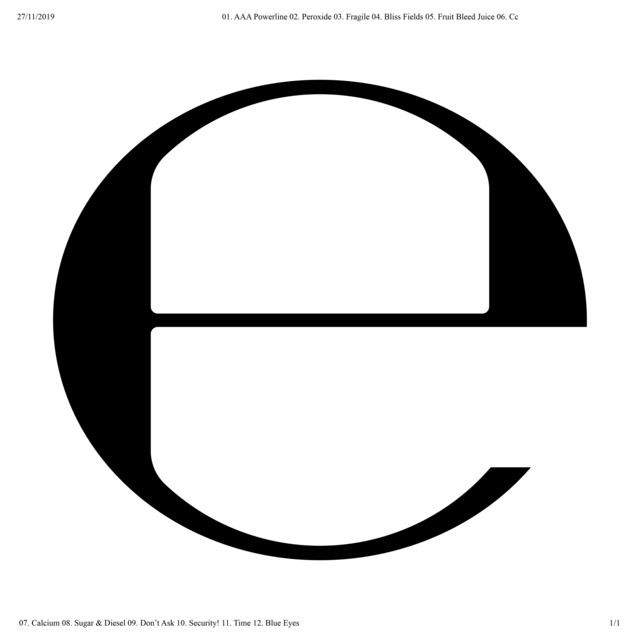
E
Ecco2k
Drain
Electronic
Experimental
2019
1
/5
E
Ecco2k
Alternative R&b
Contemporary R&b
Art Pop
2017
2
/5
GT‐R
Bladee, Yung Lean, Viagra Boys, Yung Lean, Yung Lean, Ecco2K, Viagra Boys, Yung…
Drain
Similar artists
4
/5
Devon Hendryx
Plunderphonics
Experimental Hip Hop
Cloud Rap
5
/5
Frank Ocean
Neo Soul
Pop
Contemporary R&b
3
/5
Cartier God
Plugg
Drain
Pluggnb
4
/5
Lil Yachty
Pop Rap
Detroit Sound
Contemporary R&b
4
/5
Lucy Bedroque
Cloud Rap
Digicore
Experimental Club Music
4
/5
Bladee
Drain
Cloud Rap
Hip Hop
2
/5
Drain Gang Archive
Drain
Cloud Rap
Experimental Club Music
5
/5
Joji
Viral Pop
Electronic
Alternative R&b
4
/5
Grimes
Grave Wave
Neo-Synthpop
Indietronica
4
/5
Björk
Art Pop
Icelandic Experimental
Electronic
Download our mobile app
Get the Melodigging app and start digging for new genres on the go
Download on the App Store
Get it on Google Play
© 2026 Melodigging
Give feedback
Legal
Melodding was created as a tribute to
Every Noise at Once
, which inspired us to help curious minds keep digging into music's ever-evolving genres.