Your digging level

For this genre
0/8
🏆
Sign in, then listen to this genre to level up

Description

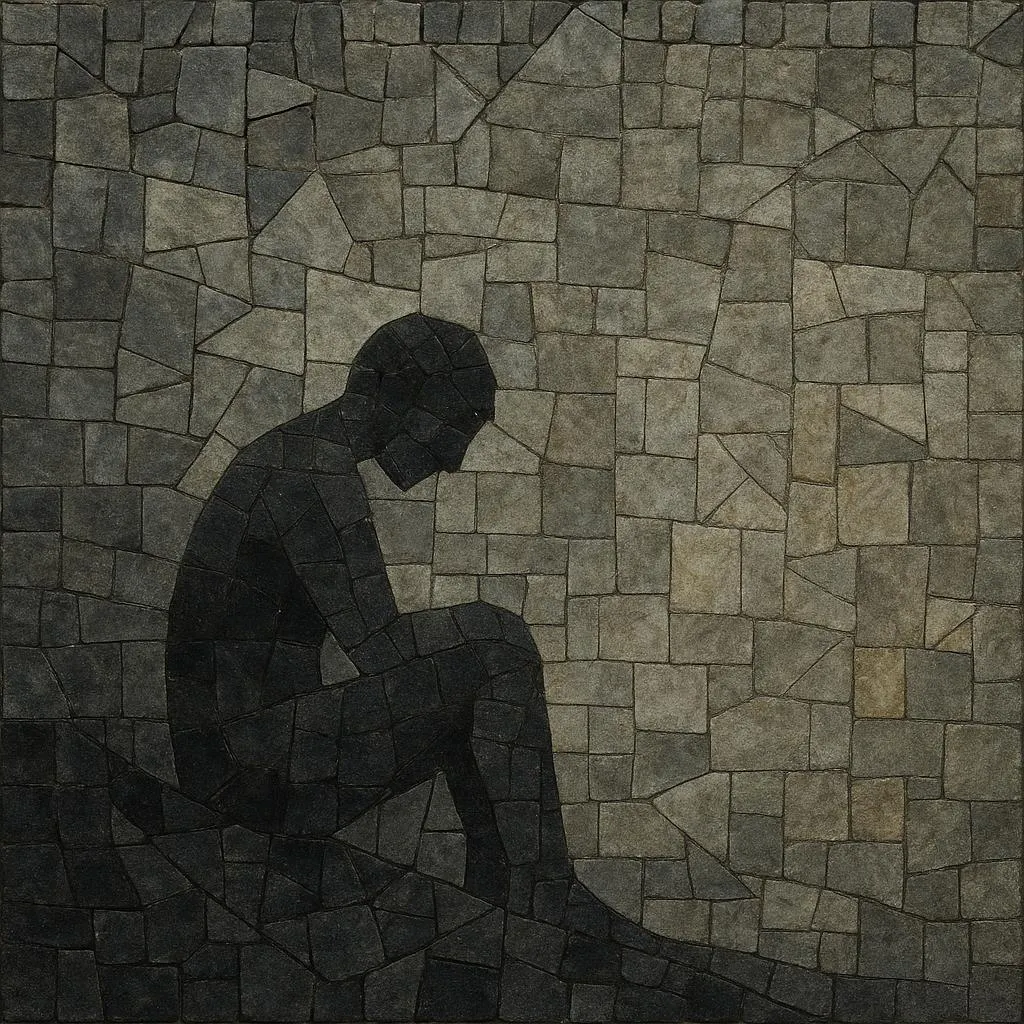
New isolationism is a contemporary strain of isolationist ambient and post-industrial minimalism that emerged in the 2010s, particularly around Scandinavian experimental labels and studios. It foregrounds intimate, close-mic’d sound, negative space, and a quiet-but-present noise floor; its pieces feel both internal and architectural, like rooms built from reverb tails, tape hiss, and soft electronics.

Sonically, the style blends glacial drones, fragile chamber timbres (strings, organ, piano), lo‑fi electronics, and field recordings into stark, slow-evolving tableaux. Melodic information is sparse—often only a few tones or gestures—while rhythm is either absent or reduced to distant pulses, heartbeats, or mechanical cycles. Vocals, when they appear, are murmured, diaristic, or abstracted by pitch and time manipulation.

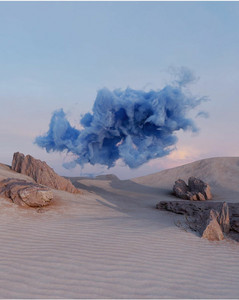
Aesthetically, new isolationism is post‑internet and diaristic: it captures solitude, memory, and dislocation with a palette that feels personal yet estranged, drawing as much from contemporary gallery sound practice as from classic dark ambient.


Sources: Spotify, Wikipedia, Discogs, RYM, MB, user feedback and other online sources

History

Origins (1990s foundations → 2010s renewal)
•   The term “isolationism” was popularized in the 1990s around dark ambient and post‑industrial work that emphasized absence, coldness, and space. New isolationism revives that ethos, but refracts it through 2010s production habits (home recording, cassette texture, DAW minimalism) and a more confessional, chamber‑scaled aesthetic. •   Around the early–mid 2010s, a cluster of Scandinavian imprints and studios—especially in Copenhagen and Stockholm—consolidated a sound where noise practice, electroacoustic methods, and minimal composition converged with an austere, intimate ambience.
Consolidation and scene aesthetics
•   The scene fused drone, electroacoustic techniques, and minimal classical gestures with post‑club sensibilities (deconstructed form, post‑internet mood). Releases often paired stark visual design with music that privileged interiority, memory, and the residue of spaces (room-tone, breath, mic proximity, print‑through). •   Streaming and cassette cultures helped the style proliferate: short-run tapes and Bandcamp‑era distribution rewarded diaristic formats—EPs, sketch-like suites, and modest, home-recorded artifacts.
2010s–2020s: Diffusion and hybridity
•   By the late 2010s and into the 2020s, new isolationism intersected with contemporary composition (organ, strings), hauntological electronics, and gallery sound. It also bled into adjacent micro‑scenes—dreampunk, liminal-space ambient, and experimental pop—spreading its taste for hush, negative space, and the poetics of lo‑fi signal. •   The broader cultural climate (digital overexposure, urban solitude, and, later, pandemic-era seclusion) gave the style additional resonance, cementing it as a distinct, modern articulation of quiet, interior experimental music.

How to make a track in this genre

Instrumentation and sound sources
•   Start with a minimal backbone: sustained synths (Juno-style pads, FM sines), harmonium/organ, close‑mic’d strings, or a dry piano. Layer quiet field recordings (room-tone, HVAC hum, footsteps, winter ambience) to establish place. •   Embrace the noise floor: light tape hiss, mic preamp hiss, or gentle granular dust provide the patina that makes the silence feel alive.
Harmony, melody, and form
•   Keep harmony static or slowly shifting: modal drones, suspended voicings (quartal/quintal), or two-chord pendulums over long durations. Tiny semitone inflections can read as seismic events. •   Melodies should feel like afterimages—two or three-note motifs, ghosted by delay or pitch‑shift; let repetitions drift in timing and tuning to suggest memory rather than statement. •   Forms favor brevity (2–5 minute vignettes) or patient long-form arcs (8–20 minutes). Avoid conventional “builds”; think evaporation, accretion, and erosion.
Rhythm and gesture
•   Often beatless; if used, rhythms are skeletal: a distant throb, a clockwork click, or a heartbeat kick at 40–70 BPM. Sidechain‑like swells or tremolo can imply motion without a drum kit. •   Use negative space musically—leave gaps, let tails decay fully, and let near‑silence reframe small events.
Vocals and text
•   If employing voice, favor whispers, murmurs, or spoken fragments. De‑semanticize with time‑stretch, formant shifting, or heavy spatialization so voice functions as texture/emotion rather than lyric delivery.
Mixing and spatial design
•   Wide dynamic headroom (peaks no higher than −6 dBFS) and conservative limiting preserve intimacy. High‑pass the lows gently (20–35 Hz) but allow room rumble if it supports “place.” •   Sculpt space with long, pre‑delay reverb and narrow-band delays; automate tails to breathe. Pan slowly, as if the listener is turning in a quiet room.
Workflow tips
•   Work quickly and print decisions (commit to takes, print reverb/echo, bounce to cassette) to retain vulnerability. •   Reduce; then reduce again. If removing a layer makes the piece more legible, it belongs to new isolationism.

Main artists

Top tracks

Locked
Share your favorite track to unlock other users’ top tracks

Upcoming concerts

in this genre
Influenced by
Has influenced

Download our mobile app

Get the Melodigging app and start digging for new genres on the go
© 2026 Melodigging
Melodding was created as a tribute to Every Noise at Once, which inspired us to help curious minds keep digging into music's ever-evolving genres.
Buy me a coffee for Melodigging