Your digging level
Description
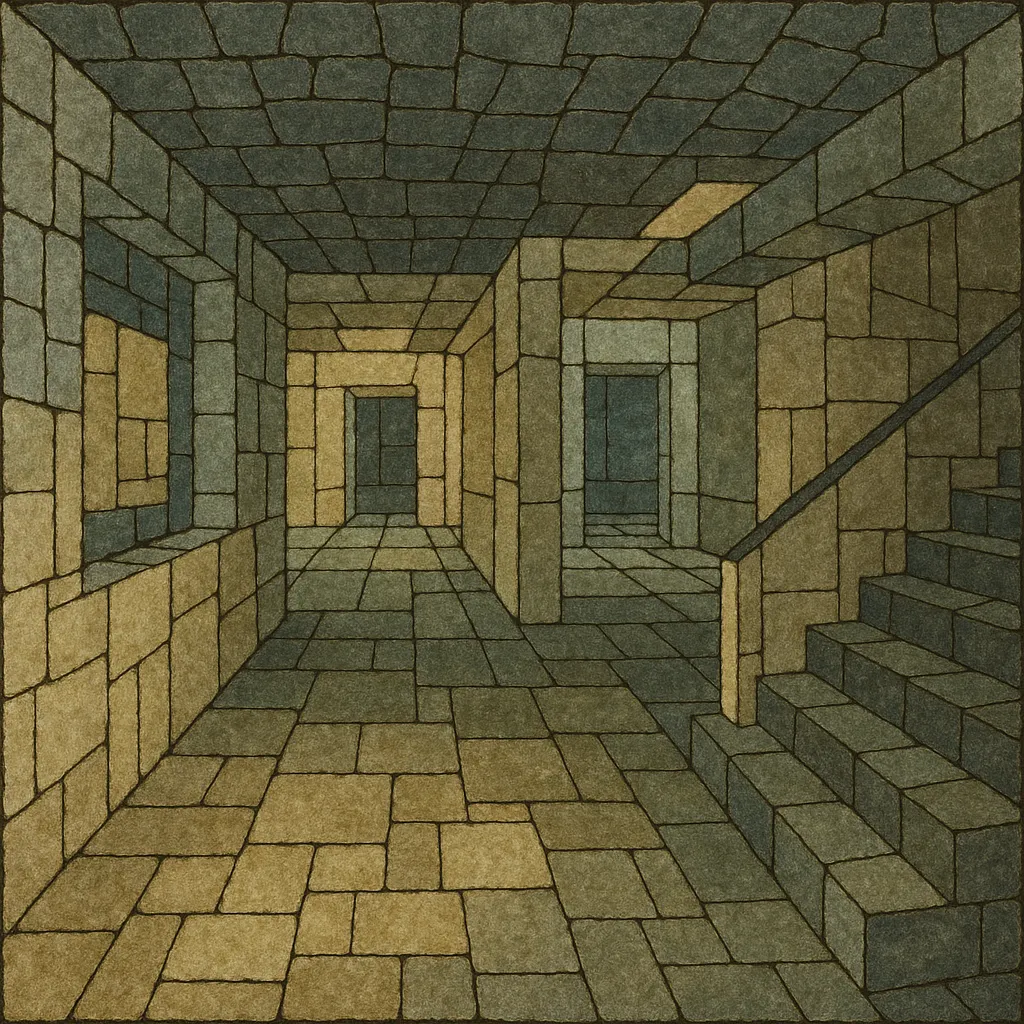
Liminal space is an internet-borne microgenre/aesthetic of ambient and vaporwave-adjacent music that aims to evoke the uncanny feeling of being in empty transitional places—deserted school corridors, unlit parking structures, late-night office lobbies, or closed shopping malls.
Sonically, it blends hushed drones, diffuse synth pads, tape hiss, and faraway environmental noises with fragments of public-address announcements or detuned muzak. The harmonic language is static, unresolved, and memory-like, with slow fades, extreme reverberation, and time-stretching that flatten the sense of motion. The result is a dreamlike, nostalgic, and often eerie atmosphere that feels suspended between past and present, presence and absence.

History
The liminal space aesthetic cohered online in the late 2010s as communities on image boards, Reddit, and YouTube began sharing uncanny photographs of empty public places alongside playlists designed to “sound like” those images. Its musical DNA drew heavily from preexisting currents: ambient and dark ambient for texture, vaporwave/mallsoft and hypnagogic pop for memory-tinted sampling and retail nostalgia, and hauntology for its fixation on spectral cultural memory.
By 2018–2020, “liminal space” playlists and 24/7 streams proliferated, pairing VHS-degraded visuals with drones, softened muzak fragments, and distant HVAC hums. Curators favored long decays, tape wear, and PA-system artifacts to simulate architectural acoustics and the unsettling quiet of after-hours buildings. The approach resonated with younger listeners encountering empty schools and malls during late-night internet browsing and, later, pandemic-era lockdowns, further cementing the style’s affect.
As the sound circulated, it cross-pollinated with vaporwave substyles (mallsoft, slushwave), dreampunk, and experimental ambient practices (tape loops, electroacoustic processing, field recording). Liminal space became less a rigid genre than a curatorial lens—an affective filter applied to production choices, imagery, and sequencing, prioritizing unresolved harmony, long reverbs, sparse events, and a strong sense of place (or non-place).
Today, liminal space persists as a playlist-driven microculture and production approach. It informs soundtrack and sound design for analog-horror videos, exploration games, and installation art, while continuing to evolve within ambient and vapor-adjacent scenes through new sampling sources, convolution spaces, and increasingly subtle treatments of environmental sound.