Your digging level for this genre

0/8
🏆
Sign in, then listen to this genre to level up

Description

Experimental pop is a boundary-pushing approach to pop music that blends memorable hooks and songcraft with unconventional sounds, structures, and production techniques.

It draws on avant-garde ideas, studio experimentation, and cross-genre hybridization while retaining some of pop’s accessibility. Artists often reconfigure verse–chorus forms, manipulate timbre and texture, and use the studio as an instrument, resulting in music that can feel both familiar and radically new.

History

Origins (1960s)

Experimental pop emerged as pop artists began adopting avant-garde ideas and studio innovations. The Beatles and The Beach Boys used multitracking, tape splicing, and non-rock instrumentation to stretch song form and texture, while psychedelic pop and early electronic experiments normalized “the studio as instrument.”

Consolidation and Expansion (1970s–1980s)

Art-pop and progressive pop currents (e.g., Brian Eno, David Bowie) reframed pop as a site for conceptual play. Kate Bush, Laurie Anderson, and Talk Talk integrated theatricality, minimalism, and ambient/neo-classical ideas into song frameworks. Widespread synths, samplers, and gated processing expanded the palette.

Postmodern Hybrids (1990s–2000s)

Björk and Radiohead brought experimental pop into the mainstream with bold timbres, nonstandard forms, and electronics. Indie and post-rock scenes (e.g., Stereolab, Animal Collective) fused krautrock, lounge, and minimalism with melodicism, while affordable DAWs enabled bedroom experiments and sample-based collage.

Digital Maximalism and Micro-scenes (2010s–present)

Networked production accelerated mutation. Artists like FKA twigs, SOPHIE, and PC Music affiliates reimagined pop with hyper-detailed sound design, nonlinear structures, and club-informed dynamics. Contemporary experimental pop intersects with alternative R&B, indietronica, and hyperpop, embracing fluid identities and rapid stylistic shifts.

Lasting Traits

Across eras, experimental pop maintains pop’s focus on hooks and emotion while adopting avant approaches to form, timbre, and production — prioritizing surprise, contrast, and studio-driven storytelling.

How to make a track in this genre

Core Aesthetic

Aim for a balance: accessible melodies and emotional clarity paired with sonic or structural surprises. Treat the studio as an instrument and timbre as a narrative device.

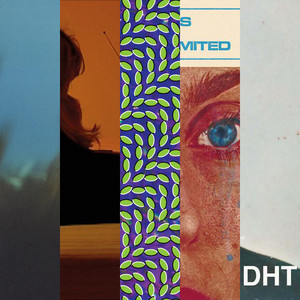
Harmony & Melody
•   Start with a singable motif, then reharmonize it using modal shifts, borrowed chords, or quartal voicings. •   Use pedal tones and stepwise melodies to anchor bold harmonic movements. •   Employ motif transformation (augmentation, inversion) across sections.
Rhythm & Form
•   Alternate stable grooves with metric feints (e.g., 4/4 to 7/8 interludes) to create tension and release. •   Consider non-linear forms: intro drops, false choruses, codas that recontextualize the hook. •   Layer micro-rhythms (ghost notes, syncopated percussion, granular stutters) under a straightforward backbeat.
Sound Design & Instrumentation
•   Hybridize sources: voice, acoustic instruments, modular/synths, samplers, manipulated field recordings. •   Use spectral/filter morphs, formant shifts, and creative re-amping to sculpt distinctive timbres. •   Reserve “ear-candy” (one-shot textures, glitch fills) for transitions to maintain narrative momentum.
Lyrics & Vocals
•   Pair vivid, concrete imagery with ambiguous or fractured viewpoints to mirror sonic experimentation. •   Explore extended vocal techniques (whispers, falsetto flips, harmonizer stacks) as compositional elements. •   Process leads selectively; let dry phrases puncture dense textures for contrast.
Production Workflow
•   Prototype arrangements quickly in a DAW, then iterate with destructive edits (resampling, tape/wow flutter, granular). •   Commit to bold contrasts: lo-fi vs hi-fi, dry vs lush, mono vs wide, sparse vs maximal. •   Use reference tracks for spectral balance while preserving idiosyncratic dynamics and transients.
Arrangement Tips
•   Introduce one novel element per section (new rhythm layer, reharmonized hook, timbral flip) to keep attention. •   Design drop-ins and negative space: strategic silences make experimental gestures feel intentional. •   Render stems and “recompose” the track from printed audio to escape DAW-grid habits.

Top tracks

Locked
Share your favorite track to unlock other users’ top tracks
Influenced by
Has influenced
Challenges
Digger Battle
Let's see who can find the best track in this genre
© 2025 Melodigging
Melodding was created as a tribute to Every Noise at Once, which inspired us to help curious minds keep digging into music's ever-evolving genres.
Buy me a coffee for Melodigging