Your digging level
Description
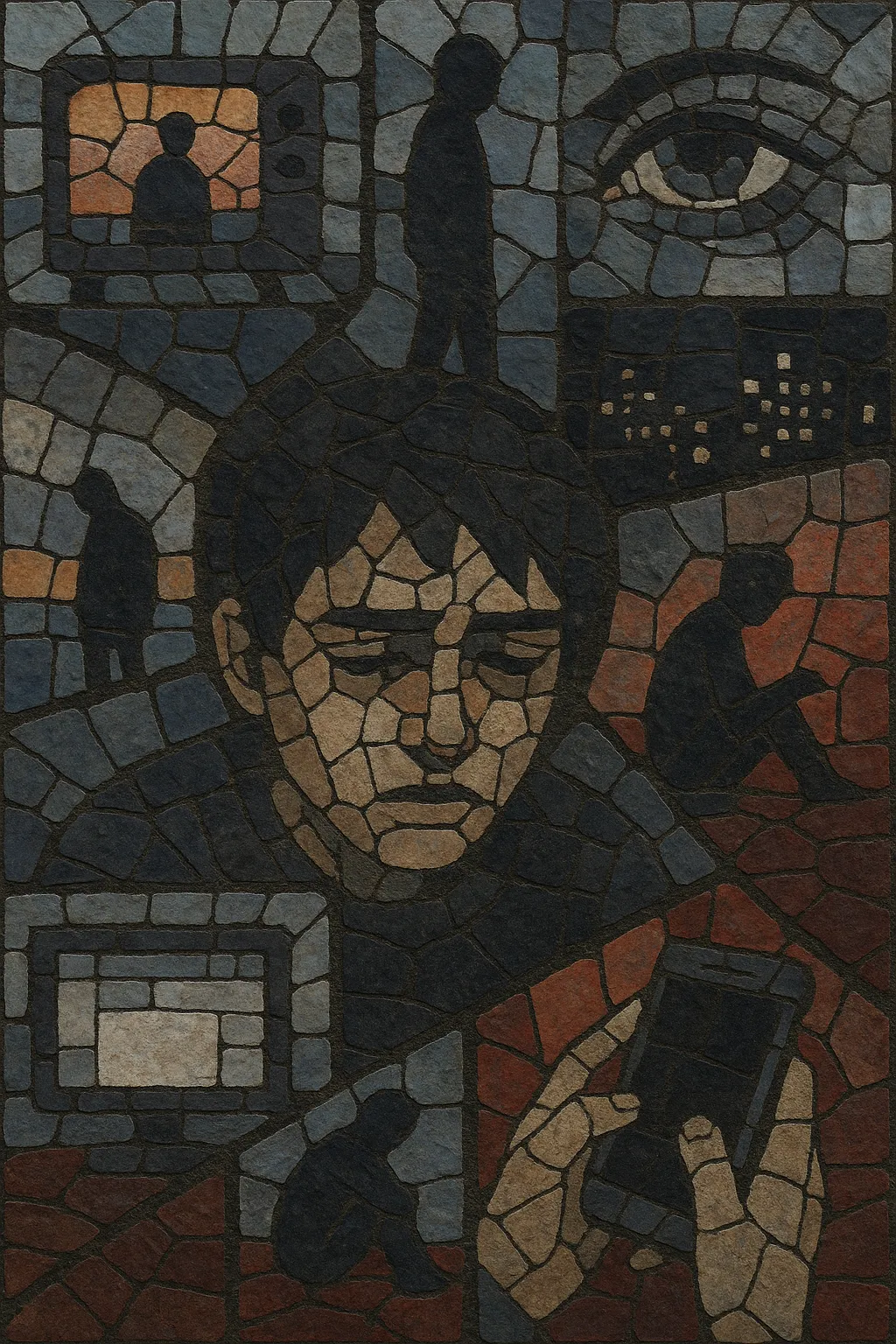
Corecore is an internet-native, collage-heavy audiovisual microgenre that turns the endless stream of online content into emotionally charged montages.
It typically pairs melancholic or atmospheric music with rapid-fire edits of news clips, social-media posts, movie fragments, webcam confessions, and found audio, using juxtaposition to evoke overload, alienation, and fragile intimacy in the age of feeds. While it is primarily known as a video-editing aesthetic (especially on TikTok), its musical identity leans on ambient, vaporwave, breakcore, and experimental collage, favoring texture, mood, and narrative over traditional song structure.
Rather than having a fixed sonic palette, corecore uses existing tracks—often downtempo, hazy, or nostalgic—then re-contextualizes them with speech samples and visual montage to produce catharsis and social commentary.
History
Corecore emerged on TikTok and adjacent platforms in the early 2020s, as creators began to splice fragments of everyday internet life—news bites, scrolling screenshots, movie lines, vlogs—into short, affect-saturated edits. The name riffs on the “-core” suffix used across internet microgenres, making “corecore” both a tongue-in-cheek label and a serious attempt to make sense of life inside the feed.
From the start, corecore borrowed audio strategies from vaporwave, hauntology, illbient, and plunderphonics—slowed textures, archival patina, sample collage—while adopting the rhythmic volatility and emotional spikes of breakcore and experimental edits. The emphasis was less on original composition and more on curatorial montage: choosing tracks whose atmospheres could carry an arc of feeling across 30–120 seconds.
By 2021–2023, the term spread widely as a community tag. Editors converged on a shared toolbox: gentle pads or nostalgic indie passages under spoken-word extracts; sudden cuts to dissonant noise or frantic breakbeats; overlays of captions, comment threads, and counterpoint clips. The result was a form of micro-essay that felt simultaneously personal and collectively authored.
Today, corecore functions as a fluid practice rather than a rigid sound. Its musical backbone remains eclectic—ambient, post-club, shoegaze-adjacent textures, and vaporous electronica—selected for how well they amplify the video’s emotional thesis. The genre’s legacy is its method: using found sound and existing songs to turn the chaos of the timeline into brief, resonant narratives.