Your digging level
Description
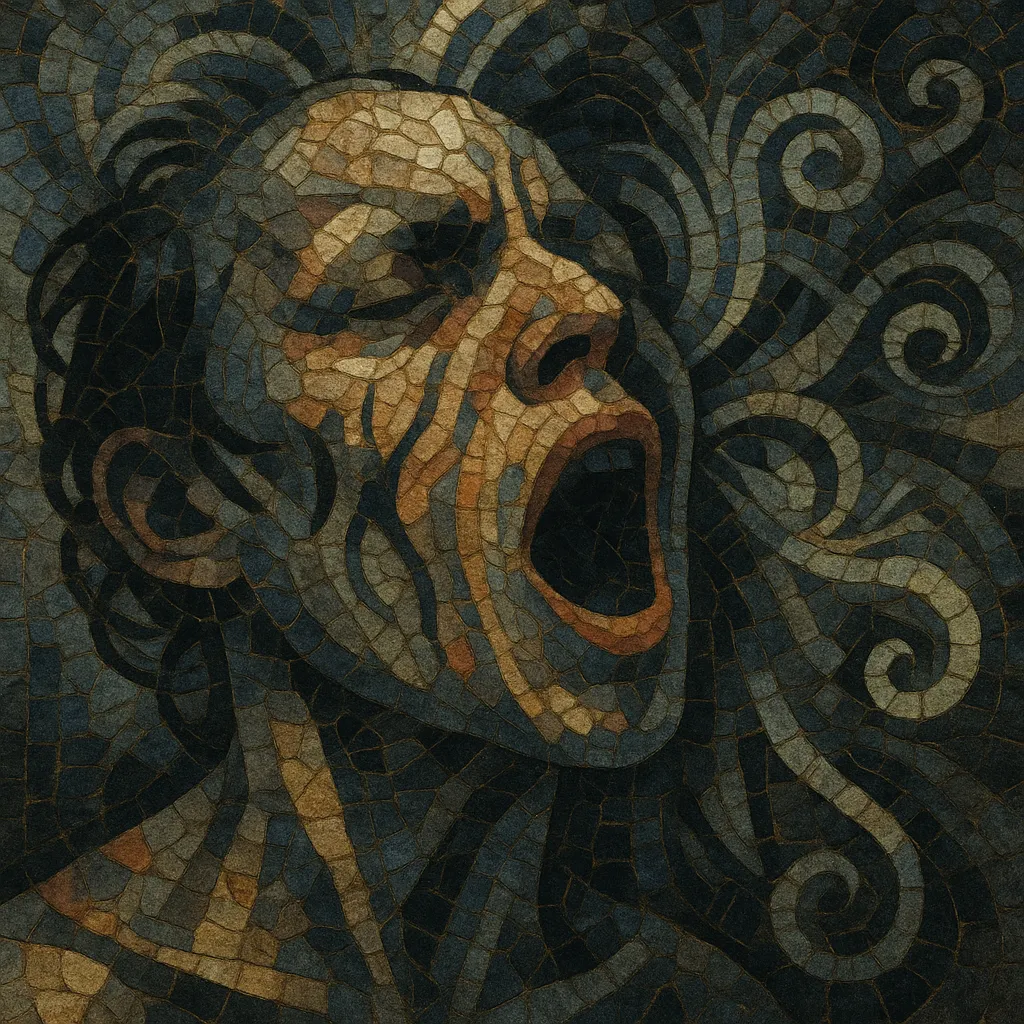
Experimental vocal is a boundary‑pushing approach to voice that treats the human vocal tract as a full-spectrum instrument. It privileges timbre, texture, and technique over conventional melody and lyric, foregrounding breath, phonemes, and raw sound just as much as sung notes.
Artists employ extended vocal techniques such as overtone singing, multiphonics, shrieks, growls, glottal stops, ululation, whistle register, inhaled phonation, tongue clicks, and non-lexical glossolalia. These are often combined with live electronics, tape and granular processing, looping, and spatialization to expand the voice beyond its natural limits.
While it overlaps with avant‑garde classical, sound art, and performance art, experimental vocal is not bound to any single tradition. It can be stark and ritualistic, viscerally intense, or meditative and textural, ranging from solo explorations to choral sound masses and multimedia works.
History
Experimental vocal practice coalesced in the 1960s at the intersection of avant‑garde composition, performance art, and electroacoustic studios. Pioneering works such as Luciano Berio’s Sequenza III for voice (1965) and Karlheinz Stockhausen’s Stimmung (1968) centered the voice as a site for timbral exploration and extended techniques. Vocalist‑muses like Cathy Berberian catalyzed composers to write for phonemes, laughter, whispering, and unconventional articulation, while American experimentalism and the Darmstadt School framed the voice within open forms, graphic notation, and new performance practices.
In the 1970s, figures like Joan La Barbara and Meredith Monk developed distinctive vocabularies of multiphonics, circular breathing, glossolalia, and ritualized ensemble writing. Performance artists and minimalists embraced process, repetition, and bodily presence; tape music and live electronics enabled looping, delay, and transformation of vocal sound. By the 1980s, artists such as Laurie Anderson and Diamanda Galás bridged galleries, concert halls, and popular media, showing that radical vocal work could be both conceptually rigorous and culturally visible.
Affordable samplers, loopers, and digital audio workstations broadened access. Experimental vocalists collaborated across scenes—free improvisation, sound art, art rock, and cinema—while pop‑adjacent projects (e.g., voice‑centric albums and a cappella‑through‑electronics approaches) demonstrated that the studio could act as an extension of the mouth, throat, and lungs. This period normalized voice as primary sound source rather than merely a carrier of lyrics.
Machine learning, real‑time pitch/formant tools, granular engines, and convolution brought new anatomies for the voice: synthetic choirs, AI‑assisted harmonies, and hybrid human‑machine ensembles. Festival circuits and academic programs foregrounded extended vocal technique, while DIY and internet cultures spread practice through tutorials, loop‑based performance, and interdisciplinary works blending choreography, installation, and live coding.
Across decades, experimental vocal centers timbre, embodiment, and immediacy. It treats language as sound material, explores phonetics and resonance (vowel formants, mouth cavity shaping), and juxtaposes purity of tone with abrasion. Scores often use text, IPA phonetics, or graphics in place of traditional notation, inviting performer agency and real‑time decision‑making.