Your digging level
Description
The Darmstadt School refers to the post–World War II circle of composers who gathered around the Internationale Ferienkurse für Neue Musik (International Summer Courses for New Music) in Darmstadt, West Germany.
Characterized by rigorous serial and post-serial techniques, extreme control of musical parameters (pitch, rhythm, dynamics, timbre), and a rejection of tonal and romantic idioms, the style prized structural clarity, pointillist textures, and an ascetic, laboratory-like approach to sound.
While aesthetically diverse, its core ethos was a modernist drive toward formal innovation, often engaging electronic media and advanced notation, and deeply influenced by the Second Viennese School—especially Webern’s concise, atomized writing.
History
In the cultural vacuum after World War II, the Darmstadt Summer Courses (founded in 1946) became a crucible for rebuilding European musical modernism. Young composers—eager to break with prewar traditions—gravitated to serialism as a rational, “objective” method. The influence of the Second Viennese School (particularly Webern’s brevity and pointillism) was decisive.
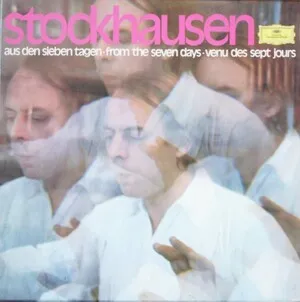
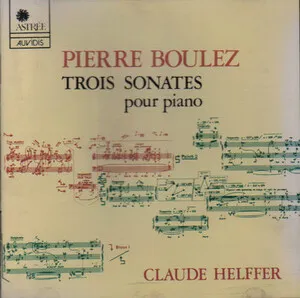
By the early–mid 1950s, figures such as Pierre Boulez, Karlheinz Stockhausen, Luigi Nono, Bruno Maderna, Karel Goeyvaerts, and Henri Pousseur helped consolidate a shared language often termed total or integral serialism, extending serial control from pitch to duration, dynamics, articulation, and timbre. The aesthetic emphasized microscopic precision, discontinuous gestures, and highly detailed notation.
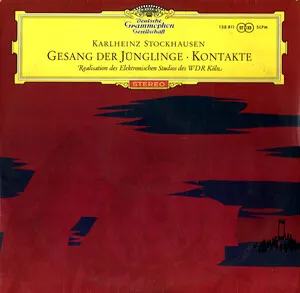
Close ties with studios (e.g., WDR Cologne) fostered a fruitful exchange between serial thought and electronic/electroacoustic practice. This period saw the integration of tape, sine-tone synthesis, and live-electronics into serial frameworks, further reinforcing the movement’s experimental and research-oriented identity.
From the late 1950s into the 1960s, the movement encountered critiques and internal diversification. Encounters with John Cage and indeterminate practices, as well as the emergence of composers like Xenakis (often in dialogue and tension with strict serialism), broadened the discourse. Some adherents softened dogma or explored new directions, but the Darmstadt School’s imprint on post-war composition remained profound.
Beyond its specific techniques, the Darmstadt School institutionalized a culture of advanced experimentalism, shaping contemporary classical pedagogy, electroacoustic practice, and later currents such as New Complexity and aspects of spectral and post-serial thought.

Top albums