Your digging level
Description
Spectralism is a movement in contemporary classical music that treats timbre and the acoustic spectrum as primary compositional materials. Rather than building music from abstract pitch-class sets or functional harmony, spectral composers derive harmonies, orchestrations, and formal processes from the real-world spectra of sounds.
Using tools such as Fourier analysis, they decompose a sound into its partials and then re-synthesize or orchestrate those partials across instruments, often employing microtonality, extended techniques, and slow, morphing processes. The result is music where color, resonance, and perceptual phenomena shape structure as much as melody or rhythm.
History
Spectralism emerged in France in the early to mid-1970s, centered around the ensemble L’Itinéraire (founded in 1973). Composers Gérard Grisey and Tristan Murail were its most visible figures, with Hugues Dufourt coining the term “musique spectrale” in 1979. Their work reacted against both post-war serialism and rigid minimal processes, proposing timbre and acoustics as the basis for harmony and form.
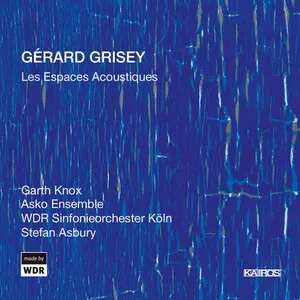
The movement developed alongside research at IRCAM and in university studios, where Fourier/FFT analysis made it possible to examine and model spectra. In landmark works such as Grisey’s “Partiels” (1975) and the cycle “Les Espaces Acoustiques” (1974–85), or Murail’s “Gondwana” (1980), composers used spectral data to generate harmonic fields, microtonal tunings, and orchestrations that emulate electronic transformations. Psychoacoustics (e.g., critical bands, difference tones) and instrument-specific colorations informed both harmony and orchestration.
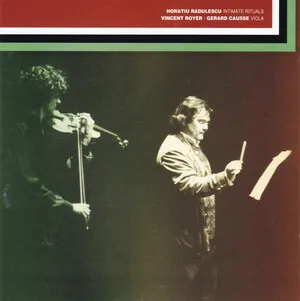
Spectral ideas spread beyond France through figures such as Horațiu Rădulescu (Romania/France), Kaija Saariaho and Magnus Lindberg (Finland), Georg Friedrich Haas (Austria), Julian Anderson (UK), and Joshua Fineberg (USA). These composers adapted spectral thinking to diverse aesthetics—from dense, radiant textures and glissandi to rigorous microtonal systems and hybrid electroacoustic approaches.
By the 1990s and after, spectralism had become a widely influential set of techniques rather than a fixed style. Its focus on timbre-as-harmony, perceptual continuity, and acoustic modeling informed much contemporary classical music, electroacoustic practice, and even ambient/drone scenes. Debates persist about labels (“post-spectral,” “trans-spectral”) and whether spectralism is a method or a style, but its core insight—that sound’s inner life can generate musical structure—remains central to new music.
Begin with a sound source (an instrument note, a bell, a voice, a field recording). Treat its timbre as the seed for harmony, texture, and form rather than starting from scales or functional progressions.