Your digging level
Description
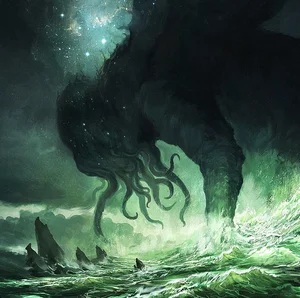
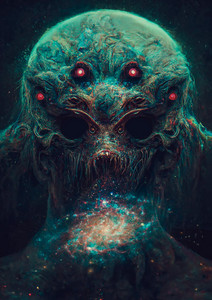
Cosmic horror is a thematically driven music genre that evokes the anti‑humanist idea that humanity is insignificant in the face of vast, indifferent cosmic forces. Drawing on the literature of H. P. Lovecraft and related writers, its soundworld favors forbidding drones, inharmonic textures, and cavernous spatial depth to suggest the unimaginable scale of time and space.
Rather than relying on jump scares or obvious musical shocks, cosmic horror cultivates creeping dread: low‑frequency rumbles, spectral clusters, bowed metals, and distressed electronics conjure environments that feel ancient, alien, and uncaring. The aesthetic spans dark ambient, experimental electroacoustic music, and extreme metal, but the unifying thread is a persistent sense of existential terror and the collapse of human meaning before the abyss.
History
Cosmic horror as a musical idea traces to the rise of Lovecraftian fiction in the 1920s United States, where the notion of an indifferent cosmos took hold in literature and radio drama. Early concert music that later became emblematic of cosmic dread—atonal, expressionist, and spectral approaches—seeded a vocabulary of clustered harmony and psychological unease. By the 1950s–60s, film and television began pairing outer‑space narratives with unsettling orchestral sonorities and early electronic effects, translating literary cosmicism into sound.
The 1970s–80s saw cosmic horror articulated in soundtrack language: dissonant strings, aleatoric brass, and cavernous reverbs underscored stories of incomprehensible entities and hostile environments (e.g., Antarctic isolation, derelict spacecraft). In parallel, electroacoustic and musique concrète composers explored inharmonic timbres, tape manipulation, and deep spatialization—techniques that fit the genre’s fascination with the unknown. By the late 1980s–90s, dark ambient and isolationist ambient (e.g., subterranean rumbles, infrasonic drones) provided a purely sonic equivalent of Lovecraftian dread with little to no conventional melody or pulse.
In the 2000s–2020s, cosmic horror diversified across scenes. Dark ambient labels curated collaborative “mythos” albums; extreme metal bands adopted lyrical worlds of eldritch deities with dissonant, down‑tuned harmony and oppressive production; and contemporary film/game scores fused electronics with extended orchestral techniques to render hostile, incomprehensible spaces. Today the tag spans ambient, experimental electronics, post‑classical scoring, and extreme metal—all unified by anti‑humanist themes, non‑teleological form, and an emphasis on texture, scale, and unknowability.