Your digging level

For this genre
0/8
🏆
Sign in, then listen to this genre to level up

Description

Atonality is music that lacks a tonal center or key. Instead of organizing pitches around a dominant tonic and functional harmony, it treats all twelve chromatic notes as potentially equal, freeing them from the hierarchical relationships that define common‑practice tonality.

In practice, atonality avoids cadential pull, conventional resolutions, and long‑range tonal plans. Dissonances are not required to resolve, familiar chords can appear in unfamiliar contexts, and intervallic cells or pitch‑class sets often replace scales and functional progressions as the basic building blocks. The result can sound tense, floating, or radically expressive, depending on the materials and textures the composer chooses.


Sources: Spotify, Wikipedia, Discogs, Rate Your Music, MusicBrainz, and other online sources

History

Origins (1900s)

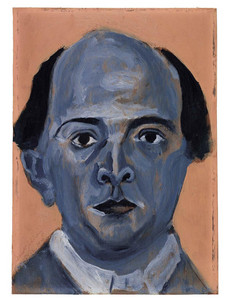
Atonality emerged in the first decade of the 20th century, centered around Vienna. Arnold Schoenberg, followed by his pupils Anton Webern and Alban Berg, gradually abandoned the gravitational pull of tonality as late‑Romantic chromaticism reached saturation. Works from about 1908 onward (e.g., Schoenberg’s op. 11 and op. 15) exemplify a “free atonal” idiom in which pitches combine without reference to a key or functional progression.

Interwar Consolidation (1910s–1930s)

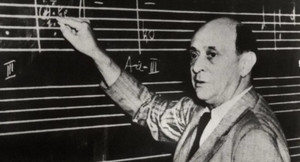
The so‑called Second Viennese School developed atonality further, with Schoenberg formalizing the twelve‑tone (dodecaphonic) method in the 1920s to bring structural clarity to music without a tonal center. Elsewhere, composers like Charles Ives and Edgard Varèse pursued their own non‑tonal languages, while Bartók and Stravinsky intermittently employed non‑tonal resources alongside other organizing systems.

Post‑war Diversification (1940s–1970s)

After World War II, atonality became a foundation for several avant‑garde movements. Integral serialism (Boulez, Stockhausen) extended serial ordering beyond pitch to rhythm, dynamics, and timbre. Parallel streams included aleatoric and stochastic approaches (Cage, Xenakis), which, while methodologically different, shared atonality’s independence from tonal hierarchy. New analytical tools (set theory, pitch‑class analysis) emerged to describe post‑tonal construction.

Late 20th Century to Present

Atonality remained a core option within contemporary classical composition and influenced adjacent fields. Spectralism (Grisey, Murail) often eschews functional tonality in favor of timbre‑based structures; many experimental, electronic, and jazz contexts adopted post‑tonal pitch organization. Today, atonality functions less as a stylistic dogma than as a broad, flexible toolkit for creating music outside functional tonality.

How to make a track in this genre

Pitch and Harmony
•   Avoid establishing a tonic or functional progressions; do not cadence in a way that implies key. •   Build with small intervallic cells or pitch‑class sets (e.g., [0,1,4]) and transform them via transposition, inversion, and registral shifts. •   Use all twelve chromatic pitches freely; consider aggregate completion (eventually sounding all 12) as a structural goal. •   Explore symmetrical structures (e.g., diminished seventh, tritone cycles) without resolving them functionally.
Melody, Texture, and Rhythm
•   Derive melodies from motivic cells rather than diatonic scales; emphasize contour and interval identity over scale degrees. •   Employ contrapuntal textures to keep voices independent, or use stark, pointillist spacing for clarity. •   Rhythm can be flexible or highly patterned; without tonal cadence, rhythm and texture often carry form and articulation.
Form and Development
•   Replace tonal “departure–return” narratives with processes: transformation of a cell, aggregate cycles, registral/timbral arcs, or dynamic/formal symmetries. •   Consider serial or ordered approaches (e.g., a twelve‑tone row) for additional discipline, but free atonality can work with consistent motivic logic alone.
Orchestration and Timbre
•   Exploit color: extended techniques, contrasting registers, and timbral counterpoint enhance clarity when harmony is non‑functional. •   Use dynamics and articulation to punctuate structure and to delineate phrases in lieu of cadences.
Practical Tips
•   Pre‑compose a small pitch inventory or set complex and map its transformations before writing. •   Analyze balance: too much density can obscure motives; spacing and registral planning keep ideas audible. •   Test for unintended tonal centers; if a passage implies key, adjust pitch choices, spacing, or cadence to diffuse it.

Top tracks

Locked
Share your favorite track to unlock other users’ top tracks
Influenced by
Has influenced
Challenges
Digger Battle
Let's see who can find the best track in this genre

Download our mobile app

Get the Melodigging app and start digging for new genres on the go
© 2026 Melodigging
Melodding was created as a tribute to Every Noise at Once, which inspired us to help curious minds keep digging into music's ever-evolving genres.
Buy me a coffee for Melodigging