Your digging level
Description
Sonorism is a post–World War II Polish avant‑garde current that makes sound color, texture, and unconventional timbral combinations the primary musical material. Rather than developing melodies and harmonies in a traditional sense, sonorist works organize music into blocks or masses of sound that transform through color, density, and register.
Emerging within the “Polish School” of the late 1950s and 1960s, sonorism embraces extended instrumental techniques, novel orchestration, and experimental notations. Its aesthetics foreground glissandi, clusters, aleatoric layers, and dramatic contrasts to create visceral, often eerie or cathartic soundscapes that challenged serial orthodoxy and expanded orchestral imagination.
History
After the political “thaw” in Poland during the late 1950s, the Warsaw Autumn festival became a vital platform for exchanging new musical ideas. Within this climate, Polish composers developed “sonorism” (sonoryzm/sonorystyka), a tendency that elevated timbre and texture as structural agents. It emerged partly in reaction to strict serialism and as an opportunity to redefine orchestral sound following the devastation and cultural isolation of the war years.
Sonorism treats the orchestra like a laboratory of colors and physical gestures. Composers built pieces from sound masses, clusters, and layered textures, using extremes of register and dynamics, sudden contrasts, and processes such as glissandi, tremoli, and micro-variation. Extended techniques—sul ponticello, col legno battuto, key slaps, air sounds, prepared piano, inside‑piano actions, and unconventional percussion—became core vocabulary. Notation often employed proportional spacing, time brackets, and graphic symbols to coordinate aleatoric or textural events.
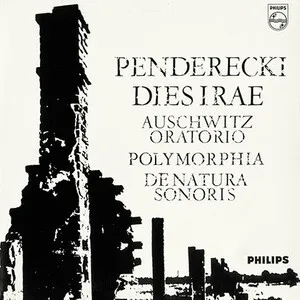
Krzysztof Penderecki’s Threnody to the Victims of Hiroshima and Polymorphia became emblematic: orchestral sound is sculpted into searing clusters, siren‑like glissandi, and textural shocks. Henryk Mikołaj Górecki’s early works (e.g., Scontri, Genesis) forged concrete blocks of sound and percussive masses before his later turn to simplicity. Witold Lutosławski’s controlled aleatory refined the approach with lucid textural design (e.g., Jeux vénitiens). Kazimierz Serocki, Bogusław Schaeffer, Wojciech Kilar, and Andrzej Dobrowolski likewise advanced the idiom across orchestral, chamber, and electroacoustic contexts.
By the late 1960s, sonoristic thinking had permeated European modernism, normalizing extended techniques and timbral form. Its focus on sound mass and color presaged or intersected with later currents such as spectralism and influenced film scoring (especially horror and psychological thrillers). The approach remains a toolkit for contemporary composers seeking dramatic, material‑centered forms that prioritize the physicality of sound.
Think in sound masses rather than melodies. Use color, density, register, and dynamics as primary parameters. Form arises from the transformation and collision of textural blocks.
Favor full orchestra or flexible chamber forces rich in color (strings, winds, brass, large percussion). Exploit extended techniques: sul ponticello, sul tasto, harmonics, col legno battuto, behind‑the‑bridge bowing, air and key‑slap sounds, breath/noise tones, flutter‑tongue, half‑valve brass, bowing cymbals, prepared/inside piano, and found percussion. Layer glissandi, clusters, trills, and tremoli to build evolving textures.
Avoid functional harmony. Use tone clusters, micro‑interval inflections, spectra of noisy vs. pitched sound, and registral polarities. Let harmony be the emergent byproduct of texture and orchestration, not the driver of form.
Prefer process‑based continuity or sectional contrast of blocks. Coordinate players via time brackets, cues, or proportional notation rather than strict meter. Superimpose independent rhythmic layers to create shimmering or turbulent motion.
Employ graphic symbols, spatial notation, and detailed performance notes for extended techniques. Provide clear cueing strategies for aleatoric passages. Workshop techniques with players to calibrate balance, blend, and attack profiles.
Leverage hall acoustics, antiphonal layouts, and offstage groups for spatial contrast. In studio settings, capture close and ambient perspectives to highlight timbral detail and massed resonance.

Top albums
%3B%20Polymorphia%3B%20De%20natura%20sonoris%2C%20Cover%20art.webp)