Genres
Artists
Albums
Make Music
Sign in
Sign in
Artists
Dabke
Artists
Dabke
Omar Souleyman
2013–2024
·
5 albums
Listen
3
/5
Genres
Gamecore
Gamecore is an internet-native electronic microgenre that fuses the timbres, melodies, and narrative tropes of classic and modern video game music with contemporary EDM songcraft. Its palette leans heavily on chiptune waveforms (square, triangle, noise), retro console/arcade sound effects, and leitmotif-style hooks, but frames them within club-forward rhythms and sound design drawn from electro house, future bass, glitch hop, dubstep, and drum & bass. The result is a bright, kinetic, and often nostalgic sound that feels like a “boss battle” drop or a euphoric level clear. Scenes and labels tied to VGM remix culture, doujin circles, and demoscene aesthetics helped codify the style, while streamers, esports content, and indie game culture amplified its reach.
Discover
Listen
Kurdish Remix
Kurdish remix refers to dance‑oriented reworks that fuse Kurdish folk melodies, dance rhythms (often from halay/dîlan traditions), and timbres (saz/tembûr, daf, davul, zurna) with contemporary electronic production—house, techno, trap and related club idioms. The result is a high‑energy, bass‑forward sound that keeps the cyclic, modal character of Kurdish tunes while translating them for clubs, weddings, and social media. The style grew online via SoundCloud/YouTube playlists labelled “Kurdish Trap/Remix” and later entered mainstream DSPs, where dedicated artists and DJ accounts issue steady singles and “modern covers.” Typical tracks loop folkloric vocal lines or saz riffs over 4/4 kicks or half‑time 808s, add build‑ups/drops, and keep a communal, call‑and‑response feel suited to line dances. Instruments such as the tembûr (tanbūr) and frame‑drum daf remain touchstones—even when emulated with synths—while halay’s accelerating, pulse‑driven phrasing informs the groove. The genre sits within a wider West Asian club current that includes dabke‑techno and Turkish/Arab electronic hybrids.
Discover
Listen
Trap Shaabi
Trap shaabi is an Egyptian fusion style that blends the street-party energy and timbres of shaabi/mahraganat with the half-time bounce, 808 weight, and ad‑libbed swagger of trap. It foregrounds Egyptian Arabic slang, bold hooks, and hyper-saturated sound design while retaining regional melodic colors and percussion. Producers stitch together distorted mizmar and arghul riffs, darbuka and sagat patterns, and microtonal melodies using maqam flavors (Bayati, Hijaz, Nahawand), then anchor them with booming sub‑bass, skittering hi‑hats, and clap-heavy drums. The result is a gritty, dance‑primed urban sound that feels equally at home in Cairo side streets and global streaming playlists.
Discover
Listen
Classify
Classify is a streaming-era microgenre that blends light classical technique with contemporary pop repertoire, typically presented as unobtrusive instrumental covers. It prioritizes soft dynamics, gentle tempos, and intimate recording to create a calm, elegant backdrop suitable for studying, working, or events. Most arrangements are for solo piano, string quartet, cello/piano duos, or small chamber ensembles. Harmonies remain diatonic and consonant, melodies are clearly voiced, and textures favor arpeggios, ostinati, and sustained legato lines. The overall aesthetic borrows from modern classical and new age moods while retaining the familiarity of pop song forms.
Discover
Listen
Egyptian Viral Pop
Egyptian viral pop is contemporary Egyptian pop designed for rapid spread on social platforms, especially YouTube, Instagram Reels, and TikTok. It blends mainstream Egyptian pop songwriting with street-level shaabi/mahraganat grooves and modern hip hop, trap, and EDM production. Songs are short, hook-first, and built around chantable refrains, memeable catchphrases, and danceable beats. Vocals are often in colloquial Egyptian Arabic with generous use of Auto‑Tune, while arrangement choices highlight a 15–30 second snippet optimized for short‑form video. Typical productions fuse darbuka and riqq percussion with 808s, claps, bright synth leads, and occasional mizmar, sax, or oud motifs. The overall effect is energetic, catchy, and built to travel quickly across the MENA region and diasporic audiences.
Discover
Listen
Arab Trap
Arab trap is a regional fusion of modern trap production with Arabic melodic language, timbres, and rhythms. Built on the half‑time bounce of 808 kicks, snappy claps, and skittering hi‑hat rolls, it layers maqam‑based hooks (often using Hijaz, Bayati, Kurd, or Nahawand) on synth leads, sampled oud, qanun, or ney. Producers frequently weave North African and Middle Eastern percussion patterns (maqsum, baladi, saidi) into trap drum grids, while vocals range from Auto‑Tuned crooning to gritty rap delivered in Maghrebi dialects, Egyptian Arabic, Levantine slang, or Khaleeji vernacular. Lyrically it spans street realism, social commentary, identity and migration, swaggering braggadocio, and nightlife, reflecting both local realities and a global hip‑hop aesthetic. Sonically it moves comfortably between dark, cinematic atmospheres and festival‑scale drops, which helped it circulate widely on streaming platforms and in global bass scenes.
Discover
Listen
House
House is a dance music genre that emerged in Chicago in the early 1980s, defined by a steady four-on-the-floor kick drum, off-beat hi-hats, soulful or hypnotic vocals, and groove-centric basslines. Typical tempos range from 118–130 BPM, and tracks are structured in DJ-friendly 16–32 bar phrases designed for seamless mixing. Drawing on disco’s celebratory spirit, electro-funk’s drum-machine rigor, and Italo/Hi-NRG’s synth-led sheen, house prioritizes repetition, tension-and-release, and communal energy on the dancefloor. Its sound palette often includes 808/909 drums, sampled or replayed disco/funk elements, filtered loops, piano/organ stabs, and warm, jazzy chords. Over time, house diversified into many substyles—deep house, acid house, French house, tech house, progressive house, and more—yet it remains a global foundation of club culture, known for emphasizing groove, inclusivity, and euphoria.
Discover
Listen
Arabic Pop
Arabic pop is the mainstream, commercial song style of the Arabic‑speaking world, blending Western pop structures with Arabic melodic modes (maqām) and regional rhythmic cycles (iqa‘āt). Arrangements typically pair traditional instruments like the oud, qanun, nay, strings, and darbuka with electric guitar/bass, keyboards, drum machines, and modern synthesizers. Vocals are highly ornamented (melisma, trills, turns) and delivered in widely understood dialects such as Egyptian and Levantine, as well as Khaliji and Maghrebi Arabic. Songs favor verse–pre‑chorus–chorus forms with catchy hooks, glossy production, and video‑forward presentation. Lyrically, themes of romance, longing, celebration, and everyday life dominate, spanning intimate ballads to up‑tempo dance anthems.
Discover
Listen
Folk
Folk is a song-centered acoustic tradition rooted in community storytelling, everyday life, and social history. It emphasizes clear melodies, simple harmonies, and lyrics that foreground narrative, protest, and personal testimony. As a modern recorded genre, folk coalesced in the early-to-mid 20th century in the United States out of older ballad, work song, and rural dance traditions. It typically features acoustic instruments (guitar, banjo, fiddle, mandolin, harmonica), strophic song forms, and participatory singing (choruses, call-and-response).
Discover
Listen
Dabke
Dabke is a high‑energy Levantine line‑dance music associated with communal celebration, especially weddings and village festivals. It is driven by stomping rhythms and call‑and‑response vocals that cue and propel the dancers, who hold hands or shoulders in a line led by a raas (leader). Musically, dabke sits in the Arabic maqam system, with melodies often built on Bayati, Hijaz, Kurd, or Nahawand. Traditional ensembles feature reed pipes such as the mijwiz and yarghul, piercing double‑reed zurna, and hand percussion like the darbuka (tabla), riqq, and daff. Since the late 20th century, electronic keyboards with quarter‑tone tuning have become central, creating the distinctive modern “wedding keyboard” sound that powers contemporary dabke‑pop and electro‑dabke.
Discover
Listen
Electronic
Electronic is a broad umbrella genre defined by the primary use of electronically generated or electronically processed sound. It encompasses music made with synthesizers, drum machines, samplers, computers, and studio/tape techniques, as well as electroacoustic manipulation of recorded or synthetic sources. The genre ranges from academic and experimental traditions to popular and dance-oriented forms. While its sonic palette is rooted in electricity and circuitry, its aesthetics span minimal and textural explorations, structured song forms, and beat-driven club permutations. Electronic emphasizes sound design, timbre, and studio-as-instrument practices as much as melody and harmony.
Discover
Listen
Levantine Arabic Music
Levantine Arabic music refers to the Arab musical traditions of the Eastern Mediterranean—today’s Syria, Lebanon, Palestine, Jordan, and Arab communities in Israel. It balances refined urban art music with village and dance repertories, all articulated through the Arabic maqam system and cyclical iqaʿ (rhythmic) cycles. Core timbres come from oud, qanun, buzuq, ney, violin/cello in Arab tuning, and hand percussion such as riqq and darbuka. Vocal performance emphasizes ornamentation, expressive melismas, and the aesthetics of tarab (ecstatic musical transport). Key forms include muwashshah and qudud Halabiyya (Aleppine songs), mawwal and layali (free-meter vocal improvisations), and popular dabke songs for line-dances. As a historical crossroads, the Levant synthesized Arab, Ottoman/Turkish, Persian, Byzantine/Syriac liturgical, and Andalusi legacies. In the 20th century, cosmopolitan Beirut, Damascus, and Aleppo studios and theaters helped shape modern Arabic song while keeping local dialects and rhythms central.
Discover
Listen
Show all 12 genres
Albums
2024
2
/5
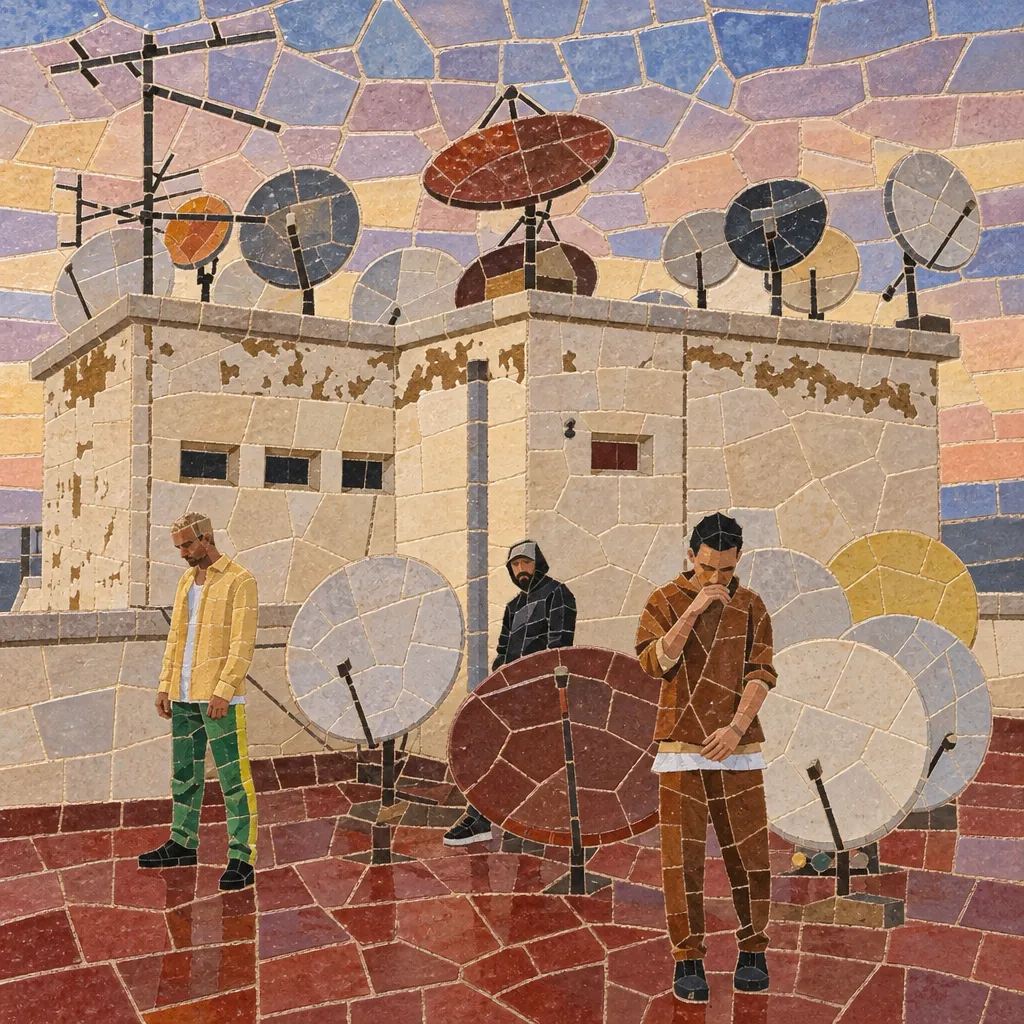
Erbil
Omar Souleyman عمر سليمان
Dabke
Levantine Arabic Music
2019
1
/5
Shlon
Omar Souleyman عمر سليمان
Dabke
Levantine Arabic Music
Arabic Pop
2017
2
/5
To Syria, With Love
Omar Souleyman عمر سليمان
Dabke
Levantine Arabic Music
Electronic
2015
1
/5
Bahdeni Nami
Omar Souleyman
Dabke
Levantine Arabic Music
Arabic Pop
2013
3
/5
Wenu Wenu
Omar Souleyman عمر سليمان
Dabke
Levantine Arabic Music
Similar artists
2
/5
Rizan Said
Dabke
Electronic
Levantine Arabic Music
3
/5
Acid Arab
Arab Groove
Electronic
Indian Indie
4
/5
Fairuz
Al-Jadīd
Mūsīqā Lubnāniyya
Dabke
2
/5
47SOUL
Arabic Hip Hop
Middle East Hip Hop
Palestinian Hip-Hop
4
/5
Skrillex
Dubstep
Electronic
Complextro
4
/5
AFROJACK
Dutch House
Electronic
Big Room House
4
/5
Björk
Art Pop
Icelandic Experimental
Electronic
3
/5
Majida El Roumi
Al-Jadīd
Arabic Pop
Levantine Arabic Music
2
/5
Natacha Atlas
Arabic Pop
Electronic
Downtempo
2
/5
Ammar 808
Arab Groove
Egyptian Music
Electronic
Download our mobile app
Get the Melodigging app and start digging for new genres on the go
Download on the App Store
Get it on Google Play
© 2026 Melodigging
Give feedback
Legal
Melodding was created as a tribute to
Every Noise at Once
, which inspired us to help curious minds keep digging into music's ever-evolving genres.