Your digging level

For this genre
0/8
🏆
Sign in, then listen to this genre to level up

Description

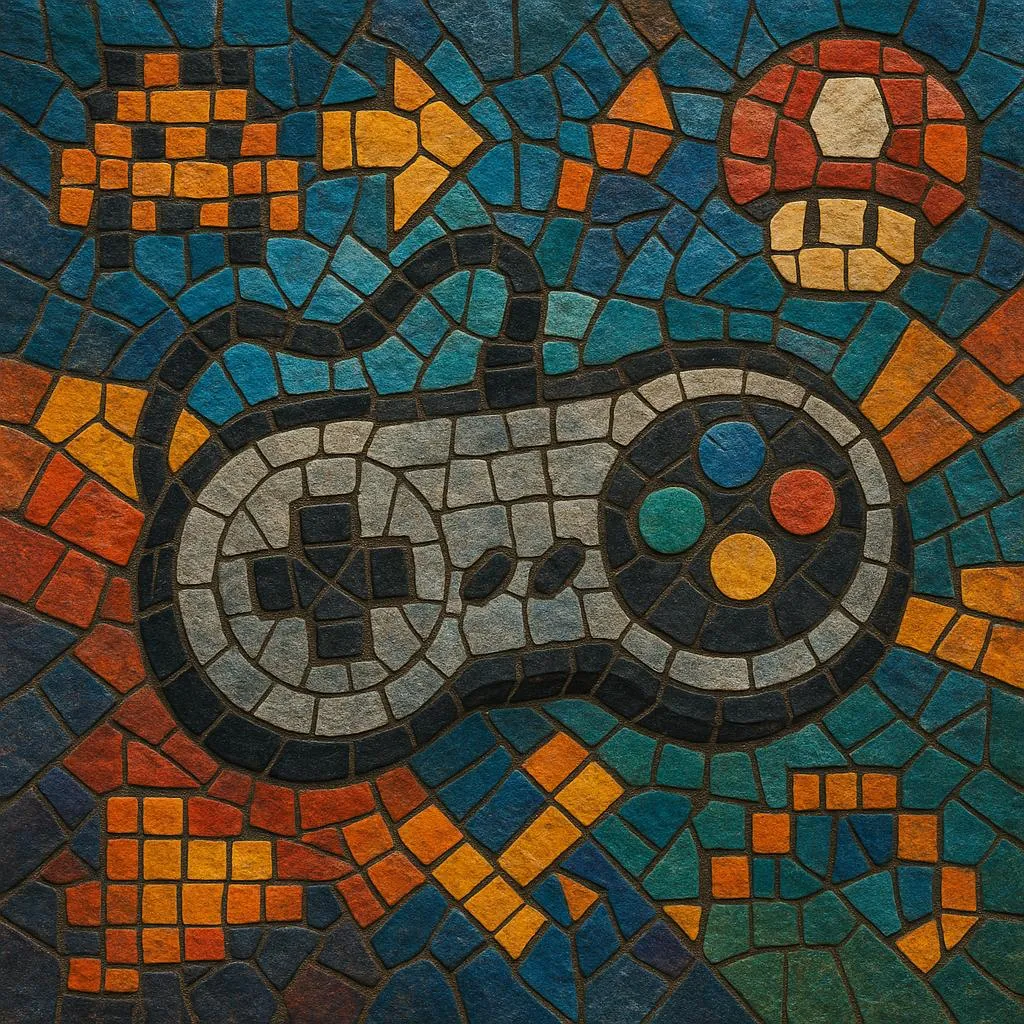
Gamecore is an internet-native electronic microgenre that fuses the timbres, melodies, and narrative tropes of classic and modern video game music with contemporary EDM songcraft.

Its palette leans heavily on chiptune waveforms (square, triangle, noise), retro console/arcade sound effects, and leitmotif-style hooks, but frames them within club-forward rhythms and sound design drawn from electro house, future bass, glitch hop, dubstep, and drum & bass. The result is a bright, kinetic, and often nostalgic sound that feels like a “boss battle” drop or a euphoric level clear.

Scenes and labels tied to VGM remix culture, doujin circles, and demoscene aesthetics helped codify the style, while streamers, esports content, and indie game culture amplified its reach.


Sources: Spotify, Wikipedia, Discogs, Rate Your Music, MusicBrainz, and other online sources

History

Early roots (2000s)

Gamecore’s seeds were planted in overlapping communities: demoscene coders/musicians, chiptune artists repurposing retro consoles, and VGM remix hubs that treated game scores as a living repertoire. These spaces normalized hybrid production—bitcrushed leads atop club beats—well before the term was widely used.

Emergence (2010s)

By the 2010s, a distinct, club-ready strain coalesced: producers began writing original tracks that sounded like fully produced “levels” or set-piece encounters, complete with melodic motifs, stingers, and SFX risers lifted from gaming lexicons. Labels and collectives centered on game-inspired releases, and YouTube/Twitch accelerated circulation via speedruns, esports montages, and creator music libraries.

Consolidation and crossover (late 2010s–2020s)

A feedback loop formed between indie games and producers: gamecore tracks influenced OSTs, while OST aesthetics fed festival and streaming playlists. The style diversified—some artists leaned toward future bass euphoria, others toward dubstep grit or DnB intensity—yet all kept the gamer-coded signifiers: arpeggiated chip leads, UI-style earcons, and victory-fanfare cadences.

Today

Gamecore occupies a stable niche in online dance/electronic culture. It is a production vocabulary as much as a genre label: a way to write drops and hooks that evoke level design, boss phases, or power‑up arcs, resonating with audiences raised on consoles, handhelds, and PC gaming.


How to make a track in this genre

Sound palette
•   Start with retro core tones: square/triangle leads, noise snares/risers, and short PCM one‑shots reminiscent of 8/16‑bit consoles. •   Layer modern synths (supersaw, FM plucks, bass growls) beneath chip leads to give width and low‑end authority. •   Use in‑world SFX as musical materials: coin/collect/power‑up stingers as fills; UI earcons as call‑and‑response.
Harmony & melody
•   Write catchy, motif‑driven leads (think level themes). Use sequence, inversion, and “phase changes” to mirror boss stages. •   Favor bright keys (C, G, D, A) and modal mixture (♭VI–♭VII–I) for heroic cadences. Borrow game‑score tropes like Lydian lifts and chromatic approach notes for “power‑up” moments. •   Arpeggiations and octave‑doubled chip leads sell the retro feel; counter‑melodies can enter like “party members.”
Rhythm & form
•   Common BPM zones: 100–110 (glitch hop), 124–130 (electro/house), 140 (dubstep halftime), 160–175 (D&B). •   Arrange like a game encounter: Intro (spawn), Build (phase 1), Drop (phase 2), Break (safe room), Second Build (enraged), Final Drop (clear), Outro (results screen). •   Use rhythmic “hitboxes”: syncopated fills, gated noise bursts, or tom runs that feel like dodge/attack cues.
Production techniques
•   Sidechain chip leads and pads to a modern kick for club translation; keep chip transients snappy (1–10 ms attacks). •   Tasteful bitcrushing/downsampling on select buses evokes retro without fatiguing the ear; parallel a clean bus for clarity. •   Design risers from pitch‑bent squares, noise sweeps, and sampled UI beeps; automate filter/bit‑depth to simulate 8‑bit “overclock.” •   Master for streaming/platforms used by gamers (YouTube/Twitch): controlled low‑end, midrange forward leads, and loudness‑aware dynamics.
Performance & context
•   Build DJ edits with clean loop points and “checkpoint” markers for streamers. •   Consider stems/instrumentals for creators; loopable sections can double as gameplay beds.

Top tracks

Locked
Share your favorite track to unlock other users’ top tracks
Influenced by
Has influenced
Challenges
Digger Battle
Let's see who can find the best track in this genre

Download our mobile app

Get the Melodigging app and start digging for new genres on the go
© 2026 Melodigging
Melodding was created as a tribute to Every Noise at Once, which inspired us to help curious minds keep digging into music's ever-evolving genres.
Buy me a coffee for Melodigging