Your digging level
Description
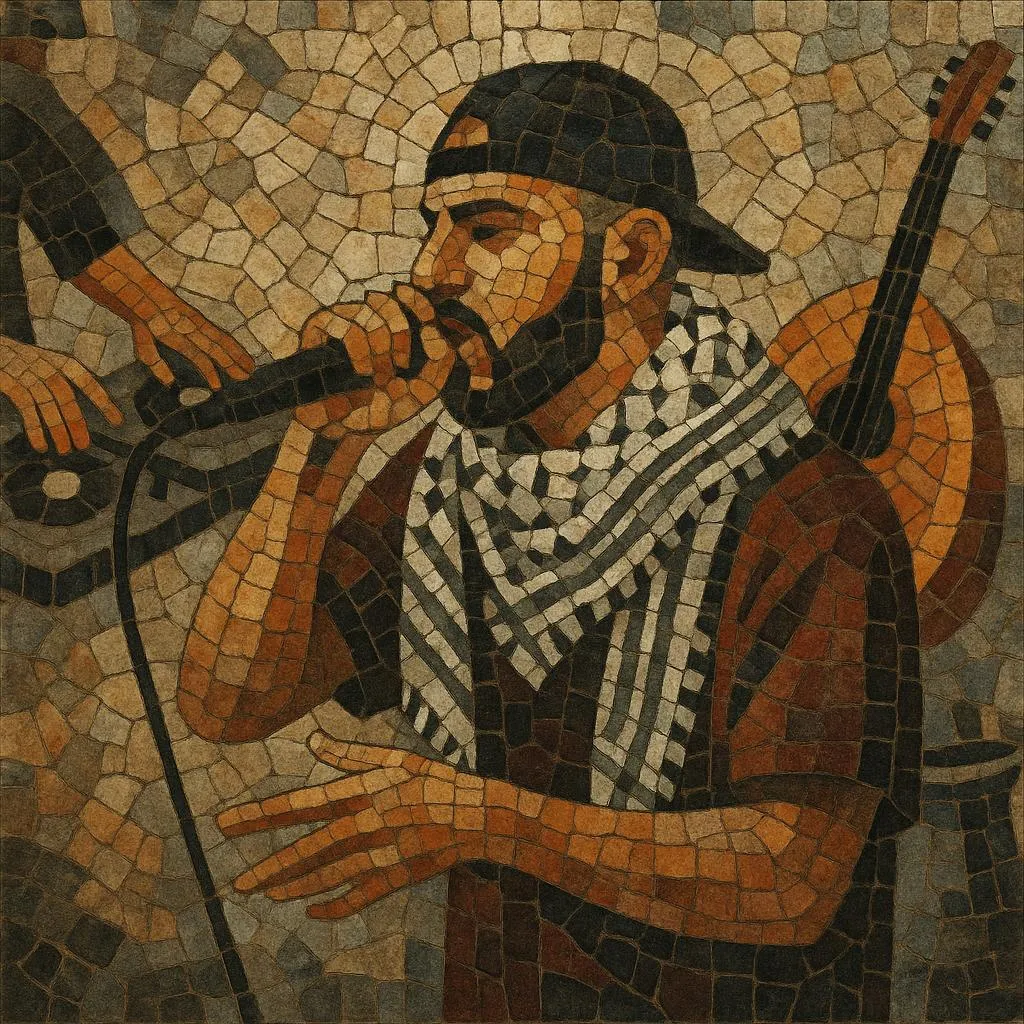
Palestinian hip‑hop is a rap movement that took shape in the late 1990s—often traced to 1998 with DAM—combining the core elements of hip‑hop (MCing, DJing, sampling, beatmaking) with Arabic melodic motifs and Levantine rhythmic feels. Artists frequently blend boom‑bap and trap frameworks with samples or references to maqam-based melodies, dabke percussion patterns, and timbres from instruments such as oud, qanun, and darbuka.
Lyrically, it is multilingual and code-switching: verses are commonly in Palestinian colloquial Arabic, with strategic use of Hebrew and English, and occasionally French. Themes center on identity, social critique, daily life under occupation, diaspora realities, class and gender, and cultural pride—balancing blunt political commentary with storytelling and satire. The scene spans the West Bank and Gaza, Palestinian communities within Israel, and a broad diaspora in the UK, US, and Canada, yielding a spectrum of aesthetics from gritty underground to highly polished studio productions.


History
Palestinian hip‑hop emerged in the late 1990s, with 1998 widely cited as a landmark year thanks to DAM (founded by Tamer Nafar, Suhell Nafar, and Mahmood Jrere). Early tracks adopted US hip‑hop’s rhythmic phrasing and sampling mentality, while placing Arabic language and Levantine melodic cues at the forefront. From the outset, the music’s identity was tied to social realities and multilingual expression—Arabic at its core, but also Hebrew and English to reach diverse local and international audiences.
Through the 2000s, crews such as Ramallah Underground (including Boikutt and Stormtrap Asifeh) helped consolidate an independent, experimental current that integrated Arabic musical materials with underground beatcraft. Diaspora artists—most prominently in the UK and North America—amplified Palestinian narratives on international stages. Live shows in Haifa, Ramallah, and Amman, as well as DIY studio setups, forged a cross-border network of producers, MCs, and videographers.
Streaming platforms and social media lowered barriers to production and distribution. A new wave of collectives and indie labels catalyzed distinctive aesthetics—ranging from atmospheric, sample-heavy beats to hard-edged drill/trap hybrids with Levantine rhythmic accents. Increasingly, artists mixed spoken-word cadences with tightly swung flows, while visuals and video art became central to the scene’s storytelling.
In the 2020s, Palestinian hip‑hop reached wider global audiences through festivals, editorial playlists, and transnational collaborations. The sound ranges from raw, minimal drum programming to lush, cinematic arrangements; from urgent protest pieces to reflective, diaristic rap. Despite stylistic diversity, the music’s through-lines remain: code-switching lyricism, Arabic/Levantine musical imprint, and an insistence on lived experience as the narrative engine.