Genres
Make Music
Artists
Albums
Challenges
Sign in
Sign in
Albums
By Wu-Tang Clan
Albums
By Wu-Tang Clan
Enter the Wu-Tang (36 Chambers)
November 9, 1993
Listen
4
/5
Genres
Tech-Noir
Tech-noir is a musical subgenre and aesthetic within the synthwave and darksynth scenes, characterized by a dark, cinematic, and dystopian atmosphere. It draws heavy inspiration from 1980s science fiction and neo-noir films, blending retro-futuristic synthesizer melodies with driving basslines and industrial elements. The music often incorporates narrative storytelling, spoken word samples, and soundscapes that evoke a sense of urban decay, high-tech menace, and cynical romance.
Discover
Listen
Animutation
Animutation is a surreal, collage-style form of short-form animation that emerged in the early 2000s on the web. Pieces typically juxtapose cut‑out photos of celebrities, public figures, and random objects with frenetic lip‑syncing and rapid, non‑sequitur edits. Most classics were authored in Adobe Flash (now Animate), embracing a deliberately crude, low‑resolution aesthetic: jagged edges, mismatched tweening, garish color clashes, and pop‑up gags layered over hyperactive foreign pop, dance, or novelty tracks. The result is a proto‑meme audio‑visual collage—equal parts absurdist humor, culture‑jamming, and internet folk art.
Discover
Listen
Magical Realism
Magical realism (in music) is an aesthetic where everyday, grounded songwriting is interwoven with subtly wondrous or uncanny sonic details. The fantastical is presented as ordinary: field‑recorded sounds feel like characters, folklore instruments sit next to synths, and surreal lyrics are narrated in a matter‑of‑fact voice. Rather than aiming for pure fantasy or psychedelia, the style keeps one foot in reality—acoustic timbres, intimate vocals, and story‑like verses—while the other foot introduces inexplicable textures, mythic motifs, or dream logic. The effect mirrors literary magical realism: magical elements are blended seamlessly with a realistic atmosphere to reveal a deeper sense of reality, culture, memory, and place.
Discover
Listen
Bullet Hell
Bullet hell (danmaku) refers to a subgenre of shoot ’em up video games defined by screen‑filling patterns of enemy projectiles that demand precise movement and pattern recognition. In music tagging and discourse, “bullet hell” commonly denotes the high‑energy soundtrack aesthetic associated with these games. Musically, bullet hell soundtracks emphasize very fast tempos, assertive and memorable melodies, bright synth leads, driving ostinatos, and dense but readable arrangements that sustain focus under extreme visual pressure. They mix arcade and PC‑98/console timbres (FM, PSG, and early PCM) with later trance, J‑core, and drum & bass production, yielding music that is simultaneously melodic, urgent, and loop‑friendly for stage and boss encounters.
Discover
Listen
Harem
Harem is primarily an anime/manga narrative genre in which multiple girls develop romantic interest in the same male lead (and, in gender-flipped “reverse harem,” multiple boys gather around a female lead). In music discourse, “harem” most often refers to the sound world that accompanies harem anime: bright, hook-driven J‑pop/J‑rock opening themes, tender or wistful ending ballads, and character songs performed by voice actors (seiyu). These tracks emphasize youthful infatuation, comedic misunderstandings, and ensemble chemistry, using glossy pop production, catchy refrains, and sometimes choral “group of friends” textures to mirror the multi‑love‑interest setup. Thus, while harem itself is a story genre, it has a recognizable musical profile within the broader sphere of Japanese anime music (anisong).
Discover
Listen
Hardcore Hip Hop
Hardcore hip hop is a confrontational, uncompromising strain of rap defined by aggressive vocal delivery, hard-hitting drum programming, and stark, sample-driven production. It prioritizes intensity over gloss, often minimizing melody in favor of dense drum breaks, sirens, noise textures, and dissonant stabs. Lyrically, it spans street reportage, social realism, political critique, and battle-ready braggadocio. The aesthetic foregrounds rawness—distorted drums, clipped samples, shouted hooks, and posse energy—while drawing deeply from funk and soul breakbeats, DJ techniques, and the boom-bap tradition.
Discover
Listen
Found Footage Horror
Found footage horror is a horror subgenre built around the conceit that what the audience is seeing (and hearing) was recorded by the characters themselves on consumer equipment. Musically, this yields a distinctive "anti-score": long stretches of room tone, mic clipping, tape hiss, HVAC hums, and environmental noises replace traditional cues. When non‑diegetic music appears at all, it is sparse—often low drones, sub‑bass rumbles, metallic scrapes, or degraded cassette/VHS textures that feel like artifacts inside the fiction rather than an external soundtrack. Because the camera is usually handheld and the audio is captured "on the mic," the sonic language overlaps with dark ambient and electroacoustic practice: reality-based sound, abrupt dynamic jumps, silence-as-tension, and found sounds processed into dread. Iconic examples (from Cannibal Holocaust to The Blair Witch Project, Paranormal Activity, REC, Cloverfield, and Host) codified a palette where sound design carries the horror as much as music does.
Discover
Listen
Boom Bap
Boom bap is a foundational East Coast hip hop style defined by hard, punchy drums—“boom” for the kick and “bap” for the snare—laid under sample-based loops from jazz, soul, and funk records. It typically runs around 85–96 BPM, favors gritty, minimally processed textures (often associated with SP‑1200 and early Akai MPC samplers), and foregrounds lyrical skill: multisyllabic rhyme schemes, internal rhymes, storytelling, street reportage, and battle bars. DJ techniques such as scratching and cut‑choruses are common, and arrangements emphasize head‑nod grooves, sparse basslines, and tight bar structures that give MCs room to “sit in the pocket.”
Discover
Listen
Hip Hop
Hip hop is a cultural and musical movement that emerged from Black, Latino, and Caribbean communities, centering around rapping (MCing), DJing/turntablism, sampling-based production, and rhythmic speech over beats. It prioritizes groove, wordplay, and storytelling, often reflecting the social realities of urban life. Musically, hip hop is built on drum-centric rhythms (from breakbeats to 808 patterns), looped samples, and bass-forward mixes. Lyrically, it ranges from party anthems and braggadocio to political commentary and intricate poetic forms, with flow, cadence, and rhyme density as core expressive tools. Beyond music, hip hop encompasses a broader culture, historically intertwined with graffiti, b-boying/b-girling (breakdance), fashion, and street entrepreneurship, making it both an art form and a global social language.
Discover
Listen
Old School Hip Hop
Old school hip hop is the earliest commercially recorded form of hip hop and the original template for the culture’s recorded sound. The term generally refers to music made from the early Bronx party era of 1973 through roughly 1983, before the harder, more sample‑dense “new school” sound took hold. Musically, it centers on extended breakbeats drawn from funk and disco records, live turntable techniques (cutting, backspinning, and early scratching), simple but infectious drum programming (often with the TR‑808), and crowd‑engaging MC routines. Rapping tends to feature clear enunciation, party chants, call‑and‑response, braggadocio, and narrative vignettes, delivered over steady 4/4 grooves in the 95–112 BPM range. Culturally, old school hip hop grew out of DJ‑led block parties, b‑boy/b‑girl dance breaks, and the Jamaican sound‑system tradition, and it codified the core pillars of the hip hop ethos: DJing, MCing, breaking, and graffiti.
Discover
Listen
East Coast Hip Hop
East Coast hip hop is a regional style of hip hop that emerged in New York City and the surrounding Northeastern United States. It is characterized by complex lyricism, dense rhyme schemes, gritty urban storytelling, and sample-heavy production that draws from funk, soul, and jazz records. Rhythmically, the sound is often associated with "boom-bap" drum patterns—hard-hitting kicks and crisp snares at moderate tempos—alongside chopped breakbeats, basslines, and DJ techniques such as scratching. The approach places the MC’s voice, cadence, and wordplay at the center, while the producer crafts a textured, crate-dug backdrop. Culturally, East Coast hip hop foregrounds authenticity, social commentary, and competitive MCing, while its crews and collectives (from Juice Crew to Native Tongues and Wu-Tang Clan) helped define hip hop’s golden age and set standards for lyrical excellence and sample-based beatmaking.
Discover
Listen
Scenes & Movements
“Scenes & movements” is not a single musical style but a meta‑category used by historians, critics, and discographers to group releases and artists that cohere around a place, community, manifesto, press‑coined wave, or shared infrastructure (venues, labels, fanzines, studios, aesthetics). Examples include geographically rooted clusters (Merseybeat in Liverpool, CBGB punk in New York, Madchester in Manchester), ideational collectives (Rock in Opposition across the UK/Europe), press‑named waves (No Wave, C86), and label‑centric families (Elephant 6 in the U.S.). These scenes frequently develop recognizable sonic traits, visual codes, and production practices—yet what binds them first is social ecology and self‑identification rather than a strict set of musical parameters.
Discover
Listen
Halloween Music
Halloween music is a cross-genre repertoire defined less by a single stylistic syntax and more by its association with the secular holiday of Halloween and its themes of horror, the uncanny, and the supernatural. It spans novelty hit singles, haunted-house sound‑effects albums, spooky children’s songs, horror-film cues, and goth/industrial and dark electronic tracks that surge in popularity every October. Common sonic markers include minor keys, tritones and diminished harmony, pipe or theater organs, eerie strings, theremin- or synth-like glides, creaks, howls, and thunderclaps. Lyrically and iconographically it references monsters, ghosts, witches, vampires, skeletons, and trick‑or‑treat imagery. Because it is tied to a season and a cultural ritual, Halloween music functions as a flexible umbrella that can encompass vintage novelty rock (e.g., Monster Mash), cinematic horror scores, and danceable pop suitable for parties, provided it evokes a spooky, playful, or theatrically macabre mood.
Discover
Listen
Ink-Wash Animation
Ink-wash animation (as a music-tagged genre) refers to the soundtrack and scoring approach associated with Chinese ink-wash (shuimo) animated films. It aims to translate the aesthetics of traditional Chinese ink painting into sound: sparse, brush-like gestures; large amounts of “negative space” (silence); and timbres drawn from Chinese classical and folk instruments. Rather than Western cartoon scoring with constant mickey-mousing, ink-wash animation music typically supports atmosphere, poetic pacing, and visual breath, often leaning toward guqin- and dizi-centered chamber textures.
Discover
Listen
Mahō Shōjo
Mahō shōjo ("magical girl") is a Japanese media genre whose stories center on a girl or group of girls who gain magical powers, often through a pact or contract with a supernatural being, and use those powers to balance everyday life with heroic responsibility. Musically, the genre’s sound world is defined by bright, hook‑forward anison (anime song) aesthetics, idol‑style pop choruses, and transformation themes that blend orchestral sparkle (strings, brass, chimes, glockenspiel) with synths and rock rhythm sections. Openers and endings are typically high‑energy J‑pop tailored for dance routines and call‑and‑response, while background scores alternate between whimsical slice‑of‑life cues and triumphant, leitmotivic battle music. Darker deconstructions of the genre (e.g., psychological or tragic storylines) shift toward minor modes, choral textures, and dramatic harmony while retaining recognizably “magical girl” thematic signifiers.
Discover
Listen
Paint-On-Glass Animation
Paint-on-glass animation is a frame-by-frame animation technique in which an artist manipulates wet media (typically oil paint, gouache, or acrylics kept workable with additives) directly on panes of glass placed under a camera. Each incremental change is photographed, creating fluid, painterly motion when played back. Because the artwork is reworked continuously on the same surface (often on multiple layers of glass for depth), the results feature dissolving shapes, smudged transitions, and rich color blending that are difficult to achieve with cels or digital tools. The method is slow and highly artisanal, but prized for its dreamlike, impressionistic look.
Discover
Listen
Parody Music
Parody music is a humorous or satirical approach to music in which an existing song, composer’s voice, or recognizable style is deliberately imitated, altered, or lyrically re-written to make its traits appear exaggerated, ridiculous, or newly meaningful. Unlike simple covers, parody pieces transform musical and/or lyrical content to comment on the original work, current events, or pop culture. Parody can target specific songs, an artist’s broader stylistic fingerprints, or an entire genre’s conventions—often walking a line between affectionate homage and pointed satire.
Discover
Listen
Psychological Horror
Psychological horror (as a music/style of scoring) uses sound to destabilize the listener’s sense of safety and to suggest inner turmoil rather than external, monster-on-screen threat. Instead of relying on loud "stingers" alone, it leans on ambiguity, silence, uneasy timbres, and subtly shifting textures to evoke dread, paranoia, and obsession. Common devices include lullabies made uncanny, breath-like drones, dissonant clusters, and noises that blur the line between diegetic sound and score. Classic examples range from Krzysztof Komeda’s nursery‑rhyme theme for Rosemary’s Baby—sweet on the surface, sinister in context—to game scores that weaponize quiet, space, and industrial ambience to mirror characters’ fractured psyches.
Discover
Listen
Supernatural Horror
Supernatural horror (as a musical style) is the sound-world crafted to evoke the occult, ghosts, possession, mythic beasts, and uncanny entities from folklore. It blends orchestral tension, choral ritualism, experimental timbres, and sound design to suggest forces beyond human comprehension. Expect atonal clusters, whispering choirs, pipe organ or harmonium, bowed metals, infrasound, eerie drones, and sudden dynamic shocks. The goal is to conjure dread and numinous awe—sonically staging hauntings, curses, exorcisms, and encounters with the Other.
Discover
Listen
Kalanta
Kalanta (κάλαντα) are Greek carols traditionally sung on the eves of Christmas, New Year, and Epiphany. The repertoire comprises distinct songs for each feast: Nativity kalanta celebrate Christ’s birth, New Year’s kalanta invoke St. Basil, and Epiphany kalanta recount the Baptism of Christ. Etymologically, the term derives from the Latin calendae (first day of the month), reflecting pre‑Christian calendrical customs that were later absorbed and reshaped during the Byzantine period. In practice, children (and sometimes youth choirs) go door‑to‑door, asking “να τα πούμε;” (“shall we sing them?”) and perform with light percussion—most famously a small metal triangle—sometimes joined by santouri, laouto, or regional folk instruments. Householders respond with treats or coins, a custom that has shifted from sweets to monetary gifts in recent decades. Kalanta exhibit rich regional variation (islands, mainland, and diaspora communities), but share a simple, processional melodic profile, memorable refrains, and lyrics offering blessings and prosperity to the household. Signature pieces include the Christmas "Καλήν εσπέραν, άρχοντες" and the New Year’s "Αρχιμηνιά κι Αρχιχρονιά."
Discover
Listen
Similar albums
1994
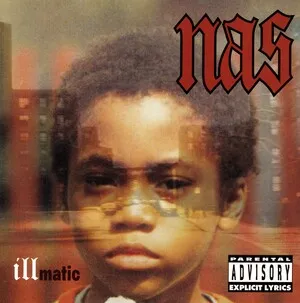
Illmatic
Nas
2012
The Money Store
Death Grips
2010
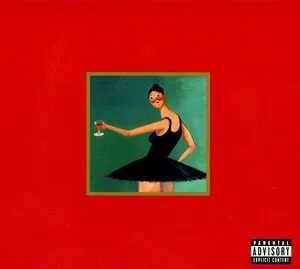
My Beautiful Dark Twisted Fantasy
Kanye West
2004
The College Dropout
Kanye West
2019
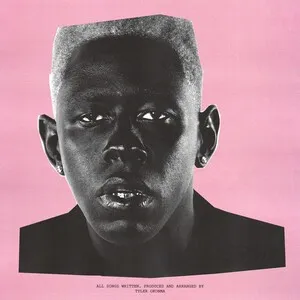
Igor
Tyler, The Creator
2012
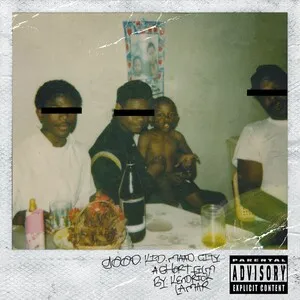
Good Kid, M.A.A.D City
Kendrick Lamar
1994
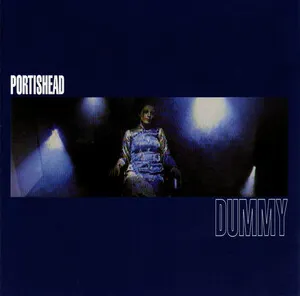
Dummy
Portishead
1991
Spiderland
Slint
1969
Abbey Road
The Beatles
2007
In Rainbows
Radiohead
Download our mobile app
Get the Melodigging app and start digging for new genres on the go
Download on the App Store
Get it on Google Play
© 2026 Melodigging
Give feedback
Legal
Melodding was created as a tribute to
Every Noise at Once
, which inspired us to help curious minds keep digging into music's ever-evolving genres.