Your digging level
Description
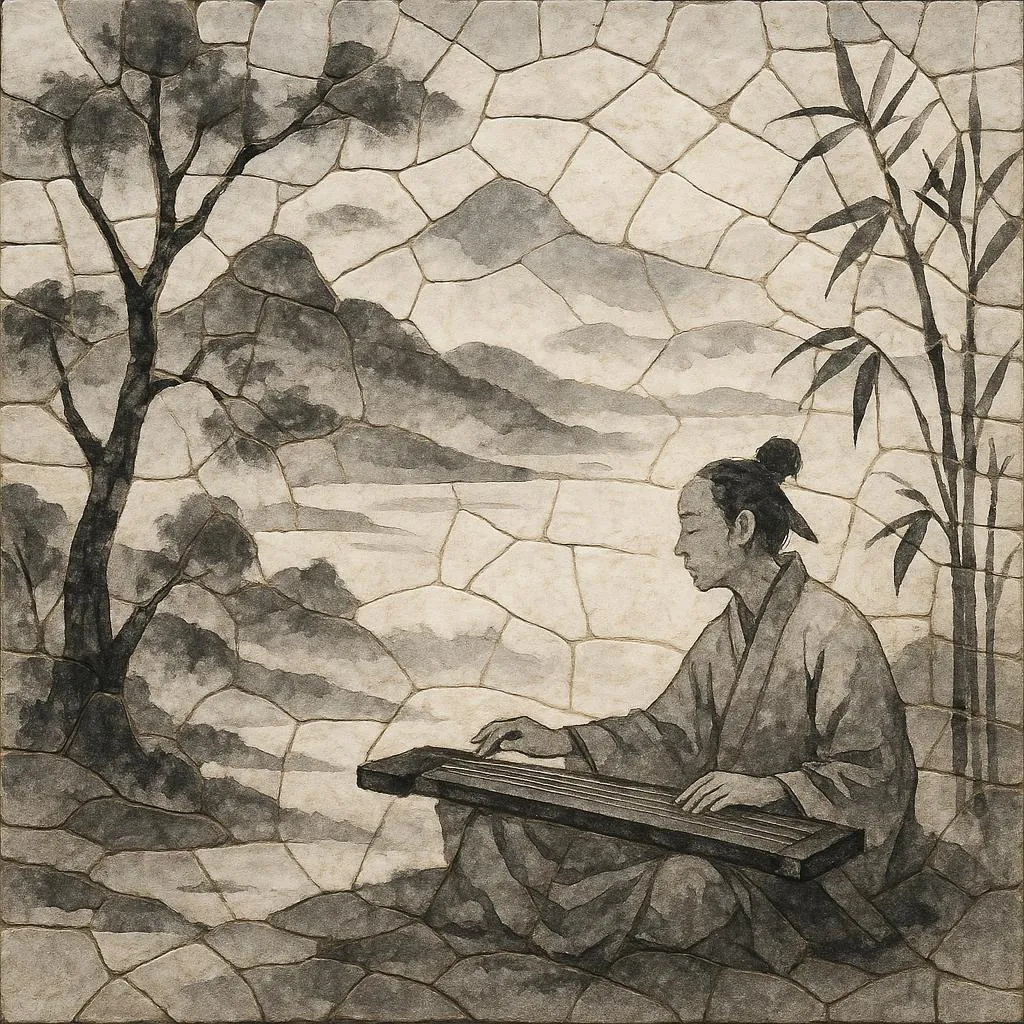
Ink-wash animation (as a music-tagged genre) refers to the soundtrack and scoring approach associated with Chinese ink-wash (shuimo) animated films.
It aims to translate the aesthetics of traditional Chinese ink painting into sound: sparse, brush-like gestures; large amounts of “negative space” (silence); and timbres drawn from Chinese classical and folk instruments.
Rather than Western cartoon scoring with constant mickey-mousing, ink-wash animation music typically supports atmosphere, poetic pacing, and visual breath, often leaning toward guqin- and dizi-centered chamber textures.
History
Chinese ink-wash animation emerged as a distinctive animation movement in the mid-20th century, closely associated with state studios and art-academy-trained animators.
The musical language developed in parallel with the visual goal: to evoke literati painting, classical poetry, and landscape contemplation. This pushed composers away from dense orchestration and toward Chinese chamber colors (guqin, xiao/dizi, pipa, erhu), flexible rubato, and carefully placed silence.
By the late 20th century, landmark ink-wash animations reinforced an internationally recognizable “Chinese poetic” scoring model—minimal, calligraphic, and timbrally traditional—later echoed in period film/TV soundtracks and “Chinese instrumental” library music used to signify elegance, nature, and introspection.