Your digging level

For this genre
0/8
🏆
Sign in, then listen to this genre to level up

Description

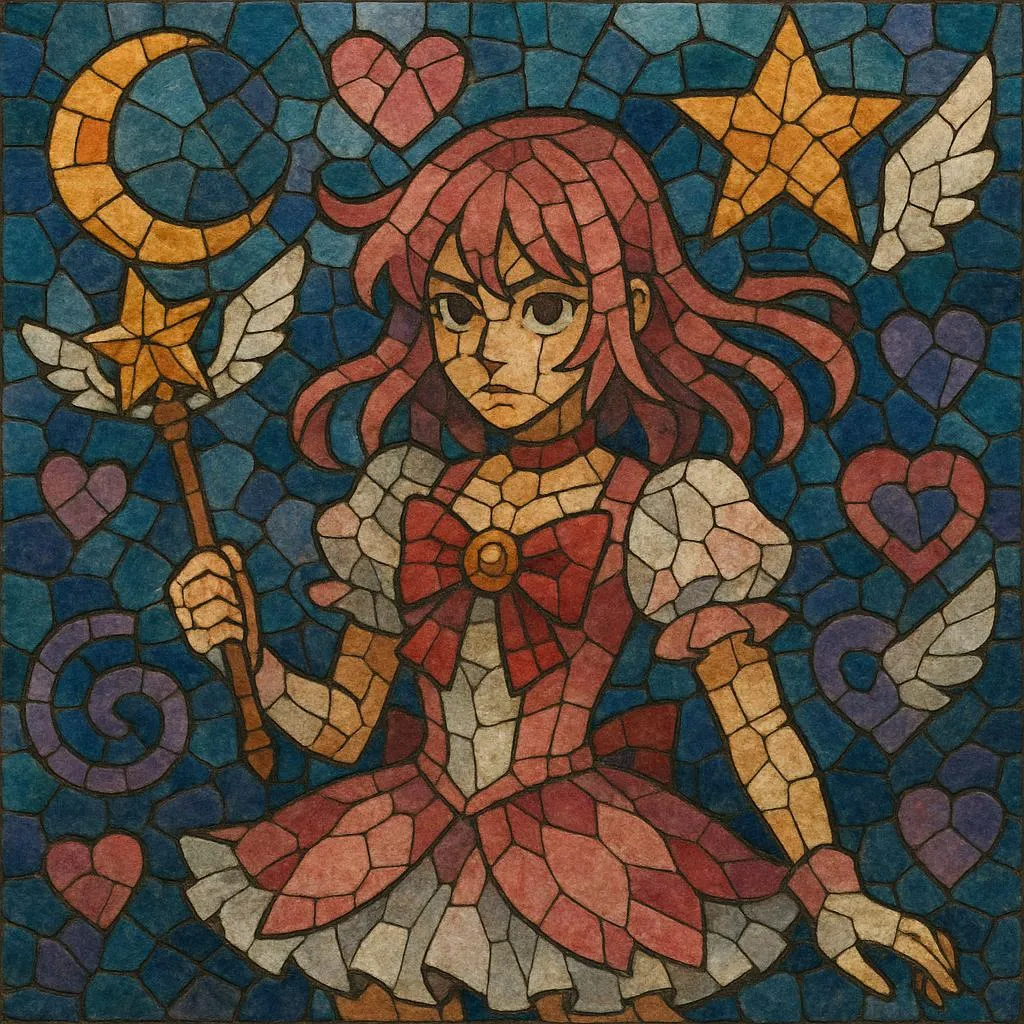
Mahō shōjo ("magical girl") is a Japanese media genre whose stories center on a girl or group of girls who gain magical powers, often through a pact or contract with a supernatural being, and use those powers to balance everyday life with heroic responsibility.

Musically, the genre’s sound world is defined by bright, hook‑forward anison (anime song) aesthetics, idol‑style pop choruses, and transformation themes that blend orchestral sparkle (strings, brass, chimes, glockenspiel) with synths and rock rhythm sections. Openers and endings are typically high‑energy J‑pop tailored for dance routines and call‑and‑response, while background scores alternate between whimsical slice‑of‑life cues and triumphant, leitmotivic battle music. Darker deconstructions of the genre (e.g., psychological or tragic storylines) shift toward minor modes, choral textures, and dramatic harmony while retaining recognizably “magical girl” thematic signifiers.

Sources: Spotify, Wikipedia, Discogs, RYM, MB, user feedback and other online sources

History

Origins (1960s–1970s)
•   The magical girl formula coalesced in 1960s shōjo manga and early TV anime; Toei’s Sally the Witch (1966) is widely cited as the first major animated template. Musically, these shows adopted contemporary Japanese children’s music and early J‑pop idioms for their themes, with light orchestral underscores.
Idol synergy and TV scoring (1980s)
•   Series like Magical Angel Creamy Mami (1983) fused the genre with Japan’s burgeoning idol culture: voice actresses performed in‑character songs, and soundtracks leaned into glossy, city‑pop‑tinged arrangements. Transformation cues crystallized around sparkling percussion, rising modulations, and signature leitmotifs.
Global boom (1990s)
•   Sailor Moon (1992) and Cardcaptor Sakura (1998) exported the format internationally. Composer Takanori Arisawa’s Sailor Moon scores balanced lighthearted cues with rousing battle themes; anison openers with instantly memorable hooks became the marketing spearhead. Sound production broadened to arena‑sized drums, rock guitars, and lush strings.
Franchise era and stylistic breadth (2000s)
•   The Pretty Cure franchise (from 2004) established an annual refresh pattern with new teams, themes, and songs, standardizing high‑BPM, danceable OPs/EDs while maintaining orchestral hero cues. Cross‑media musicals and live idol events deepened the feedback loop between character branding and pop songwriting.
Deconstruction and prestige scoring (2010s–present)
•   Puella Magi Madoka Magica (2011) reframed the genre with darker psychological tones; Yuki Kajiura’s choral/minor‑mode, modal harmonies and percussive ostinati signaled a parallel sound for tragic magical girl narratives. Streaming and global fandom normalized cover cultures (anime piano, rock/metal arrangements) and further tied mahō shōjo to VTuber/idol‑game ecosystems while preserving the genre’s core: empowering, motif‑driven music that marks transformation, friendship, and resolve.

How to make a track in this genre

Core ingredients
•   Tempo and groove: OP/ED songs often sit at 130–170 BPM with four‑on‑the‑floor or energetic backbeats. Verses may be lighter (half‑time feel) before launching into big, danceable choruses. •   Harmony and melody: Favor bright, singable melodies in major keys, with frequent pre‑chorus lift chords and key changes up a semitone or whole step for the final chorus. Common progressions: I–V–vi–IV, IV–V–I, vi–IV–I–V; for darker stories, shift to minor, modal mixture, and ostinati. •   Leitmotifs: Assign short, memorable motifs to each girl/team, to transformations, and to finishing moves. Reuse and re‑orchestrate them (music‑box → strings → full brass) to track character growth.
Instrumentation and arrangement
•   OP/ED (idol‑pop leaning): lead vocal(s) + stacked harmonies, bright synths, rhythm guitar, electric bass, punchy drums, tambourine/shaker, with ear‑candy (glockenspiel, chimes, risers). Add call‑and‑response hooks for live crowd participation. •   Transformation/battle cues: strings (violins in fast ostinati), brass stabs, timpani, cymbal swells, harp glissandi, celesta/glockenspiel for “sparkle,” layered with synth arps and side‑chained pads. For deconstructions, add choir (Latin or invented syllables), low percussion, and pedal‑point drones.
Lyrics and themes
•   Emphasize friendship, courage, hope, and balancing school life with heroism. Use empowering imperatives (“Let’s transform,” “Believe in our light”), magical imagery (stars, moonlight, hearts), and team slogans. Darker works juxtapose innocence with sacrifice or fate while retaining a core of resolve.
Production tips
•   Chorus first: write the chorus hook and design the arrangement around its lift (add octaves, countermelodies, and a late key change). •   Motif economy: keep motifs 4–6 notes long; make intervallic shapes easy to recognize across orchestrations. •   Sound design: layer twinkles (bell trees, chimes), noise risers, and reverse cymbals to telegraph transformation. Side‑chain pads subtly to keep vocals forward. •   Mix: bright, pop‑forward top end; tighten low end for danceability; push strings/choir during heroic moments without masking the lead motif.

Top tracks

Locked
Share your favorite track to unlock other users’ top tracks

Upcoming concerts

in this genre
Influenced by
Has influenced

Download our mobile app

Get the Melodigging app and start digging for new genres on the go
© 2026 Melodigging
Melodding was created as a tribute to Every Noise at Once, which inspired us to help curious minds keep digging into music's ever-evolving genres.
Buy me a coffee for Melodigging