Your digging level

For this genre
0/8
🏆
Sign in, then listen to this genre to level up

Description

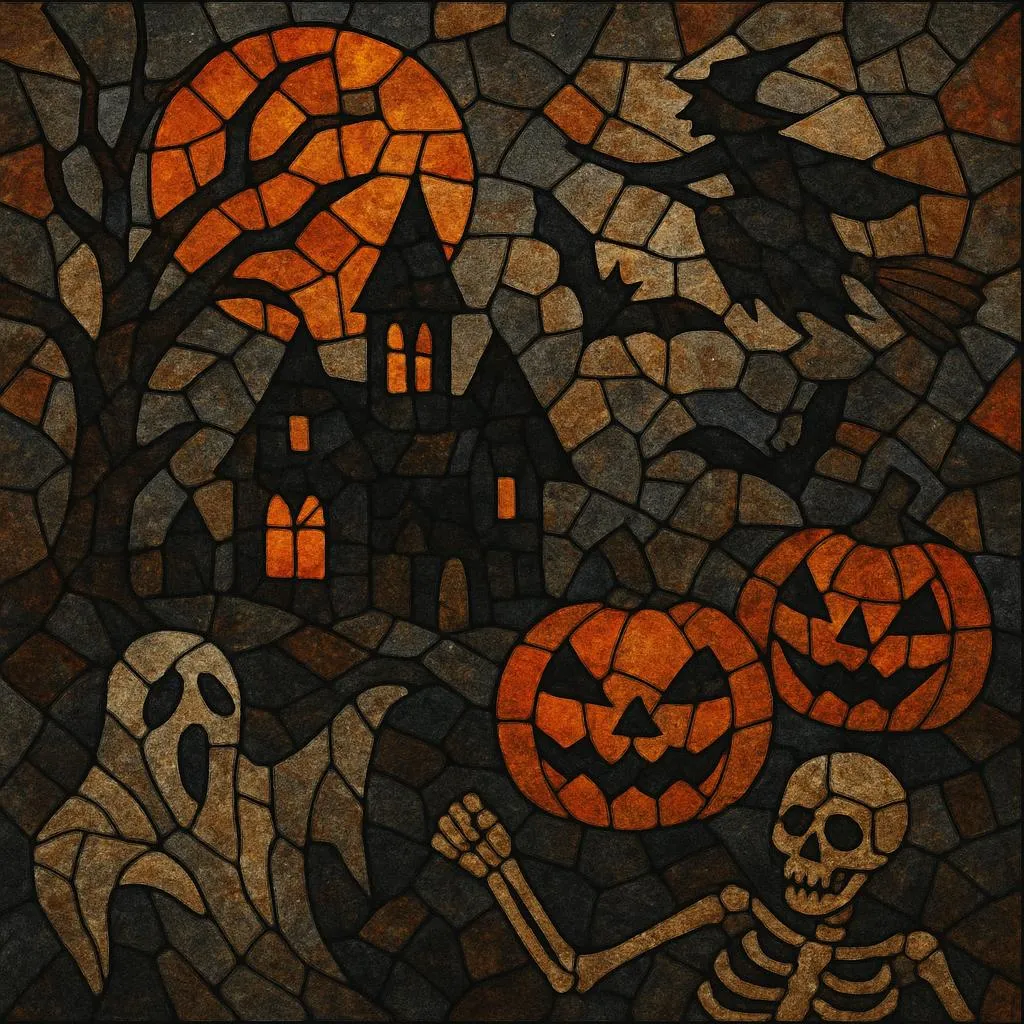
Halloween music is a cross-genre repertoire defined less by a single stylistic syntax and more by its association with the secular holiday of Halloween and its themes of horror, the uncanny, and the supernatural.

It spans novelty hit singles, haunted-house sound‑effects albums, spooky children’s songs, horror-film cues, and goth/industrial and dark electronic tracks that surge in popularity every October. Common sonic markers include minor keys, tritones and diminished harmony, pipe or theater organs, eerie strings, theremin- or synth-like glides, creaks, howls, and thunderclaps. Lyrically and iconographically it references monsters, ghosts, witches, vampires, skeletons, and trick‑or‑treat imagery.

Because it is tied to a season and a cultural ritual, Halloween music functions as a flexible umbrella that can encompass vintage novelty rock (e.g., Monster Mash), cinematic horror scores, and danceable pop suitable for parties, provided it evokes a spooky, playful, or theatrically macabre mood.

Sources: Spotify, Wikipedia, Discogs, Rate Your Music, MusicBrainz, and other online sources

History

Early roots (1930s–1950s)
•   The spooky soundworld of Halloween music grows from early horror-film scoring (e.g., Universal and Hammer Studios), silent-era/theater-organ traditions, and novelty songs that toyed with macabre humor. These introduced tropes such as ominous pedal points, tremolo strings, theremin glissandi, and gothic pipe organ timbres.
Popular codification (1960s)
•   In 1962 Bobby “Boris” Pickett’s Monster Mash became a novelty-rock template, cementing playful horror pastiche as party-friendly “Halloween music.” The decade also saw a market for haunted-house sound-effects LPs—creaks, chains, storms—designed for home decorating and parties.
Cinematic and pop expansion (1970s–1980s)
•   John Carpenter’s minimalist synth score for Halloween (1978) redefined the eerie, pulsing horror theme. In parallel, theatrical rock and pop—Alice Cooper’s shock-rock persona, Oingo Boingo’s Dead Man’s Party—fed the holiday’s campy macabre. Michael Jackson’s Thriller (1982/83) and Ray Parker Jr.’s Ghostbusters (1984) gave Halloween music blockbuster anthems.
Cross-pollination and catalog building (1990s–2000s)
•   Goth, industrial, horror punk, and darkwave scenes provided darker seasonal staples while children’s media generated PG-friendly catalogues for classrooms and family events. Film composers like Danny Elfman mainstreamed gothic orchestrations with playful menace.
Streaming era and viral revival (2010s–present)
•   Curated playlists turned Halloween into a programmable season across pop, rock, score, and kids’ tracks. Andrew Gold’s Spooky Scary Skeletons (1996) resurged via memes/TikTok. The genre now functions as a cultural container for anything evoking spooky-party, campy-horror, or atmospherically haunted vibes every October.

How to make a track in this genre

Core musical language
•   Harmony & melody: Favor natural minor (Aeolian), harmonic minor for sharpened leading tones, and the Phrygian flavor for immediate menace. Use diminished chords, chromatic neighbor tones, and the tritone to suggest instability. Leitmotifs—short, catchy cells—work well for party songs and cue-like themes. •   Rhythm & tempo: Two typical zones—(1) danceable 110–130 BPM for party tracks; (2) stalking/cinematic 60–90 BPM with ostinati. Occasional 3/4 or 6/8 waltz can evoke a haunted ballroom.
Instrumentation & sound design
•   Iconic timbres: Pipe or theater organ, tremolo/col legno strings, pizzicato bass, theremin or portamento synths, low brass stabs, tubular bells, celesta, and harpsichord. •   Foley and ambience: Thunder, wind, creaky doors, wolves, chains, whispers, and distant bells. Layer these subtly so they support rather than clutter. •   Production: Use roomy reverbs (cathedral/large hall), slapback on vocals for retro novelty, tape or analog-emulation saturation for vintage grit, and sidechain/duck effects to keep SFX from masking the groove.
Lyrics & imagery
•   Themes: Monsters (vampires, werewolves), witches, ghosts, potions/spells, pumpkins and trick-or-treating. Balance playful camp with eerie adjectives; alliteration and rhyme help make hooks memorable. •   Tone targeting: For kids, keep language bright and outcomes safe; for adults, lean into campy humor or cinematic dread.
Arrangement approaches
•   Pop/rock novelty: Verse–chorus with a strong, chantable hook; call-and-response gang vocals; parallel minor/major flips for cheeky surprise. •   Cinematic/orchestral: Ostinato-driven strings, low drones, sparse percussion (timpani, bass drum), and a high-register color (celesta/theremin). Build tension via dynamics and motivic development. •   Electronic/dance: Minor-key bassline, detuned pads, filtered noise swells, and a catchy top-line lead. Drop can feature organ stabs or retro horror synth.
Practical tips
•   Establish the mood in the first 5 seconds (a howl, organ hit, or eerie gliss). •   Reserve your most distinctive sound (e.g., theremin line or bell motif) for the hook. •   Test at low volume: the vibe should still read as spooky even when quiet. •   Create radio/playlist cuts (2:30–3:30) and extended mixes for parties.

Top tracks

Locked
Share your favorite track to unlock other users’ top tracks
Influenced by
Has influenced
Challenges
Digger Battle
Let's see who can find the best track in this genre

Download our mobile app

Get the Melodigging app and start digging for new genres on the go
© 2026 Melodigging
Melodding was created as a tribute to Every Noise at Once, which inspired us to help curious minds keep digging into music's ever-evolving genres.
Buy me a coffee for Melodigging