Genres
Artists
Albums
Make Music
Sign in
Sign in
Artists
Classical
Artists
Classical
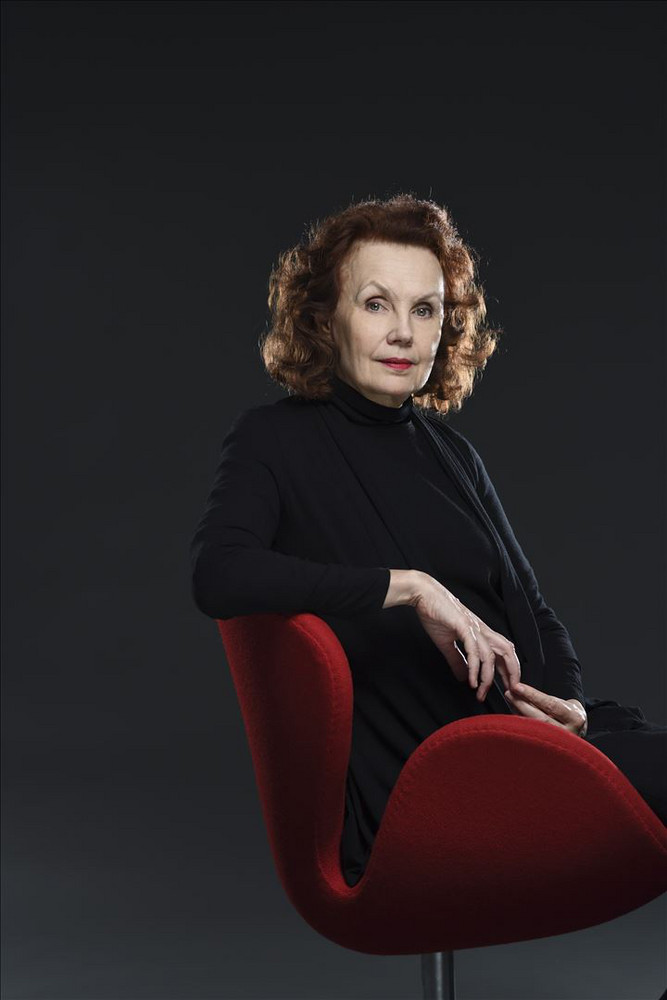
Kaija Saariaho
1997–2015
·
5 albums
Listen
1
/5
Genres
Spectralism
Spectralism is a movement in contemporary classical music that treats timbre and the acoustic spectrum as primary compositional materials. Rather than building music from abstract pitch-class sets or functional harmony, spectral composers derive harmonies, orchestrations, and formal processes from the real-world spectra of sounds. Using tools such as Fourier analysis, they decompose a sound into its partials and then re-synthesize or orchestrate those partials across instruments, often employing microtonality, extended techniques, and slow, morphing processes. The result is music where color, resonance, and perceptual phenomena shape structure as much as melody or rhythm.
Discover
Listen
Experimental
Experimental music is an umbrella term for practices that prioritize exploration, process, and discovery over adherence to established genre norms. It embraces new sound sources, nonstandard tuning systems, indeterminacy and chance operations, graphic and open-form scores, extended techniques, and technology-led sound design (tape, electronics, computers, and live processing). Rather than a single style, it is a methodology and ethos: testing hypotheses about sound, structure, and performance, often blurring boundaries between composition, improvisation, sound art, and performance art. Listeners can expect unfamiliar timbres, unusual forms, and an emphasis on how music is made as much as the resulting sound.
Discover
Listen
Serialism
Serialism is a compositional method in which musical parameters are organized into ordered series that govern a work’s structure. Most famously, twelve‑tone serialism uses an ordered row of the 12 pitch classes, deploying transformations such as prime, inversion, retrograde, and retrograde inversion to avoid traditional tonal hierarchy. While Schoenberg’s twelve‑tone technique focuses on pitch, post‑war composers expanded the idea to "total" or "integral" serialism, applying series to rhythm, dynamics, articulation, timbre, and register. The results often emphasize clarity of event over tonal center, pointillistic textures, and rigorous formal control. Aesthetic outcomes range from Berg’s expressive lyricism to Webern’s ultra‑condensed, crystalline writing, and later to the highly systematized post‑war European avant‑garde. Serialism remains a cornerstone of 20th‑century modernist practice, whether embraced, extended, or reacted against by subsequent movements.
Discover
Listen
Electronic
Electronic is a broad umbrella genre defined by the primary use of electronically generated or electronically processed sound. It encompasses music made with synthesizers, drum machines, samplers, computers, and studio/tape techniques, as well as electroacoustic manipulation of recorded or synthetic sources. The genre ranges from academic and experimental traditions to popular and dance-oriented forms. While its sonic palette is rooted in electricity and circuitry, its aesthetics span minimal and textural explorations, structured song forms, and beat-driven club permutations. Electronic emphasizes sound design, timbre, and studio-as-instrument practices as much as melody and harmony.
Discover
Listen
Monodrama
Monodrama is a staged musical work centered on a single character whose thoughts, memories, or actions unfold in real time. It typically features one singer (or sometimes a speaking actor) accompanied by orchestra, chamber ensemble, or piano, turning the solitary voice into the sole onstage protagonist. While it shares DNA with opera, cantata, and melodrama, monodrama narrows the dramatic lens to an intimate psychological drama. The music is often through-composed, allowing uninterrupted narrative flow, and the orchestra frequently functions as an "invisible second character," projecting scenery, memory, and subtext through color and motif.
Discover
Listen
Ballet
Ballet (as a musical genre) refers to orchestral music written to accompany choreographed dance on stage. It prioritizes clear tempi, strongly articulated rhythms, and memorable leitmotifs to support narrative, character, and movement. While rooted in court entertainment, ballet music evolved into a sophisticated, self-sufficient concert art: many ballets yield popular orchestral suites that are performed independently. Typical numbers include adagios, variations, codas, divertissements, character dances, and large ensemble scenes that mirror the dramatic arc of the choreography. Stylistically, ballet spans Baroque courtly idioms, Classical clarity, Romantic lyricism, and 20th‑century modernism and neoclassicism. It is predominantly instrumental (full orchestra), but can occasionally include choral or vocal parts when dramaturgy requires it.
Discover
Listen
Chamber Music
Chamber music is a tradition of composed music for small ensembles—typically one player per part—intended for intimate spaces such as courts, salons, and private rooms rather than large public halls. Its aesthetic emphasizes clarity of texture, conversational interplay among parts, and balance without a conductor. Hallmark formations include the string quartet, piano trio, wind quintet, string quintet, and various mixed ensembles. Multi‑movement cycles (often in sonata form) and finely wrought counterpoint are common, ranging from Baroque trio sonatas to Classical string quartets and modern works with expanded timbres and techniques. Because of its scale and transparency, chamber music has long been a proving ground for compositional craft and ensemble musicianship, shaping the core of Western art music from the Baroque through the present.
Discover
Listen
Orchestral
Orchestral music refers to compositions written for an orchestra—a large ensemble typically built around a string section (violins, violas, cellos, double basses), complemented by woodwinds, brass, percussion, and often harp, keyboard, or other auxiliary instruments. A conductor coordinates the ensemble, shaping balance, phrasing, and expression. The style emphasizes coloristic timbre combinations, dynamic range from the softest pianissimo to explosive tuttis, and textures that can shift seamlessly between transparent chamber-like writing and monumental masses of sound. Orchestral writing underpins concert genres such as symphonies, overtures, and tone poems, as well as opera, ballet, and modern film and game scores. While orchestral writing evolved across centuries, its core craft centers on melody, counterpoint, harmony, register, and orchestration—the art of assigning musical ideas to instruments to achieve clarity, contrast, and narrative impact.
Discover
Listen
Classical
Classical music is the notated art-music tradition of Europe and its global descendants, characterized by durable forms, carefully codified harmony and counterpoint, and a literate score-based practice. The term “classical” can refer broadly to the entire Western art-music lineage from the Medieval era to today, not just the Classical period (c. 1750s–1820s). It privileges long-form structures (such as symphonies, sonatas, concertos, masses, and operas), functional or modal harmony, thematic development, and timbral nuance across ensembles ranging from solo instruments to full orchestras and choirs. Across centuries, the style evolved from chant and modal polyphony to tonal harmony, and later to post-tonal idioms, while maintaining a shared emphasis on written notation, performance practice, and craft.
Discover
Listen
Vocal Music
Vocal music is music in which one or more singers carry the primary musical line, whether accompanied by instruments or sung a cappella (without any non‑vocal instrumental accompaniment). If singing is present but not featured prominently, the piece is typically treated as instrumental music. By contrast, vocal music foregrounds the human voice—its words, melody, timbre, and expressive nuance—across an enormous range of styles from chant and folk song to opera, pop, and hip hop.
Discover
Listen
Show all 10 genres
Albums
2015
1
/5
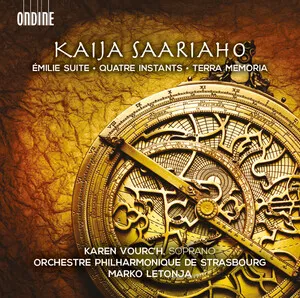
Émilie suite ; Quatre instants ; Terra memoria
Kaija Saariaho
Monodrama
Classical
Orchestral
2013
1
/5
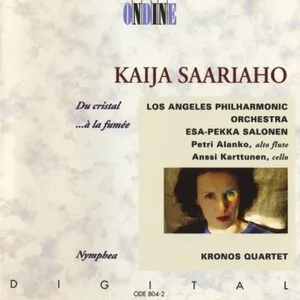
Du cristal; ...à la fumée; Nymphea
Kaija Saariaho
Spectralism
Classical
Electronic
2013
1
/5
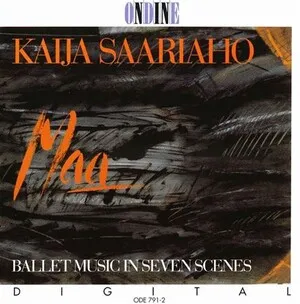
Maa: Ballet Music in Seven Scenes
Kaija Saariaho
Spectralism
Ballet
Classical
2001
1
/5
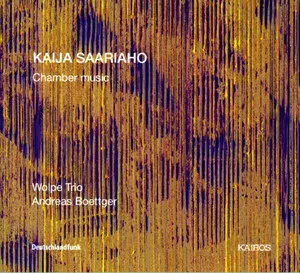
Chamber Music
Kaija Saariaho / Wolpe Trio / Andreas Boettger
Serialism
Chamber Music
Classical
1997
1
/5
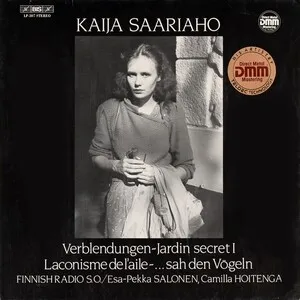
Verblendungen; Jardin secret I; Laconisme de l'aile; ...sah den Vögeln
Kaija Saariaho
Spectralism
Classical
Electronic
Similar artists
2
/5
Iannis Xenakis
Classical
Stochastic Music
Acousmatic
4
/5
Max Richter
Post-Minimalism
Classical
Contemporary Classical
4
/5
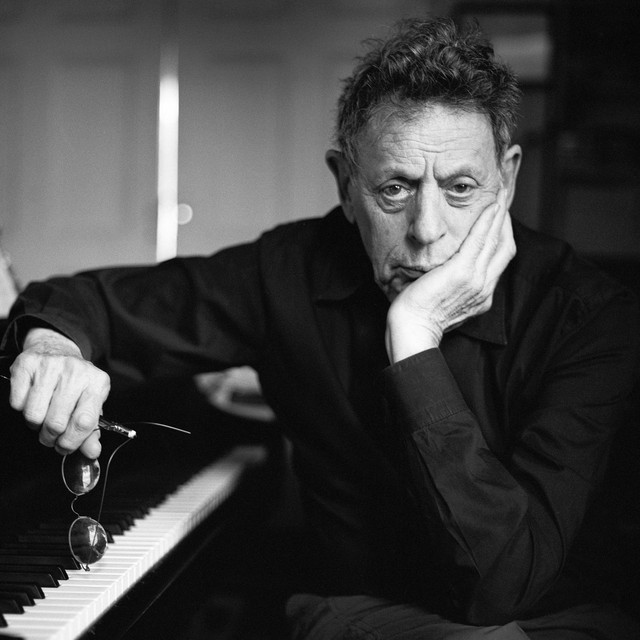
Philip Glass
Classical
Minimalism
Modern Classical
2
/5
WDR Sinfonieorchester Köln
Classical
Avant-Garde
Darmstadt School
2
/5
John Cage
Indeterminacy
Classical
Experimental
2
/5
Terry Riley
Minimalism
Classical
Experimental
1
/5
John Zorn
Avant-Garde Jazz
Free Improvisation
Jazz
1
/5
Various Artists
Afro-Funk
Alternative Rock
Ambient
4
/5
London Symphony Orchestra
Classical
Ballet
Concerto
3
/5
Hildur Guðnadóttir
Icelandic Experimental
Modern Cello
Classical
Download our mobile app
Get the Melodigging app and start digging for new genres on the go
Download on the App Store
Get it on Google Play
© 2026 Melodigging
Give feedback
Legal
Melodding was created as a tribute to
Every Noise at Once
, which inspired us to help curious minds keep digging into music's ever-evolving genres.