Your digging level

For this genre
0/8
🏆
Sign in, then listen to this genre to level up

Description

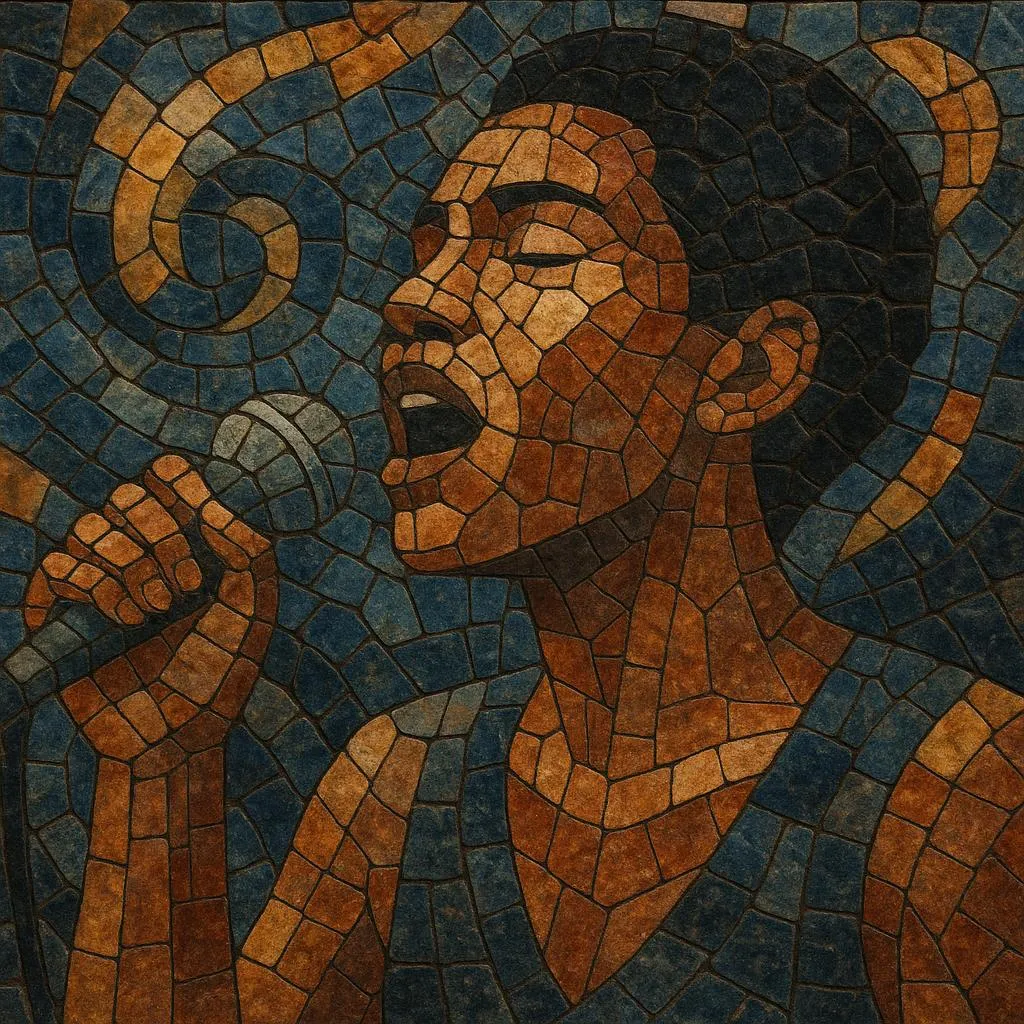
Vocal music is music in which one or more singers carry the primary musical line, whether accompanied by instruments or sung a cappella (without any non‑vocal instrumental accompaniment).

If singing is present but not featured prominently, the piece is typically treated as instrumental music. By contrast, vocal music foregrounds the human voice—its words, melody, timbre, and expressive nuance—across an enormous range of styles from chant and folk song to opera, pop, and hip hop.


Sources: Spotify, Wikipedia, Discogs, RYM, MB, user feedback and other online sources

History

Deep Roots and Early Codifications

Singing predates written history, functioning as a vehicle for ritual, storytelling, and social cohesion in every known culture. While vocal music is prehistoric in origin, systematic preservation in the West accelerated with the invention of staff notation in the 9th–10th centuries (e.g., plainchant and Gregorian chant). These early notated repertoires helped codify pitch, contour, and text underlay, anchoring a written tradition for vocal art.

Medieval to Renaissance: Polyphony and Text Expression

From the 12th century onward, polyphonic practices (Notre Dame school, Ars Nova) expanded vocal textures beyond monody. The Renaissance intensified text–music relationships: madrigals, motets, and chansons used word painting and refined counterpoint to make language and emotion central. Parallel non‑Western traditions (e.g., Byzantine chant, Persian radif-based singing, and countless folk idioms) cultivated equally rich voice‑centered aesthetics, typically transmitted orally.

Baroque to Romantic: Virtuosity and Dramatic Narrative

The Baroque era elevated the voice’s dramatic and virtuosic potential through recitative–aria forms and oratorio/opera. In the Classical and Romantic periods, lieder/art song and bel canto opera further celebrated vocal expressivity, expanding registral demands, dynamic control, and prosody. Choral symphonies and large oratorios embedded the human voice within orchestral spaces, blending text clarity with symphonic architecture.

Global and Popular Currents

Beyond Europe, vocal music flourished in Sufi qawwali, Indian classical khyal and dhrupad, Arabic maqam-based singing, African griot traditions, East Asian theatrical song, and Indigenous song practices worldwide. The 20th century’s recording and broadcast revolutions transformed vocal music into a global popular force—jazz, blues, gospel, country, rock, R&B, soul, and later hip hop and electronic pop foregrounded distinct vocal timbres, phrasing, and mic techniques.

Contemporary Practice

Today, vocal music spans a cappella ensembles, experimental extended techniques, Auto‑Tune aesthetics, sample‑based vocal collages, and cross‑cultural hybrids. While technologies evolve, the defining principle remains constant: the human voice is the musical centerpiece, whether unaccompanied or supported by instruments.


How to make a track in this genre

Core Focus: The Voice First
•   Treat the voice as the lead instrument. Start by shaping the melody to suit the singer’s natural range, tessitura, and timbre. •   Decide if the piece is a cappella (voice-only) or accompanied. In a cappella, harmony and rhythm must be generated entirely by voices; with accompaniment, ensure instruments support—not overshadow—the singer.
Melody, Range, and Prosody
•   Craft singable contours with clear peaks and resolution points. Balance stepwise movement with expressive leaps. •   Fit syllables to rhythm naturally (prosody). Stress important words with melodic emphasis, longer note values, or registral placement. •   Use melisma (multiple notes per syllable) or syllabic setting depending on clarity and style.
Harmony and Texture
•   For choral/a cappella writing, build functional harmony or modal frameworks with voice‑leading that respects each part’s range. •   Employ homophony for textual clarity and polyphony/counterpoint for richness and interplay. •   Consider call‑and‑response, antiphony, or layered ostinati for groove‑oriented styles.
Rhythm and Articulation
•   Align rhythmic density with lyrical content: conversational rhythms for narrative clarity; syncopation for danceability; rubato for expressive ballads. •   Mark diction and articulation: legato for lyric warmth; staccato for clarity; consonant placement for ensemble precision.
Lyrics and Storytelling
•   Prioritize narrative arc: set up tension, turning points, and cadential release. •   Match vowel colors to sustained notes (open vowels sustain better). Place breath points at syntactic seams.
Technique and Production
•   Exploit vocal registers (chest, mix, head) and dynamics for contrast. Use harmonies, doubles, and ad‑libs to add depth. •   In studio contexts, choose microphones and compression/EQ to flatter the voice; in live settings, write with projection and acoustics in mind.

Top tracks

Locked
Share your favorite track to unlock other users’ top tracks

Upcoming concerts

in this genre
Influenced by
Has influenced

Download our mobile app

Get the Melodigging app and start digging for new genres on the go
© 2026 Melodigging
Melodding was created as a tribute to Every Noise at Once, which inspired us to help curious minds keep digging into music's ever-evolving genres.
Buy me a coffee for Melodigging