Your digging level
Description
Zikir (also spelled Dhikr) is a genre of Islamic devotional music and recitation centered on the rhythmic repetition of the names of God (Allah) and supplications. While rooted in religious worship, it has evolved into a distinct musical form characterized by hypnotic vocal chants, often accompanied by minimal percussion or performed a cappella. The genre ranges from traditional Sufi ceremonies, where the recitation induces a trance-like state, to contemporary pop-influenced recordings known as 'Zikir Terapi' (Therapy Zikir) designed for relaxation and spiritual healing.
History
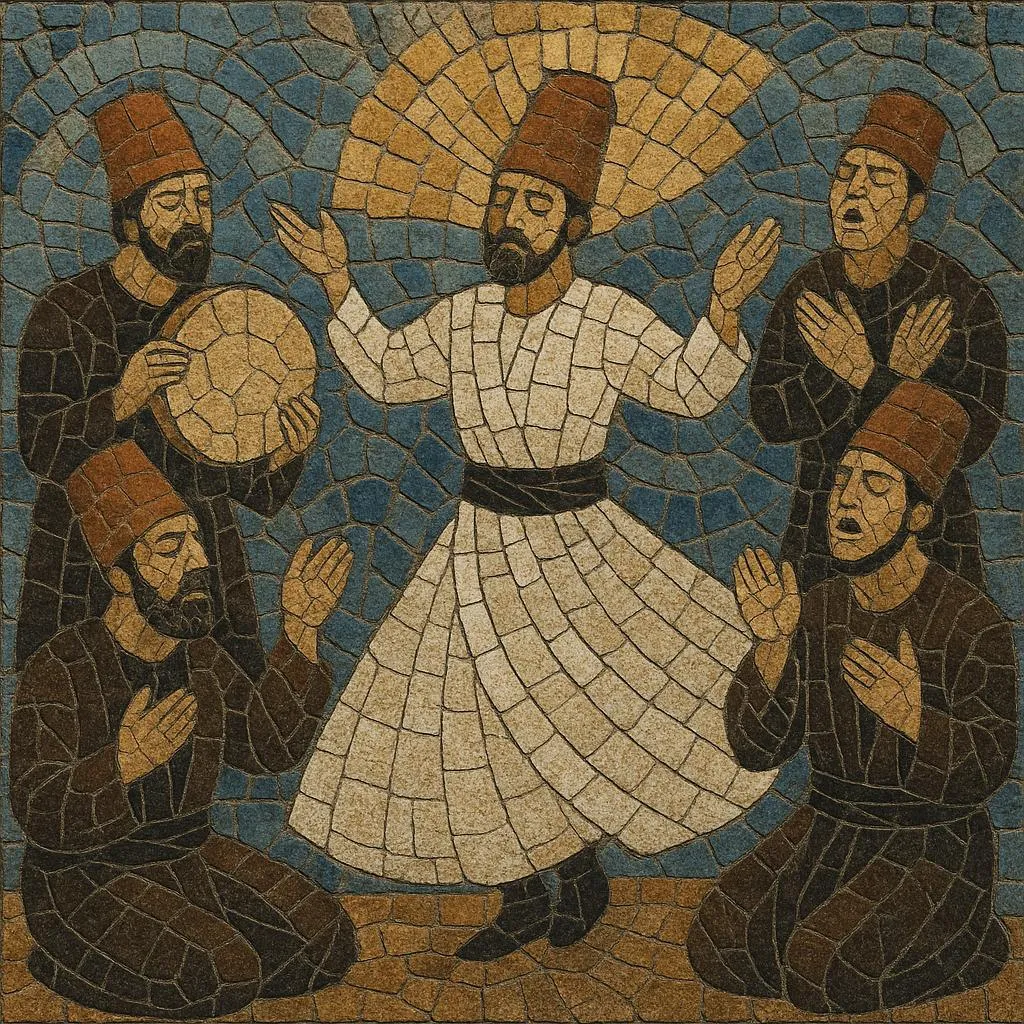
The roots of Zikir lie in the early Islamic period (7th century) with the Quranic injunction to 'remember God often.' Initially a form of individual or congregational worship, it became formalized musically with the rise of Sufi orders (Tariqas) around the 12th century. Sufi mystics developed specific rhythmic breathing techniques and melodic formulas for group recitations (Hadra), integrating movement and sometimes instruments like the daf and ney.
As Islam spread, Zikir assimilated local musical traditions. In the Malay world (Malaysia, Indonesia, Brunei), it evolved into localized forms like 'Zikir Barat' and 'Zikir Nazam,' blending Arabic chants with Malay folk rhythms. In the late 20th and early 21st centuries, a modern commercial genre emerged, popularized by artists like Hafiz Hamidun, who combined traditional recitations with ambient synthesizers and soft instrumentation, marketing it as spiritual therapy and relaxation music. This modern iteration has cemented Zikir as a recognized genre in the global Islamic music industry.
Composing or performing Zikir requires a focus on the vocal melody and the rhythmic repetition of sacred phrases. The foundation is usually a monophonic vocal line reciting phrases like 'Subhanallah,' 'Alhamdulillah,' or 'La ilaha illallah.'
Rhythm is paramount; it should be steady and hypnotic, often set in 4/4 time, to facilitate a meditative state. If using instrumentation, keep it minimal—percussion instruments like the frame drum (daf or rebana) are traditional, while modern compositions may use soft ambient pads, flutes (ney), or acoustic guitar. Harmony is typically sparse, often relying on a drone or simple call-and-response structures between a lead reciter (Munshid) and a chorus. The delivery should be emotive and controlled, emphasizing proper Arabic pronunciation (Tajweed) and spiritual sincerity.