Your digging level
Description
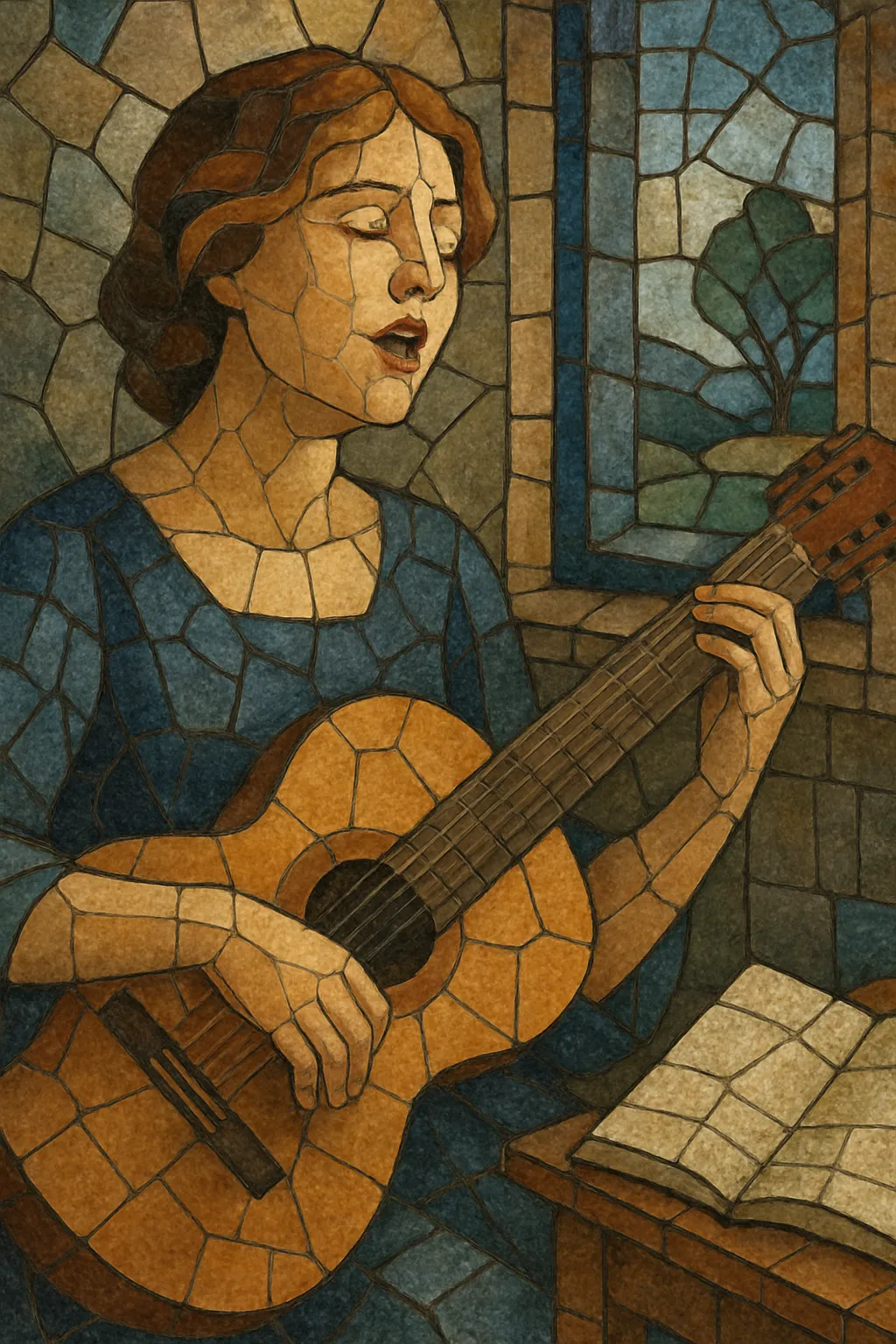
Art song is an intimate, concert-music genre in which a poetic text is set for solo voice with an equally integral piano accompaniment. Unlike popular song, it is composed for attentive listening in the recital hall or salon, and unlike opera, it does not require staging or multiple characters.
The genre privileges prosody, word-painting, and subtle harmonic color to illuminate imagery and emotion in the poem. Forms range from strophic and modified strophic to fully through-composed designs, and the piano often supplies prelude, interludes, and a telling postlude that extends or reframes the text’s sentiment. German Lieder, French mélodie, and English-language art song are the best-known national currents within this tradition.
History
Art song crystallized in the early Romantic era, when the rise of middle-class salons and an intensified interest in lyric poetry converged. Although precursors exist in Renaissance lute song and Classical-period settings, the genre’s modern identity coalesced with German Lied in the 1810s and 1820s. Franz Schubert’s prolific output—melding memorable melody, vivid word-painting, and narratively suggestive piano textures—established the paradigm, with works like Gretchen am Spinnrade (1814) and Erlkönig (1815).
By mid-century, Robert Schumann, Johannes Brahms, and later Hugo Wolf deepened the psychological nuance and musical sophistication of the form. The song cycle emerged as a hallmark of Romantic narrative cohesion—Schubert’s Winterreise and Schumann’s Dichterliebe are archetypes—using recurring motives, tonal plans, and textual arcs. In France, the mélodie blossomed with Charles Gounod, Gabriel Fauré, and Claude Debussy, who refined declamation and coloristic harmony to suit the French language’s prosody and aesthetic. Meanwhile, Richard Strauss and Gustav Mahler expanded the genre’s expressive range, with Mahler prominently cultivating the orchestral song variant.
The 20th century brought stylistic plurality: Benjamin Britten revitalized English art song with acute text sensitivity and crystalline transparency; American composers such as Charles Ives and Samuel Barber fused vernacular inflections with concert craft. Modernist, post-tonal, and later postmodern idioms enlarged the palette, while the recital tradition continued to elevate singer–pianist partnership as a chamber ideal. Today, art song thrives across languages and styles, from historically informed practice to newly commissioned works that engage contemporary poetry, extended vocal techniques, and multimedia presentation.