

Your digging level
For this genre
0/8
🏆
Sign in, then listen to this genre to level up
Description
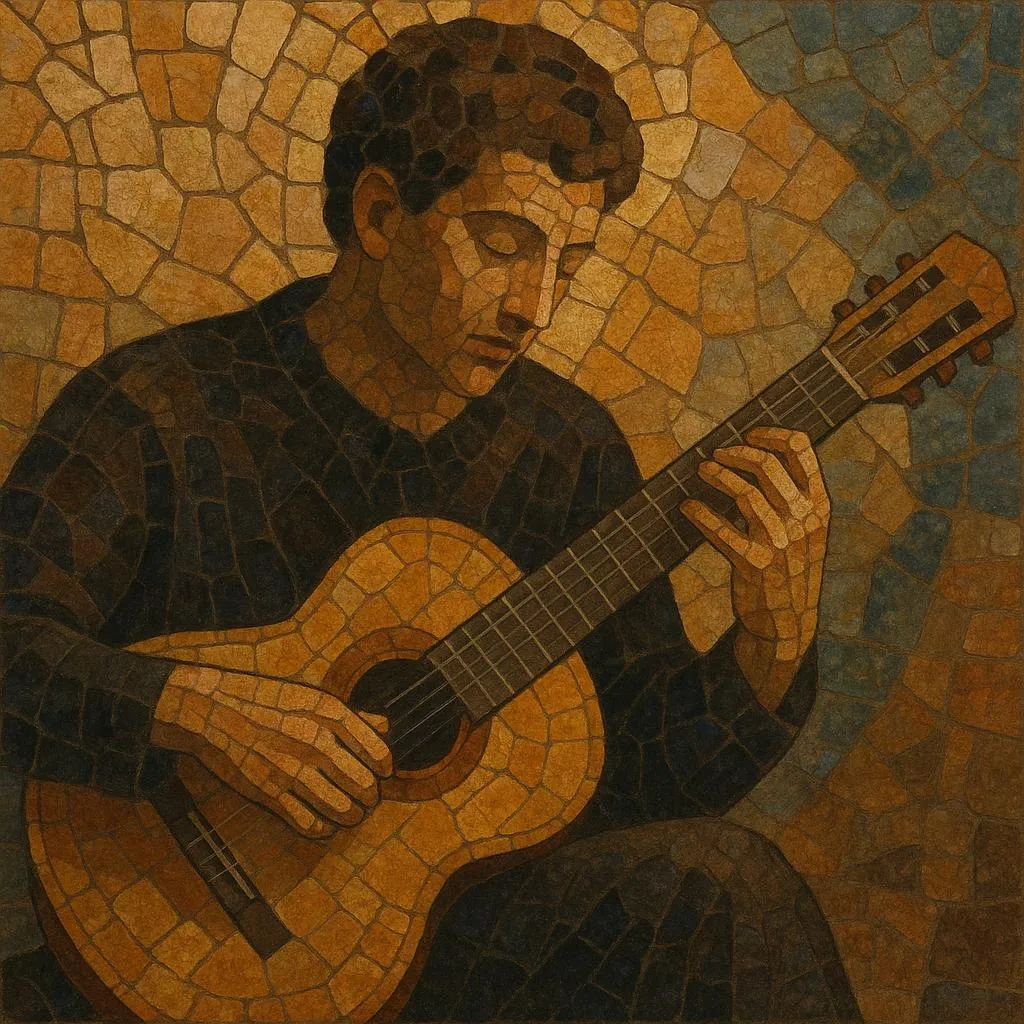
Solo music is any repertoire written or arranged to be performed by a single musician without ensemble accompaniment (or with only incidental drones, continuo, or silence).
In Western art music it crystalized in the early Baroque through idiomatic writing for keyboard, lute, and unaccompanied voice, then expanded across the Classical and Romantic eras with virtuosic piano, violin, guitar, and wind solos. In many traditions worldwide, solo performance also serves ritual, meditative, pedagogical, or demonstrative purposes.
The genre prioritizes projection of a single musical line or performer’s persona, often highlighting timbral nuance, expressive rubato, dynamic range, and technical display.
History
Origins (17th century)
• Although solo performance is ancient, the modern concept of idiomatic "solo music" coalesced in early 17th‑century Italy. Monodic practice and basso continuo aesthetics inspired keyboard toccatas and partite (Frescobaldi), lute and theorbo works, and unaccompanied vocal airs. Instrument makers (e.g., Stradivari for strings; improved harpsichords and organs) enabled greater projection and technical possibility.
Expansion in the Classical and Romantic eras (18th–19th centuries)
• The solo sonata and set of character pieces flourished. C.P.E. Bach and Haydn refined keyboard language; Mozart and Beethoven deepened pianistic rhetoric and form. The 19th century witnessed a "cult of the virtuoso": Paganini’s caprices transformed violin technique; Chopin and Liszt redefined piano as an orchestral instrument, while guitar repertoire (Sor, Giuliani; later Tárrega) established modern guitar idiom. Short forms (preludes, études, impromptus, bagatelles) became central to solo recital culture.
Diversification in the 20th century
• Composers extended technique (harmonics, multiphonics), timbre (prepared piano—Cage), and rhythm (Stravinsky, Bartók). Solo wind and percussion repertoires expanded dramatically; modernists explored process, atonality, and extended notation. Recording culture canonized distinctive solo interpretations (Gould, Horowitz) and allowed intimate listening to highly detailed performance.
Contemporary practice (late 20th–21st centuries)
• Minimalism, spectralism, and post‑tonal idioms co‑exist with neo‑romantic and historically informed approaches. The solo recital remains a laboratory for technique and expression across instruments—piano, strings, classical guitar, winds, organ, and percussion—and intersects with electronics, live looping, and multimedia. Instrument‑specific communities (e.g., solo saxophone, solo cello, solo classical guitar) continue to commission, transcribe, and innovate, sustaining solo music as a core concert practice.
Instrumentation and idiom
• Choose one instrument and write idiomatically for its range, resonance, and mechanics (e.g., open strings for violin, hand distribution and pedaling for piano, campanella and rest strokes for classical guitar, registration and breathing for winds).
• Exploit color: articulations (staccato/legato), sul ponticello or sul tasto (strings), pedaling (piano), stops and registrations (organ), timbral trills and harmonics (winds/strings), and extended techniques where stylistically appropriate.
Form and gesture
• Classical solo forms include: binary/ternary dances, variation sets, inventions, preludes, fugues, sonata‑allegro movements, caprices, études, bagatelles, character pieces, and suites.
• Balance large‑scale architecture (exposition–development–recapitulation or sectional narrative) with memorable micro‑gestures (motivic cells, idiomatic runs, arpeggiation patterns, cantabile lines).
Texture, counterpoint, and harmony
• Create fullness from one performer via: implied polyphony (arpeggios outlining harmony), broken‑chord figurations, pedal tones/drones, double‑stops and chords (strings/guitar), and left‑hand accompaniment vs. right‑hand melody (keyboard).
• Harmonic language can range from tonal/functional to modal, quartal, extended tertian, or atonal sets; use register and resonance to clarify progressions. Cadences and registral peaks help articulate form.
Rhythm and expression
• Write rhythms that fit the instrument’s physicality (bow changes, breath capacity, hand alternation). Use rubato, agogic accents, and dynamic shaping to communicate phrasing without ensemble support.
• For études or caprices, center a single technical focus (e.g., string crossings, octaves, scalar velocity) and embed musicality within the drill.
Notation and performance practice
• Provide detailed dynamics, articulations, fingerings/bowings/breath marks where clarity aids execution. Indicate pedaling/registration for keyboard and organ.
• Consider historical style: Baroque articulation and ornamentation, Classical clarity, Romantic rubato and color, or contemporary extended techniques—state these explicitly in performance notes.
Recording and presentation
• In live recital programming, contrast keys, tempi, textures, and eras. For recordings, capture room resonance and instrument body (close + ambient miking) to preserve solo presence.


Top tracks
Locked
Share your favorite track to unlock other users’ top tracks
Upcoming concerts
in this genre
