Your digging level
Description
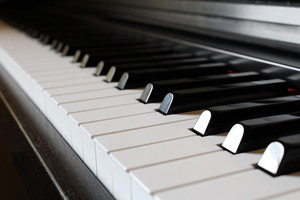
Piano music refers to repertoire written for, arranged for, or centered on the piano, including solo pieces, four‑hands/duet works, concertante pieces with orchestra, and chamber settings where the piano is primary.
Emerging soon after the invention of the pianoforte by Bartolomeo Cristofori in early‑18th‑century Italy, piano music absorbed and transformed earlier keyboard traditions (harpsichord, clavichord, organ). Over subsequent centuries it became a cornerstone of Western art music and, later, a central voice in popular, jazz, film, and contemporary ambient contexts. The piano’s wide dynamic range, sustain, and coloristic possibilities make it unusually suited to both lyrical melody and intricate polyphony.
History
The invention of the pianoforte in Florence by Bartolomeo Cristofori (c. 1700) enabled expressive dynamics (piano–forte) and sustained tones, immediately distinguishing it from the harpsichord and clavichord. Early piano music adapted Baroque keyboard idioms and forms—prelude, toccata, dance suites, and fugue—previously associated with harpsichord and organ.
By the mid‑ to late‑18th century, the piano replaced the harpsichord as the principal domestic and concert keyboard. Composers such as Haydn, Mozart, and especially Beethoven standardized the piano sonata, variation sets, and concerto, exploring form, motivic development, and the instrument’s expanding range and power as fortepianos evolved.
A revolution in piano manufacturing (iron frames, higher string tension) allowed greater volume, wider range, and richer color. Virtuoso composers—Chopin, Liszt, Schumann, Brahms—created idiomatic forms (nocturne, ballade, étude, impromptu, intermezzo) and poetic character pieces suited to salon and concert hall. National schools (e.g., Russian, French) and programmatic writing flourished.
Impressionists (Debussy, Ravel) used modal, whole‑tone, and pentatonic palettes and innovative pedaling to create new sonorities. Modernists (Rachmaninoff, Scriabin, Prokofiev, Bartók) pushed virtuosity, rhythm, and harmony; experiments included prepared piano (Cage) and extended techniques.
From ragtime and stride to swing, bebop, and modern jazz, the piano became a core improvisational instrument (e.g., Joplin’s rags to Ellington/Monk/Herbie Hancock idioms). In popular and rock contexts, piano (and later electric pianos) underpinned ballads and anthems, while film and game scoring leveraged the instrument’s emotional immediacy.
Minimalism (Glass, Nyman), neo‑romantic and cinematic styles, new‑age piano, and ambient/lo‑fi idioms expanded the repertoire. Today, acoustic, hybrid, and digital pianos thrive across classical, jazz, media, and independent scenes, with global dissemination through recordings, streaming, and pedagogy.
Decide whether you are writing a short character piece (e.g., prelude, nocturne), a larger form (sonata, theme & variations), or music for four hands/duet, chamber ensemble, or piano with orchestra.