Your digging level

For this genre
0/8
🏆
Sign in, then listen to this genre to level up

Description

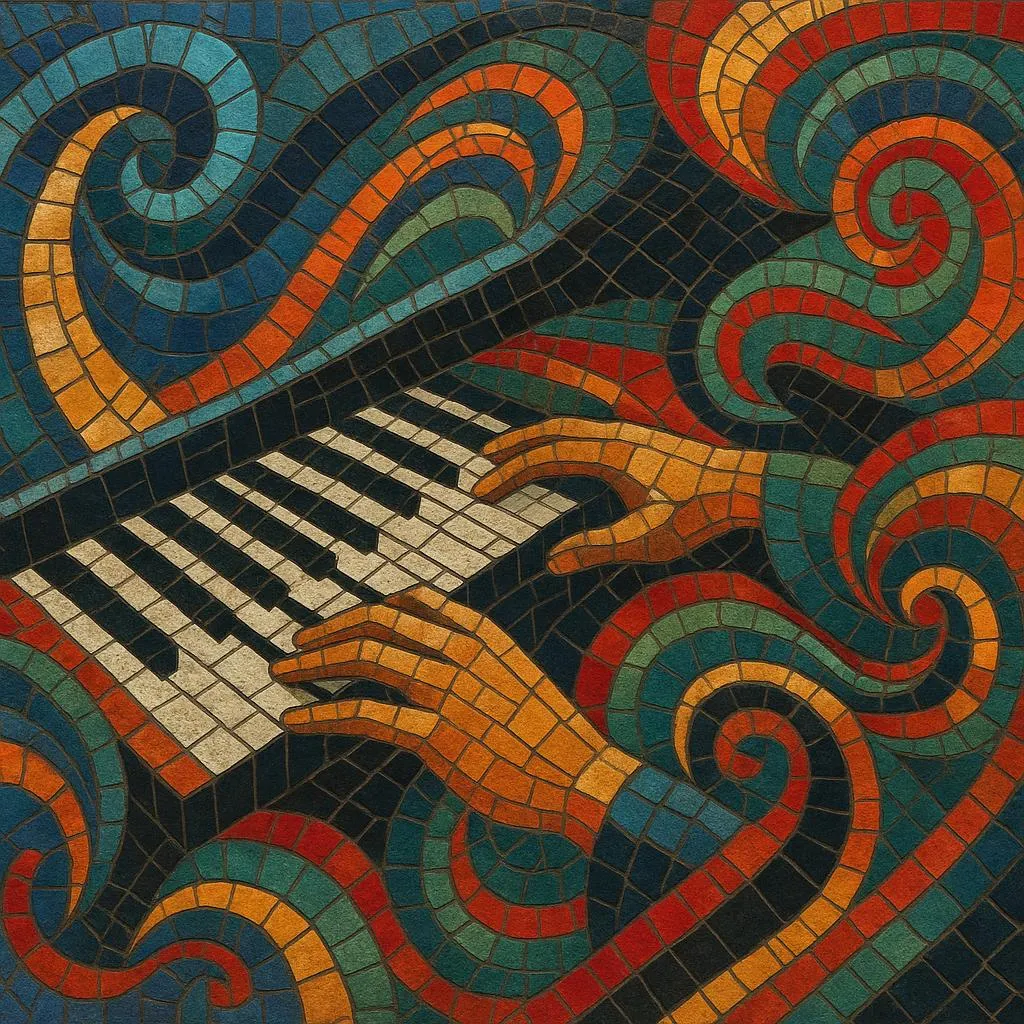
Piano house is a house music style defined by prominent, rhythmic piano riffs and bright chord stabs layered over a steady four-on-the-floor beat.

It typically blends the drum-machine-driven groove of classic house with gospel, disco, and soul-influenced harmony, creating tracks that feel both dancefloor-functional and emotionally uplifting.

Arrangements often revolve around a repeating piano hook that drives the song’s momentum, supported by basslines, claps, hi-hats, and occasional vocal snippets or full soulful vocals.


Sources: Spotify, Wikipedia, Discogs, Rate Your Music, MusicBrainz, and other online sources

History

Origins (Late 1980s)

Piano house emerged in the late 1980s as house producers began foregrounding piano riffs as the main melodic and rhythmic hook. These riffs drew heavily from disco, gospel, and soul harmony, but were tightened into loop-based phrases that locked to the drum machine groove.

Breakthrough and Peak (Early 1990s)

The sound became especially dominant in the UK and parts of Europe in the early 1990s, where rave-era club culture embraced the big, bright, anthemic feel of piano-led house. Tracks were often structured around a signature piano progression that could lift a crowd instantly.

Legacy and Revivals (2000s–Present)

While its early-90s peak faded as other club styles rose, piano house has been continually revived through classic house DJ culture and modern “classic house” and “pop-leaning” dance productions. Contemporary producers frequently reference its hallmark piano hooks as a shorthand for euphoric nostalgia.

How to make a track in this genre

Core instrumentation
•   Use a house drum kit: kick on every beat, clap/snare on beats 2 and 4, open hat on the off-beats, and shuffled closed hats or percussion for motion. •   Make the piano the lead voice: a bright house piano (often sampled or a punchy ROMpler-style patch) with short, percussive dynamics. •   Add a solid bassline: either a rounded analog-style bass or a simple sub-bass that outlines the root notes of the piano progression.
Rhythm and groove
•   Keep the tempo commonly in the 118–128 BPM range. •   Quantize tightly for a classic house feel, but introduce swing on hats/percussion to avoid stiffness. •   Write the piano riff as a rhythmic hook, not just harmony; it should “talk” with the drums through syncopation.
Harmony and piano writing
•   Start with a strong 4–8 bar chord loop using major/minor 7ths, add 9ths/11ths for soul and gospel color. •   Common technique: alternate chord stabs with a short melodic fill, or repeat a driving arpeggiated figure. •   Voice chords to be bright and mid-forward: keep chord tones around the middle register and avoid overly dense low voicings that fight the bass.
Arrangement
•   Build an intro with drums and bass, then reveal the piano hook gradually. •   Use breakdowns where the drums drop out and the piano (and pads or strings) carries emotion; then reintroduce the kick for maximum lift. •   Classic house transitions: filters, short risers, and drum fills every 8 or 16 bars to cue the dancefloor.
Vocals (optional)
•   Piano house often uses soulful vocals or chopped vocal hooks. •   If using full vocals, write lyrics that are direct and uplifting (love, release, togetherness), and keep the melody simple enough to sit over the repeating piano loop.
Mixing tips
•   High-pass the piano slightly so it does not mask the bass and kick. •   Use short room or plate reverb on piano stabs for size, but keep the transient punch. •   Sidechain the piano and pads subtly to the kick to keep the groove breathing.

Top tracks

Locked
Share your favorite track to unlock other users’ top tracks
Influenced by
Has influenced
Challenges
Digger Battle
Let's see who can find the best track in this genre
© 2026 Melodigging
Melodding was created as a tribute to Every Noise at Once, which inspired us to help curious minds keep digging into music's ever-evolving genres.
Buy me a coffee for Melodigging