Your digging level
Description
Moravian folk music is the traditional music of Moravia, the eastern historical region of the present‑day Czech Republic. It is distinguished by regionally specific styles (Slovácko, Valašsko/Wallachia, Haná, Lachia) and by its characteristic cimbalom‑led string bands (cimbálová muzika), bright, open vocal timbre, and richly ornamented melodic lines.
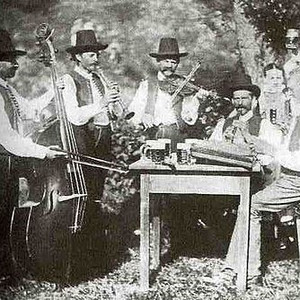
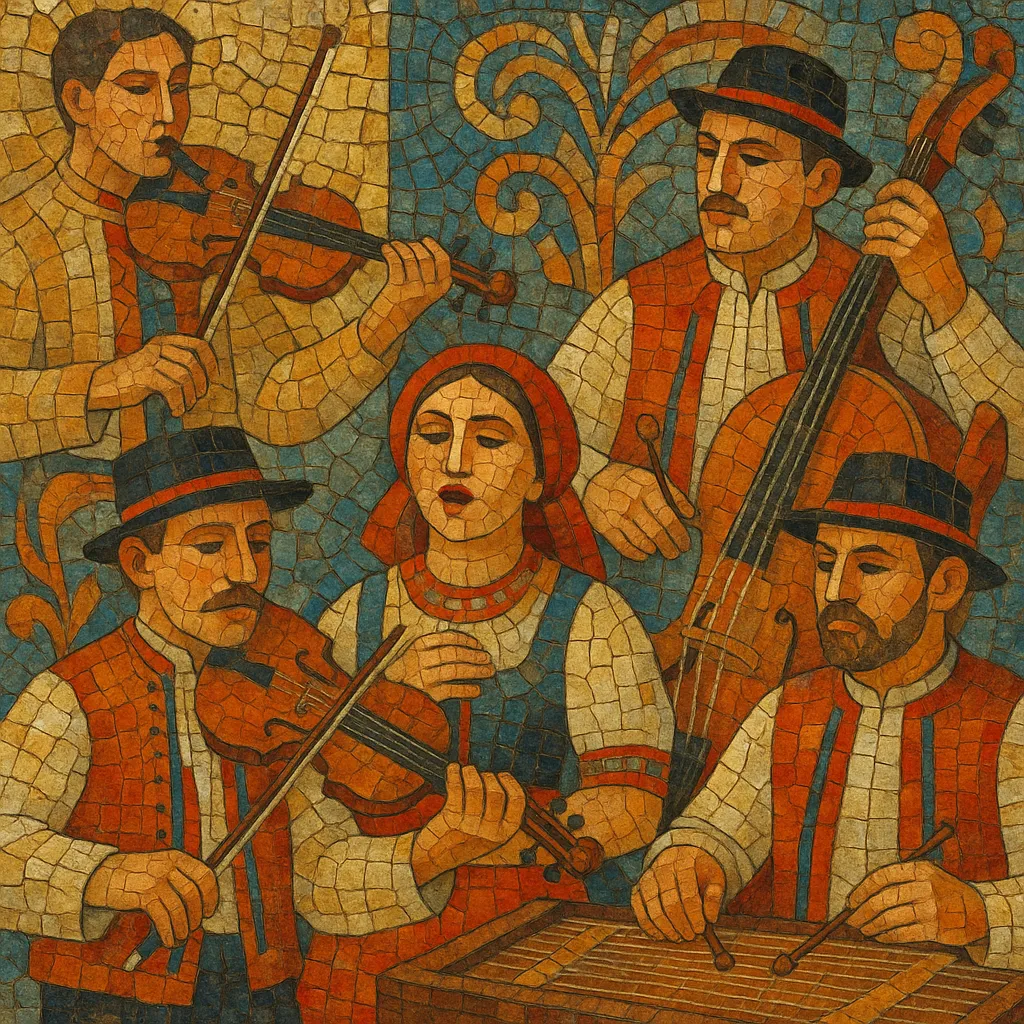
Typical ensembles feature a lead violin (primáš), supporting violas playing rhythmic chords (kontra), double bass, and the cimbalom; clarinet or flute may double melodies, while regional bagpipes (gajdy) appear in Lachia and Valašsko. In Haná, brass bands (dechovka) adapt local song repertoires. Dance types such as verbuňk (a men’s recruiting dance), odzemek, and skočná underpin the music’s lively, driving character.
Modal inflections (especially Mixolydian and Dorian), drones and open fifths, parallel thirds/sixths, and flexible phrasing are common. Texts (often in local dialects) treat love, conscription, harvest and vineyard life, and village rituals, frequently in call‑and‑response or strophic forms.
History
The practices underlying Moravian folk music are older, but the style coalesced in the 19th century as regional repertoires and dance customs became more distinctly identified. Village bands with violins, violas, bass, and later cimbalom provided music for weddings, calendar‑cycle feasts, and communal dances across Slovácko, Valašsko, Haná, and Lachia.
From the 1830s onward, collectors such as František Sušil and later František Bartoš documented hundreds of songs, stabilizing variants and spreading regional tunes beyond their villages. This period aligned with Romantic nationalism, and Moravian melodies entered urban salons and concert halls, shaping a broader Czech cultural identity.
Leoš Janáček’s lifelong interest in Moravian speech‑melody and folksong (including his field transcriptions) fed directly into his operas, choruses, and orchestral works. Antonín Dvořák and others drew on Moravian dance rhythms and modal turns in chamber music and song, carrying the style into Romantic and early modern classical idioms.
The rise of radio and state folk ensembles professionalized performance. The Brněnský rozhlasový orchestr lidových nástrojů (BROLN) popularized cimbalom‑band sound nationwide. The Strážnice International Folklore Festival (est. 1946) became a flagship venue for Moravian song and dance traditions, while local brass and cimbalom groups maintained community functions.
After 1989, independent labels, community ensembles, and folk‑rock or world‑fusion groups renewed the repertoire with fresh arrangements, new lyrics, and crossovers with jazz and classical music. UNESCO’s inscription of the Slovácko verbuňk (2005) highlighted the living, regionally grounded character of Moravian folk performance.