Your digging level
Description
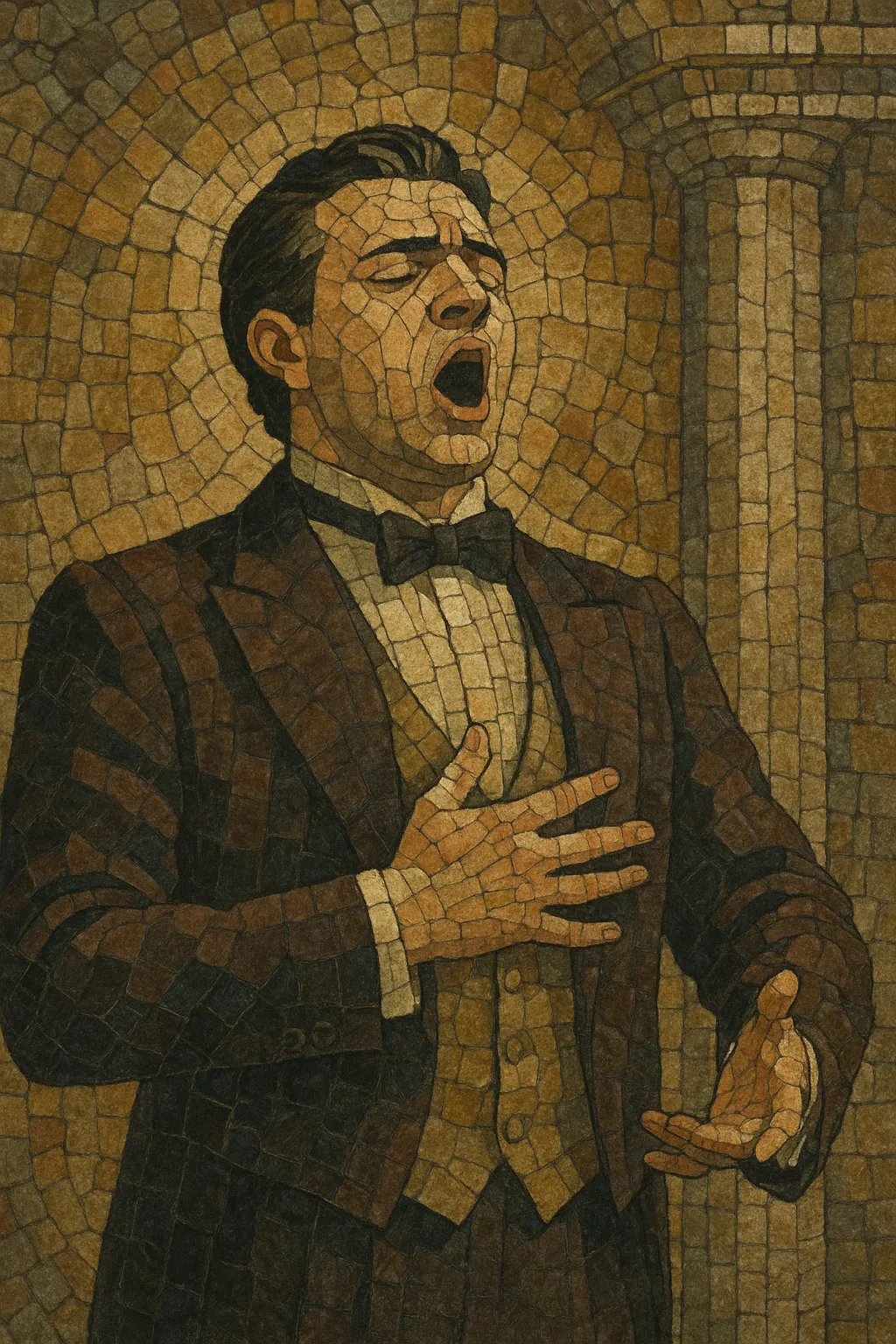
Classical tenor refers to the Western classical tradition of tenor singing across opera, oratorio, and art song. It centers on a high male voice type whose typical written range spans roughly C3 to B4/C5, with the core tessitura sitting around the passaggio between E4–G4.
The style is defined by legato phrasing, precise diction in multiple languages (especially Italian, German, French, and Latin), balanced chiaroscuro tone, and secure breath management (appoggio) that enables both long lyrical lines and brilliant climaxes. Subtypes include leggiero, lyric, spinto, dramatic, and heldentenor, each suited to different repertoire weights and orchestral demands.
Accompaniments are commonly full orchestra (opera/oratorio) or piano (Lied/mélodie), sometimes organ or chamber ensembles. Repertoire ranges from Baroque da capo arias to Romantic grand opera scenes, Wagnerian music dramas, sacred works, and recital songs.
History
Tenor parts appear throughout Renaissance and Baroque sacred polyphony and early opera, but castrati often took the highest male roles on major stages. As opera formalized in Italy and beyond, tenors increasingly shouldered heroic or amorous roles, especially in opera seria and oratorio, where clarity of text and sustained line were prized.
During the bel canto era and into Romanticism, the tenor voice became the dramatic and lyrical protagonist. A key turning point came in the 1830s when Gilbert Duprez popularized the high C (C5) sung in chest-heavy production (do di petto), shaping the modern ideal of brilliance and ring (squillo). Grand opera in Paris and the Italian stage expanded the repertory, while Wagner’s music dramas in Germany demanded the heavier heldentenor, capable of sustained high tessitura over large orchestras.
The gramophone era crowned Enrico Caruso a worldwide idol and established the classical tenor as a global archetype. The mid‑20th century saw a "golden age" with diverse fach specialists—from lyric elegance (Jussi Björling, Fritz Wunderlich) to spinto/dramatic power (Franco Corelli, Jon Vickers). Tenors became central to opera house identity and touring culture.
The Three Tenors (Pavarotti, Domingo, Carreras) brought the sound to mass audiences, catalyzing crossover and arena-scale performances. Historically informed performance revitalized Baroque roles for lighter tenors, while modern houses balance bel canto, verismo, and Wagnerian demands. Today, training and casting emphasize fach specificity, stylistic literacy, and microphone-era media fluency.
Select repertoire that fits a tenor fach (leggiero, lyric, spinto, dramatic, heldentenor). Aim for a practical range of C3–C5 with a comfortable tessitura near the passaggio (E4–G4). Plan key choices and transpositions to keep climaxes in a sustainable zone.
Use appoggio (breath support) to sustain legato and manage crescendi/decrescendi (messa di voce). Maintain an aligned laryngeal setup, balanced vowels, and careful passaggio strategies (gradual vowel modification, consistent resonance). Develop squillo for projection without forcing, and keep vibrato even and narrow.
Prioritize clear text in Italian, German, French, Latin, and English. Employ IPA-based practice, consonant energy without clipping legato, and stylistic prosody (e.g., Italian stress patterns, German consonant clarity, French liaison).
Write supportive harmonic scaffolding that leaves space for tenor resonance (avoid constant mid‑high orchestral doubling). Use rhythmic figures that accommodate breath timing and textual clarity. For piano, distribute arpeggiation and counter-melodies to underline the vocal line without masking it.
Warm up from semi-occluded vocal tract exercises to lyric lines; isolate passaggio work daily. Mark high rehearsals to preserve stamina. On stage, align gesture and phrasing with character arc; maintain consistent placement from piano rehearsals to orchestral dress. Record practice to track intonation, vowel balance, and diction.