Your digging level
Description
Tonadilla is a short, satirical Spanish song form of theatrical origin, performed between or within acts of spoken comedies and sainetes during the 18th century.
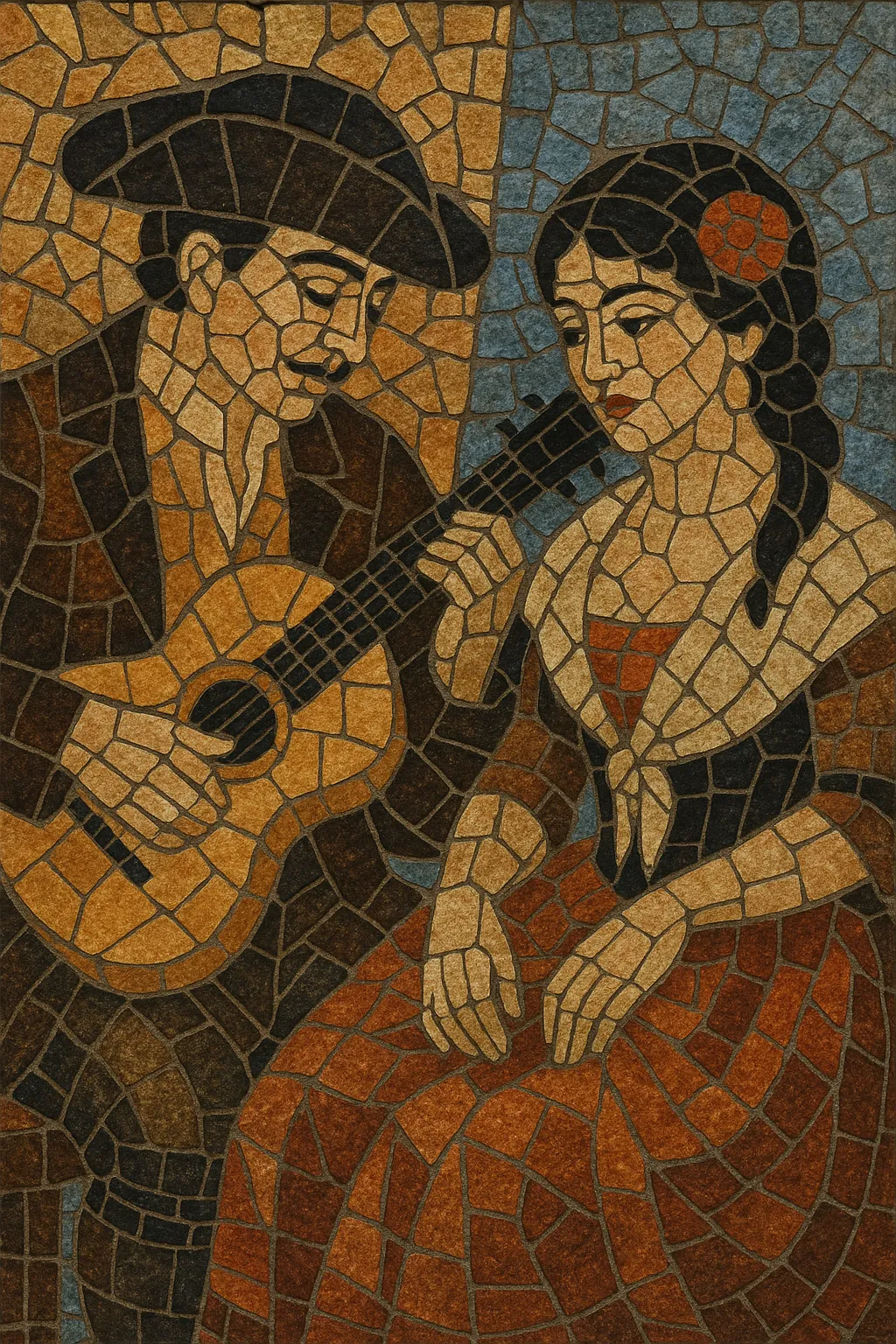
It is primarily a sung piece (not a dance), typically featuring lively, popular rhythms (seguidillas, fandango, bolero) and witty, topical texts delivered by archetypal Madrid characters such as majos and majas. Scored for solo voice (tonadilla a solo) or small ensembles with a modest theatre orchestra or guitar/continuo, it compresses comic situation, social caricature, and local color into a compact musical scene.
While born in Spain, the tonadilla became popular across the Spanish-speaking world, later circulating in Cuba and other parts of the Spanish colonial sphere.
History
The tonadilla (often "tonadilla escénica") crystallized in mid-18th‑century Madrid, around the 1750s, as a brief musical interlude for the commercial theatres (notably the Teatro de la Cruz and Teatro del Príncipe). Though the word “tonadilla” had earlier connotations of a small tune, the mature stage form fused local song with comic theatre and the intermezzo tradition. Early shapers included Luis Misón, followed by pivotal librettist Ramón de la Cruz, who provided the vivid street‑level satire and types that audiences adored.
From the 1760s to the 1790s the tonadilla flourished. Composers such as Blas de Laserna, Pablo Esteve y Grimau, Jacinto Valledor, and José Castel wrote prolifically, crafting numbers that showcased popular idioms (seguidillas, fandangos, boleros) within succinct theatrical tableaux. The genre’s appeal lay in its immediacy—wit, topical references, and recognizable Madrid characters (majos/majas) delivered in a compact musical scene. Famous star singers (tonadilleras) such as La Caramba and La Tirana helped turn these pieces into urban sensations.
By the late 18th century, tonadillas were performed and adapted outside Spain, notably in Cuba and other Spanish colonial cities. Their portability—short length, small forces, and catchy vernacular style—made them ideal for wider theatrical circuits in the Hispanic world.
Political turmoil and changing theatrical tastes in the early 19th century shifted popularity away from the tonadilla. Yet its DNA—satirical bite, local color, and popular dance rhythms—permeated later Spanish stage genres. Elements resurfaced in 19th‑century zarzuela (especially the lighter género chico), the music‑hall‑style cuplé, and ultimately the 20th‑century canción española/coplas tradition, preserving the tonadilla’s spirit of urban wit and vivid characterization.