Genres
Make Music
Artists
Albums
Challenges
Sign in
Sign in
Albums
By Kaija Saariaho
Albums
By Kaija Saariaho
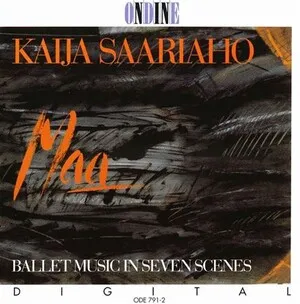
Maa: Ballet Music in Seven Scenes
November 1, 2013
Listen
1
/5
Genres
Spectralism
Spectralism is a movement in contemporary classical music that treats timbre and the acoustic spectrum as primary compositional materials. Rather than building music from abstract pitch-class sets or functional harmony, spectral composers derive harmonies, orchestrations, and formal processes from the real-world spectra of sounds. Using tools such as Fourier analysis, they decompose a sound into its partials and then re-synthesize or orchestrate those partials across instruments, often employing microtonality, extended techniques, and slow, morphing processes. The result is music where color, resonance, and perceptual phenomena shape structure as much as melody or rhythm.
Discover
Listen
Ballet
Ballet (as a musical genre) refers to orchestral music written to accompany choreographed dance on stage. It prioritizes clear tempi, strongly articulated rhythms, and memorable leitmotifs to support narrative, character, and movement. While rooted in court entertainment, ballet music evolved into a sophisticated, self-sufficient concert art: many ballets yield popular orchestral suites that are performed independently. Typical numbers include adagios, variations, codas, divertissements, character dances, and large ensemble scenes that mirror the dramatic arc of the choreography. Stylistically, ballet spans Baroque courtly idioms, Classical clarity, Romantic lyricism, and 20th‑century modernism and neoclassicism. It is predominantly instrumental (full orchestra), but can occasionally include choral or vocal parts when dramaturgy requires it.
Discover
Listen
Classical
Classical music is the notated art-music tradition of Europe and its global descendants, characterized by durable forms, carefully codified harmony and counterpoint, and a literate score-based practice. The term “classical” can refer broadly to the entire Western art-music lineage from the Medieval era to today, not just the Classical period (c. 1750s–1820s). It privileges long-form structures (such as symphonies, sonatas, concertos, masses, and operas), functional or modal harmony, thematic development, and timbral nuance across ensembles ranging from solo instruments to full orchestras and choirs. Across centuries, the style evolved from chant and modal polyphony to tonal harmony, and later to post-tonal idioms, while maintaining a shared emphasis on written notation, performance practice, and craft.
Discover
Listen
Similar albums
2010
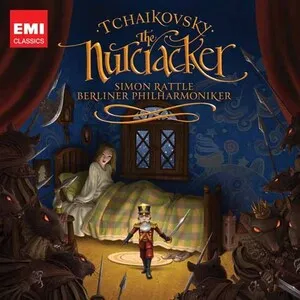
The Nutcracker
Pyotr Tchaikovsky Пётр Чайковский / Berliner Philharmoniker / Simon Rattle
1976
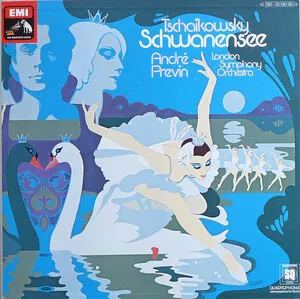
Swan Lake
Pyotr Tchaikovsky Пётр Чайковский / London Symphony Orchestra / André Previn
1998
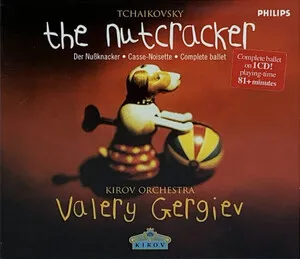
The Nutcracker
Pyotr Tchaikovsky Пётр Чайковский / Mariinsky Orchestra Симфонический оркестр М…
1999
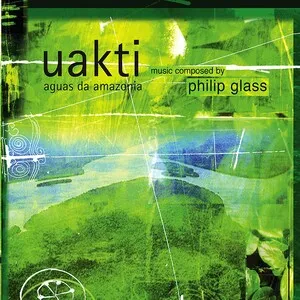
Águas da Amazônia
Philip Glass / Uakti / Marco Antônio Guimarães
2023
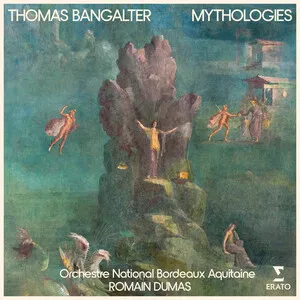
Mythologies
Thomas Bangalter / Orchestre national Bordeaux Aquitaine / Romain Dumas
1958
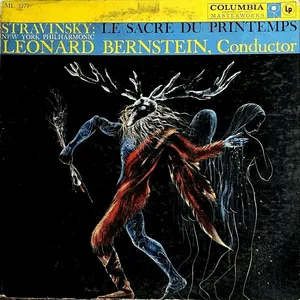
Le sacre du printemps
Igor Stravinsky / New York Philharmonic / Leonard Bernstein
2005
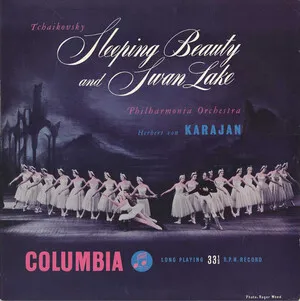
Sleeping Beauty and Swan Lake
Pyotr Tchaikovsky Пётр Чайковский / Philharmonia Orchestra / Herbert von Karajan
1962
Stravinsky Conducts Le sacre du printemps
Igor Stravinsky / Columbia Symphony Orchestra
1970
Boulez Conducts Stravinsky's Le sacre du printemps
Igor Stravinsky / Cleveland Orchestra / Pierre Boulez
2005
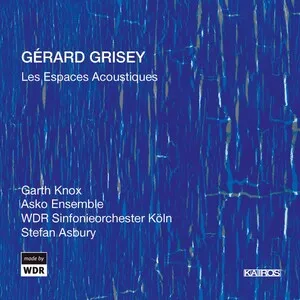
Les espaces acoustiques
Gérard Grisey
Download our mobile app
Get the Melodigging app and start digging for new genres on the go
Download on the App Store
Get it on Google Play
© 2026 Melodigging
Give feedback
Legal
Melodding was created as a tribute to
Every Noise at Once
, which inspired us to help curious minds keep digging into music's ever-evolving genres.