Genres
Artists
Albums
Make Music
Sign in
Sign in
Artists
Indeterminacy
Artists
Indeterminacy
John Cage
1974–2018
·
16 albums
Listen
2
/5
Genres
Soundclown
Soundclown is an internet-born remix and mashup style that thrives on comedic juxtaposition, bait‑and‑switch reveals, and hyper-referential sample collage. It blends pop hits, game and cartoon music, ad jingles, meme sounds, and viral speech into quick-cut audio gags. The genre developed across YouTube and SoundCloud, favoring shock humor, nostalgia, and absurdity over traditional song form. Hallmarks include sudden key/tempo whiplash, exaggerated pitch-shifts, ear‑rending “earrape” peaks, and punchline drops that transform a familiar source into something hilariously incongruent. Because it is fundamentally platform-native, soundclown is as much a memetic editing culture as a musical style. Its tracks often function like sonic shitposts: fast, punchy, and built for instant recognition and shareability.
Discover
Listen
New Isolationism
New isolationism is a contemporary strain of isolationist ambient and post-industrial minimalism that emerged in the 2010s, particularly around Scandinavian experimental labels and studios. It foregrounds intimate, close-mic’d sound, negative space, and a quiet-but-present noise floor; its pieces feel both internal and architectural, like rooms built from reverb tails, tape hiss, and soft electronics. Sonically, the style blends glacial drones, fragile chamber timbres (strings, organ, piano), lo‑fi electronics, and field recordings into stark, slow-evolving tableaux. Melodic information is sparse—often only a few tones or gestures—while rhythm is either absent or reduced to distant pulses, heartbeats, or mechanical cycles. Vocals, when they appear, are murmured, diaristic, or abstracted by pitch and time manipulation. Aesthetically, new isolationism is post‑internet and diaristic: it captures solitude, memory, and dislocation with a palette that feels personal yet estranged, drawing as much from contemporary gallery sound practice as from classic dark ambient.
Discover
Listen
High Quality Rip
High quality rip (often shortened to “HQ rip”) is an internet remix practice and micro-genre centered on bait-and-switch edits of familiar music. A track typically begins as an apparently faithful, “high-quality” version of a known song (often from video games, anime, or pop media), then abruptly detours into unexpected quotes, genre shifts, tempo changes, jokes, or mashups. It is community-driven and highly localized to specific online forums/channels, where in-jokes, recurring motifs, and shared source libraries shape what “works” as a good rip.
Discover
Listen
New Complexity
New Complexity is a movement in contemporary classical composition characterized by extremely detailed notation, dense polyphonic textures, and intricate rhythmic layers. Composers in this school aim to encode a wealth of micro-level information—articulations, dynamics, timbral inflections, and nuanced temporal relationships—directly into the score. The music typically features nested tuplets, rapidly shifting meters, microtonal pitch structures, and extensive use of extended techniques. While often perceived as virtuosic and formidable, its goal is not complexity for its own sake but the precise realization of highly differentiated sound worlds and continuously transforming textures.
Discover
Listen
Minimalism
Minimalism is a style of Western art music that emerged in the United States during the 1960s, characterized by the use of very limited musical materials, steady pulse, and extensive repetition. Composers often build pieces from short cells or motifs that are repeated and slowly transformed through additive or subtractive processes, phase shifting, and gradual changes in harmony, texture, or register. Harmony is typically consonant (often modal or diatonic), though just intonation and extended drones are also common. The result is music that foregrounds process, clarity, audibility of structure, and a hypnotic sense of stasis and flow. Typical ensembles include keyboards, mallet percussion, strings, winds, voices, and electronics or tape. Minimalism influenced a wide array of later styles, from ambient and new age to post-minimalism and minimal techno.
Discover
Listen
American Gamelan
American gamelan is a movement within contemporary classical and experimental music in the United States that creates new repertoire for gamelan-style ensembles built or adapted outside Indonesia. It draws on the cyclical, layered textures of Javanese and Balinese gamelan while embracing American instrument-building, just-intonation tunings, and minimalist process techniques. Ensembles often use homemade metallophones, gongs, and resonators fabricated from aluminum, steel, and other materials, producing a shimmering, bell-like sonority that is at once Indonesian-inspired and distinctively American. Unlike traditional Indonesian genres tied to court, ritual, or theatre, American gamelan typically serves the concert stage and educational settings, favoring newly composed works, cross-cultural collaborations, and experiments that combine gamelan with Western instruments, voice, or electronics.
Discover
Listen
Indeterminacy
Indeterminacy is a strand of post‑war experimental music in which some aspects of a composition are left to chance or to the free choice of the performer, ensuring that no two realizations are exactly the same. The approach encompasses chance procedures used during composition (e.g., tossing coins or consulting the I Ching), open or mobile forms in which sections may be reordered, graphic or text‑based notation that prompts interpretation rather than strict reading, and time‑bracket techniques that specify durations but not exact synchrony. Closely associated with the New York School (John Cage, Earle Brown, Morton Feldman, Christian Wolff), indeterminacy challenged traditional authorship, fixed works, and score‑bound precision by shifting agency to processes and performers. While often conflated with “aleatoric” music, indeterminacy typically denotes unpredictability at the level of performance/realization (open form, variable notation), whereas chance composition may use randomness to create a fixed score. In practice, many works combine both.
Discover
Listen
Experimental
Experimental music is an umbrella term for practices that prioritize exploration, process, and discovery over adherence to established genre norms. It embraces new sound sources, nonstandard tuning systems, indeterminacy and chance operations, graphic and open-form scores, extended techniques, and technology-led sound design (tape, electronics, computers, and live processing). Rather than a single style, it is a methodology and ethos: testing hypotheses about sound, structure, and performance, often blurring boundaries between composition, improvisation, sound art, and performance art. Listeners can expect unfamiliar timbres, unusual forms, and an emphasis on how music is made as much as the resulting sound.
Discover
Listen
Integral Serialism
Integral serialism (also called total serialism) is a post–World War II compositional approach that extends the serial ordering principle beyond pitch to other musical parameters such as duration, dynamics, timbre, articulation, and register. Instead of relying on tonal harmony or freely atonal gestures, the composer constructs one or more ordered sets (series) for each parameter and subjects them to systematic transformations (inversion, retrograde, transposition, permutation) and cross-mappings. The result is highly controlled, pointillistic textures and tightly organized forms whose coherence derives from parametric organization rather than tonal function. Its sound world often features fragmented gestures, rapid contrasts of dynamics and articulation, and intricate rhythmic structures. While perceived as austere or rigorous, it enabled composers to craft micro-detailed musical behaviors and helped forge the postwar European avant-garde’s language.
Discover
Listen
Sound Collage
Sound collage is a practice and genre that assembles disparate recorded sounds—speech, field recordings, musical fragments, noise, and media detritus—into a new, cohesive work. It treats recorded sound as raw material to be cut, layered, looped, juxtaposed, and transformed, often privileging texture, timbre, and context over conventional melody and harmony. Emerging from mid‑century tape and electroacoustic experiments, sound collage spans avant‑garde, popular, and club contexts, ranging from radical tape splices to sample‑dense pop and hip‑hop. Because it recontextualizes existing audio, it can be narrative, political, archival, or purely abstract—oscillating between documentary and dreamlike mosaic.
Discover
Listen
Musique Concrète
Musique concrète is an electroacoustic approach to composition that uses recorded real‑world sounds (objets sonores) as primary material rather than traditional instruments or notation. Composers edit, splice, loop, reverse, time‑stretch, filter, and otherwise transform these recordings to create works designed for loudspeakers. Emerging in late‑1940s France, it introduced acousmatic listening—focusing on the sound itself, detached from its source—along with a morphology‑based vocabulary of gesture, texture, and timbre. Historically realized on tape and now on digital audio workstations, musique concrète privileges montage and transformation over conventional harmony and meter, inviting listeners into a rich, tactile world of sonic phenomena.
Discover
Listen
Avant-Garde
Avant-garde music is an umbrella term for boundary-pushing practices that challenge prevailing norms of harmony, rhythm, timbre, form, and performance. It privileges experimentation, conceptual rigor, and a willingness to reframe what counts as music at all. Historically tied to early 20th‑century artistic modernism, avant-garde music introduced atonality, the emancipation of noise, and new forms of notation and process. It embraces indeterminacy, extended techniques, electronics, spatialization, and multimedia performance, treating sound as material to be sculpted, questioned, and reinvented.
Discover
Listen
Electronic
Electronic is a broad umbrella genre defined by the primary use of electronically generated or electronically processed sound. It encompasses music made with synthesizers, drum machines, samplers, computers, and studio/tape techniques, as well as electroacoustic manipulation of recorded or synthetic sources. The genre ranges from academic and experimental traditions to popular and dance-oriented forms. While its sonic palette is rooted in electricity and circuitry, its aesthetics span minimal and textural explorations, structured song forms, and beat-driven club permutations. Electronic emphasizes sound design, timbre, and studio-as-instrument practices as much as melody and harmony.
Discover
Listen
Lecture
Lecture is a spoken-word audio genre centered on the delivery of information and ideas by a single speaker (or a small panel) to an audience. It prioritizes clarity, structure, and rhetorical craft over musical accompaniment, with production focusing on intelligible voice capture and minimal sonic distraction. As a recorded format, lecture evolved from public oratory and classroom teaching into publishable audio: first on phonograph cylinders and 78 rpm discs, later on LPs, cassettes, CDs, and today via digital streaming, podcasts, and open courseware. Topics span philosophy, science, social theory, religion, psychology, technology, and public policy. A typical lecture has an introduction that frames the thesis, a body that progresses through signposted sections and examples, and a conclusion that synthesizes takeaways—sometimes followed by audience Q&A. Audience ambience, brief applause, or light cues may be present, but music beds are rare or restrained.
Discover
Listen
Speech
Speech is a non-music recording category focused on intelligible spoken language rather than melody, harmony, or meter. It encompasses political addresses, public announcements, news bulletins, commemorations, and other forms of formal oratory captured as audio. Unlike spoken word poetry or stand-up comedy, the emphasis in speech recordings is on clear rhetoric, message delivery, and documentary value. The production prioritizes intelligibility, natural prosody, and sonic transparency, often avoiding musical accompaniment so that content remains archival, reference-grade, and contextually faithful. From wax cylinders and shellac discs to radio tape, cassettes, digital broadcast, and streaming archives, speech has been a core use-case of audio media, preserving moments of civic life, cultural change, and history in their original voices.
Discover
Listen
Étude
An étude is a short solo instrumental piece, most commonly for piano, designed to develop a specific technical skill while also standing as a musically satisfying work. Emerging in the early 19th century from pedagogical "studies," the concert étude transformed drill-like patterns (arpeggios, octaves, double notes, leaps, rapid scales, polyrhythms) into expressive miniatures suitable for the stage. Typical études are through-composed or ternary in shape, last a few minutes, and center on a single technical focus that is woven into the musical fabric. Although most associated with the piano, the étude tradition extends to violin, winds, brass, and other instruments, where sets of studies target instrument-specific techniques. Over time the genre has ranged from classical tonality (Czerny, Chopin) to late-Romantic and modern harmonic languages (Rachmaninoff, Scriabin, Debussy) and into avant-garde textures and extended techniques (Ligeti).
Discover
Listen
Balinese Gamelan
Balinese gamelan is the vibrant, bronze-percussion ensemble tradition of Bali, Indonesia, known for brilliant timbres, explosive dynamics, and agile interlocking rhythms. It is performed by community-based ensembles (sekaa), often to accompany temple rituals, dance-drama, and shadow puppetry, but it also thrives as a concert art. Its sound-world centers on metallophones (gangsa), kettle-gongs (reyong/trompong), large hanging gongs (gong ageng, kempur), hand drums (kendang), and cymbals (ceng-ceng), with bamboo flutes (suling) and occasional fiddle (rebab). Paired tuning (ombak) creates a deliberate “shimmer” through slightly detuned instrument pairs, while interlocking parts (kotekan) generate dazzling, motoric textures. Modal practice draws on five- and seven-tone collections with named modes (e.g., selisir, tembung), articulated through cyclical gong structures (gongan).
Discover
Listen
Balinese Music
Balinese music refers to the rich ensemble and vocal traditions of the island of Bali, Indonesia, best known for its vibrant bronze gamelan orchestras, tightly interlocking rhythms, and brilliant dynamic contrasts. It encompasses many ensemble types—such as gong kebyar, gender wayang, angklung, jegog, and beleganjur—each tied to specific social functions including temple ceremonies, dance-drama, processions, and modern stage performance. Balinese tuning systems (sléndro- and pélog-derived local modes) are uniquely realized through paired instruments tuned slightly apart to create a characteristic acoustic “shimmer” (ombak). The music’s hallmark techniques include rapid interlocking figuration (kotekan), bold sectional contrasts (kebyar “explosions”), and drum-led cues (angsel) that synchronize music and dance. While deeply rooted in ritual and community life, Balinese music has also become a global influence, informing modern composition and cross-cultural collaborations.
Discover
Listen
Classical
Classical music is the notated art-music tradition of Europe and its global descendants, characterized by durable forms, carefully codified harmony and counterpoint, and a literate score-based practice. The term “classical” can refer broadly to the entire Western art-music lineage from the Medieval era to today, not just the Classical period (c. 1750s–1820s). It privileges long-form structures (such as symphonies, sonatas, concertos, masses, and operas), functional or modal harmony, thematic development, and timbral nuance across ensembles ranging from solo instruments to full orchestras and choirs. Across centuries, the style evolved from chant and modal polyphony to tonal harmony, and later to post-tonal idioms, while maintaining a shared emphasis on written notation, performance practice, and craft.
Discover
Listen
Show all 19 genres
Albums
2018
1
/5
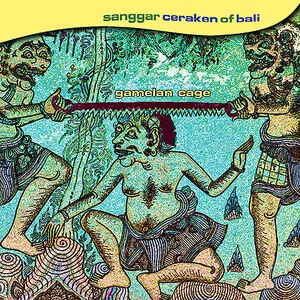
Gamelan Cage
John Cage / Sanggar Ceraken of Bali
American Gamelan
Balinese Gamelan
Balinese Music
2014
1
/5
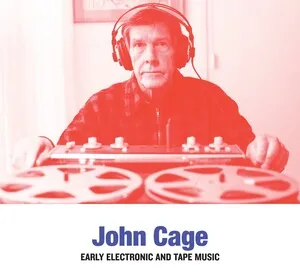
Early Electronic and Tape Music
John Cage / Langham Research Centre
Indeterminacy
Electronic
Experimental
2013
1
/5
Darmstadt Aural Documents, Box 2: John Cage — Communication
Christian Wolff / David Tudor
Speech
2012
1
/5
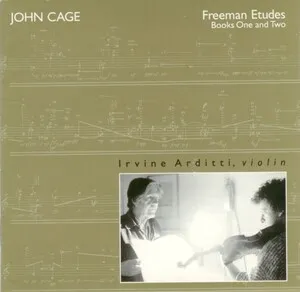
Freeman Etudes: Books One and Two
John Cage / Irvine Arditti
New Complexity
Étude
Indeterminacy
2011
1
/5
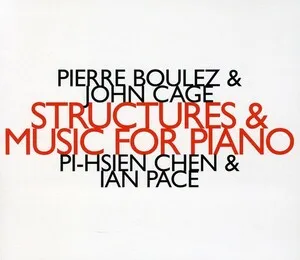
Structures & Music for Piano
John Cage / Pierre Boulez
Integral Serialism
Classical
2011
1
/5
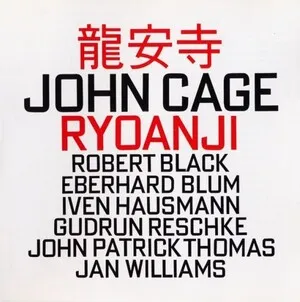
Ryoanji
John Cage
Indeterminacy
2006
1
/5
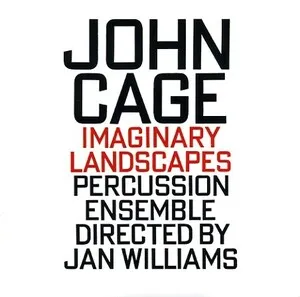
Imaginary Landscapes
John Cage / Maelström Percussion Ensemble / Jan Williams
Indeterminacy
2002
1
/5
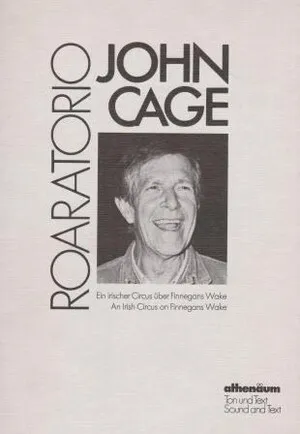
Roaratorio: An Irish Circus on Finnegans Wake
John Cage
Indeterminacy
Classical
Electronic
1994
1
/5
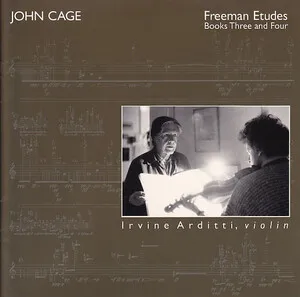
Freeman Etudes: Books Three and Four
John Cage / Irvine Arditti
New Complexity
Étude
1992
1
/5
Indeterminacy: New Aspect of Form in Instrumental and Electronic Music
John Cage / David Tudor
Lecture
Indeterminacy
1991
2
/5
4'33''
John Cage
Avant-Garde
1974
1
/5
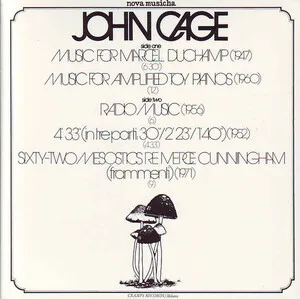
John Cage
John Cage
Indeterminacy
Pray MCMLXXII Reign (Tribute Album to "Pop Champagne")
John Cage
High Quality Rip
Pray MCMLXXII Reign (Tribute Album to "Pop Champagne")
John Cage
Soundclown
Cheap Imitation
John Cage
Indeterminacy
Klang der Wandlungen
John Cage
Indeterminacy
Similar artists
1
/5
John Zorn
Avant-Garde Jazz
Free Improvisation
Jazz
2
/5
Terry Riley
Minimalism
Classical
Experimental
2
/5
Karlheinz Stockhausen
Integral Serialism
Serialism
Darmstadt School
1
/5
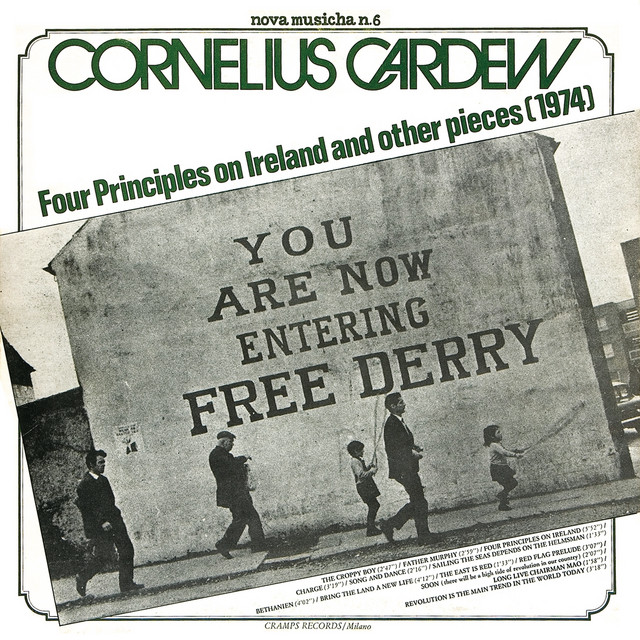
Cornelius Cardew
Experimental
Avant-Garde
Indeterminacy
1
/5
Éliane Radigue
Drone
Experimental
Ambient
1
/5
Various Artists
Afro-Funk
Alternative Rock
Ambient
2
/5
Otomo Yoshihide
Experimental
Avant-Garde
Anime Lo-Fi
2
/5
Iannis Xenakis
Classical
Stochastic Music
Acousmatic
1
/5
Robert Ashley
Spoken Word
Acousmatic
Experimental
1
/5
Carl Stone
Experimental
Lowercase
Avant-Garde
Download our mobile app
Get the Melodigging app and start digging for new genres on the go
Download on the App Store
Get it on Google Play
© 2026 Melodigging
Give feedback
Legal
Melodding was created as a tribute to
Every Noise at Once
, which inspired us to help curious minds keep digging into music's ever-evolving genres.