Genres
Artists
Albums
Make Music
Sign in
Sign in
Artists
Spoken Word
Artists
Spoken Word
Robert Ashley
1991–2017
·
5 albums
Listen
1
/5
Genres
New Age
New age is a largely instrumental, mood-driven genre that emphasizes calm, spacious textures and a sense of spiritual or contemplative uplift. It blends gentle electronic timbres, acoustic instruments, and global/folk influences to create immersive soundscapes intended for relaxation, meditation, and introspection. Hallmarks include slow tempos or free time, long sustaining pads, modal and consonant harmonies, nature field recordings, and unobtrusive rhythms. The music often avoids dramatic tension in favor of openness and continuity, conveying themes of inner peace, nature, and the transcendent.
Discover
Listen
Minimalism
Minimalism is a style of Western art music that emerged in the United States during the 1960s, characterized by the use of very limited musical materials, steady pulse, and extensive repetition. Composers often build pieces from short cells or motifs that are repeated and slowly transformed through additive or subtractive processes, phase shifting, and gradual changes in harmony, texture, or register. Harmony is typically consonant (often modal or diatonic), though just intonation and extended drones are also common. The result is music that foregrounds process, clarity, audibility of structure, and a hypnotic sense of stasis and flow. Typical ensembles include keyboards, mallet percussion, strings, winds, voices, and electronics or tape. Minimalism influenced a wide array of later styles, from ambient and new age to post-minimalism and minimal techno.
Discover
Listen
Spoken Word
Spoken word is a performance-centered genre where text—poems, monologues, stories, or manifestos—is delivered aloud with musicality in voice rather than through singing. It may be entirely a cappella or accompanied by sparse instrumentation (often jazz combos, ambient textures, or minimal electronics) that frames the cadence and rhetoric of the performer. The emphasis is on language: prosody, pacing, imagery, and argument. Pieces often explore personal narratives, social critique, and political themes, drawing on techniques such as internal rhyme, alliteration, and repetition. While recordings exist, the tradition is fundamentally live, prioritizing immediacy, audience engagement, and oratorical presence.
Discover
Listen
Experimental
Experimental music is an umbrella term for practices that prioritize exploration, process, and discovery over adherence to established genre norms. It embraces new sound sources, nonstandard tuning systems, indeterminacy and chance operations, graphic and open-form scores, extended techniques, and technology-led sound design (tape, electronics, computers, and live processing). Rather than a single style, it is a methodology and ethos: testing hypotheses about sound, structure, and performance, often blurring boundaries between composition, improvisation, sound art, and performance art. Listeners can expect unfamiliar timbres, unusual forms, and an emphasis on how music is made as much as the resulting sound.
Discover
Listen
Rock
Rock is a broad family of popular music centered on amplified instruments, a strong backbeat, and song forms that foreground riffs, choruses, and anthemic hooks. Emerging from mid‑20th‑century American styles like rhythm & blues, country, and gospel-inflected rock and roll, rock quickly expanded in scope—absorbing folk, blues, and psychedelic ideas—while shaping global youth culture. Core sonic markers include electric guitar (often overdriven), electric bass, drum kit emphasizing beats 2 and 4, and emotive lead vocals. Rock songs commonly use verse–chorus structures, blues-derived harmony, and memorable melodic motifs, ranging from intimate ballads to high‑energy, stadium‑sized performances.
Discover
Listen
Acousmatic
Acousmatic music is a form of electroacoustic composition created specifically for loudspeakers, where the audience hears sounds without seeing their sources. The genre privileges timbre, morphology, and spatial movement over traditional melody and harmony, and it is often experienced in darkened auditoria to sharpen attention to pure listening. Composers typically work with recorded or synthesized sounds—ranging from environmental recordings and instrumental fragments to purely electronic textures—then edit, transform, and organize them into a fixed medium. Performance focuses on diffusion: the live projection of a fixed track across a multichannel loudspeaker array to sculpt space and perspective in real time.
Discover
Listen
Electroacoustic
Electroacoustic music is a broad art-music tradition that integrates recorded acoustic sound and electronically generated or processed sound into coherent musical works. It privileges timbre, gesture, texture, and spatialization over conventional melody-and-harmony song forms, often employing tape manipulation, synthesis, live electronics, and computer-based signal processing. Works are frequently composed for fixed media (stereo or multichannel loudspeakers) and may also involve live performers who are transformed in real time. Concert presentation typically emphasizes spatial diffusion and immersive listening, and the repertoire spans concert works, radio pieces, installations, and soundscape compositions.
Discover
Listen
Musique Concrète
Musique concrète is an electroacoustic approach to composition that uses recorded real‑world sounds (objets sonores) as primary material rather than traditional instruments or notation. Composers edit, splice, loop, reverse, time‑stretch, filter, and otherwise transform these recordings to create works designed for loudspeakers. Emerging in late‑1940s France, it introduced acousmatic listening—focusing on the sound itself, detached from its source—along with a morphology‑based vocabulary of gesture, texture, and timbre. Historically realized on tape and now on digital audio workstations, musique concrète privileges montage and transformation over conventional harmony and meter, inviting listeners into a rich, tactile world of sonic phenomena.
Discover
Listen
Avant-Garde
Avant-garde music is an umbrella term for boundary-pushing practices that challenge prevailing norms of harmony, rhythm, timbre, form, and performance. It privileges experimentation, conceptual rigor, and a willingness to reframe what counts as music at all. Historically tied to early 20th‑century artistic modernism, avant-garde music introduced atonality, the emancipation of noise, and new forms of notation and process. It embraces indeterminacy, extended techniques, electronics, spatialization, and multimedia performance, treating sound as material to be sculpted, questioned, and reinvented.
Discover
Listen
Electronic
Electronic is a broad umbrella genre defined by the primary use of electronically generated or electronically processed sound. It encompasses music made with synthesizers, drum machines, samplers, computers, and studio/tape techniques, as well as electroacoustic manipulation of recorded or synthetic sources. The genre ranges from academic and experimental traditions to popular and dance-oriented forms. While its sonic palette is rooted in electricity and circuitry, its aesthetics span minimal and textural explorations, structured song forms, and beat-driven club permutations. Electronic emphasizes sound design, timbre, and studio-as-instrument practices as much as melody and harmony.
Discover
Listen
Monodrama
Monodrama is a staged musical work centered on a single character whose thoughts, memories, or actions unfold in real time. It typically features one singer (or sometimes a speaking actor) accompanied by orchestra, chamber ensemble, or piano, turning the solitary voice into the sole onstage protagonist. While it shares DNA with opera, cantata, and melodrama, monodrama narrows the dramatic lens to an intimate psychological drama. The music is often through-composed, allowing uninterrupted narrative flow, and the orchestra frequently functions as an "invisible second character," projecting scenery, memory, and subtext through color and motif.
Discover
Listen
Opera
Opera is a large-scale theatrical genre that combines music, drama, and visual spectacle, in which the story is primarily conveyed through singing accompanied by an orchestra. It unites solo voices, ensembles, and chorus with staging, costumes, and often dance to create a total artwork. Emerging in late Renaissance Italy and flourishing in the Baroque era, opera developed signature forms such as recitative (speech-like singing that advances the plot) and aria (lyrical numbers that explore character and emotion). Over the centuries it evolved diverse national styles—Italian bel canto, French grand opéra, German music drama—while continually experimenting with orchestration, harmony, narrative structure, and stagecraft.
Discover
Listen
Classical
Classical music is the notated art-music tradition of Europe and its global descendants, characterized by durable forms, carefully codified harmony and counterpoint, and a literate score-based practice. The term “classical” can refer broadly to the entire Western art-music lineage from the Medieval era to today, not just the Classical period (c. 1750s–1820s). It privileges long-form structures (such as symphonies, sonatas, concertos, masses, and operas), functional or modal harmony, thematic development, and timbral nuance across ensembles ranging from solo instruments to full orchestras and choirs. Across centuries, the style evolved from chant and modal polyphony to tonal harmony, and later to post-tonal idioms, while maintaining a shared emphasis on written notation, performance practice, and craft.
Discover
Listen
Show all 13 genres
Albums
2017
1
/5
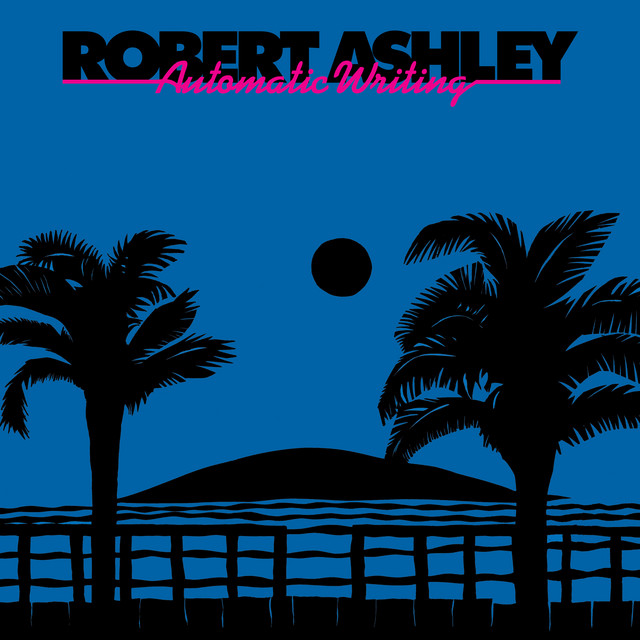
Automatic Writing
Robert Ashley
Musique Concrète
Electroacoustic
Acousmatic
2017
1
/5
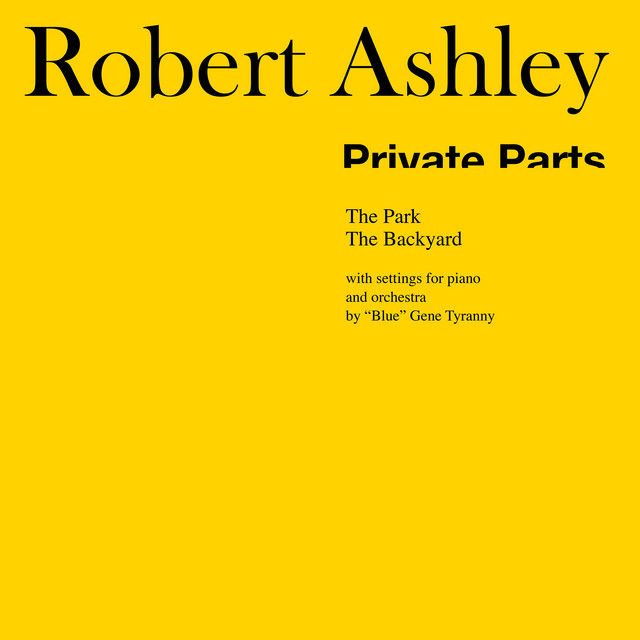
Private Parts
Robert Ashley / "Blue" Gene Tyranny
Spoken Word
New Age
Acousmatic
1999
1
/5
Your Money My Life Goodbye
Robert Ashley
Monodrama
1999
1
/5
Your Money My Life Goodbye
Robert Ashley
Monodrama
Classical
Opera
1991
1
/5
Perfect Lives (An Opera for Television by Robert Ashley)
Robert Ashley
Spoken Word
Classical
Electronic
Similar artists
1
/5
Various Artists
Afro-Funk
Alternative Rock
Ambient
2
/5
Iannis Xenakis
Classical
Stochastic Music
Acousmatic
2
/5
Raymond Scott
Acousmatic
Electronic
Children's Music
2
/5
Karlheinz Stockhausen
Integral Serialism
Serialism
Darmstadt School
1
/5
Éliane Radigue
Drone
Experimental
Ambient
1
/5
Luigi Nono
Darmstadt School
Classical
Acousmatic
2
/5
John Cage
Indeterminacy
Classical
Experimental
2
/5
Terry Riley
Minimalism
Classical
Experimental
2
/5
Pierre Henry
Acousmatic
Avant-Garde
Experimental
2
/5
Pauline Oliveros
Acousmatic
Free Improvisation
Ambient
Download our mobile app
Get the Melodigging app and start digging for new genres on the go
Download on the App Store
Get it on Google Play
© 2026 Melodigging
Give feedback
Legal
Melodding was created as a tribute to
Every Noise at Once
, which inspired us to help curious minds keep digging into music's ever-evolving genres.