Genres
Artists
Albums
Make Music
Sign in
Sign in
Artists
Classical
Artists
Classical
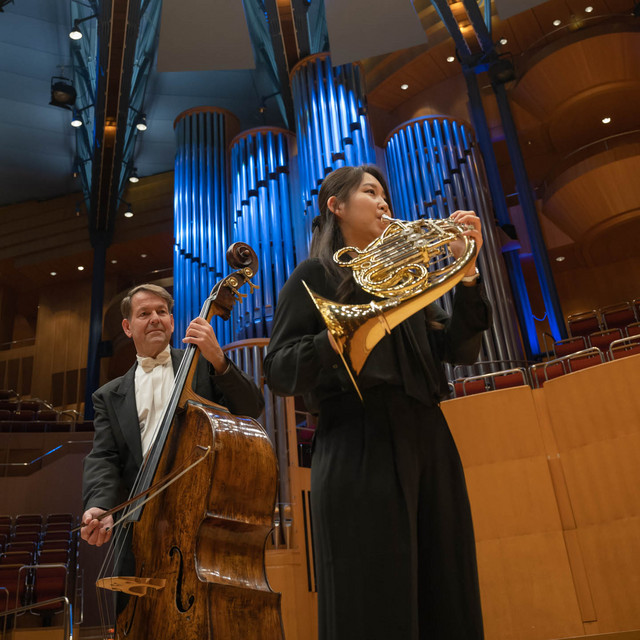
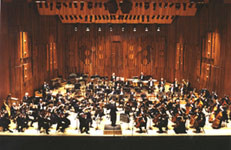
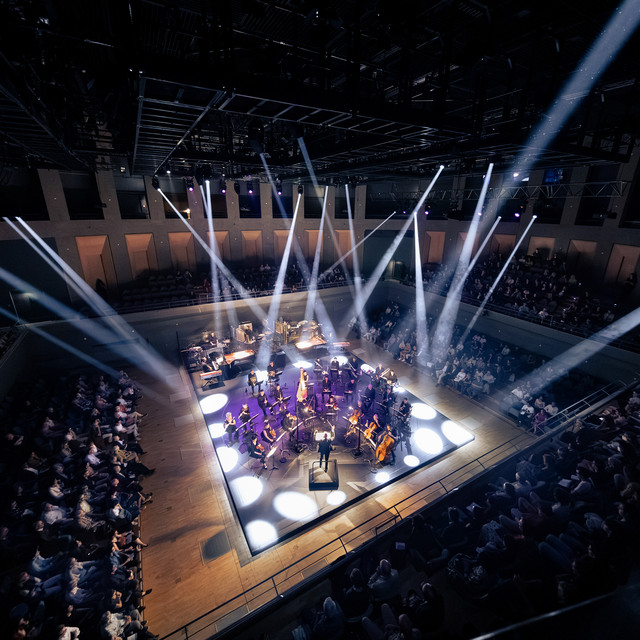
WDR Sinfonieorchester Köln
1962–2008
·
6 albums
Listen
2
/5
Genres
Spectralism
Spectralism is a movement in contemporary classical music that treats timbre and the acoustic spectrum as primary compositional materials. Rather than building music from abstract pitch-class sets or functional harmony, spectral composers derive harmonies, orchestrations, and formal processes from the real-world spectra of sounds. Using tools such as Fourier analysis, they decompose a sound into its partials and then re-synthesize or orchestrate those partials across instruments, often employing microtonality, extended techniques, and slow, morphing processes. The result is music where color, resonance, and perceptual phenomena shape structure as much as melody or rhythm.
Discover
Listen
Musique Concrète Instrumentale
Musique concrète instrumentale is a compositional approach that transfers the ideas of musique concrète to the realm of purely acoustic instruments. Instead of manipulating recorded sound objects on tape or digitally, composers write for traditional instruments played with unconventional, extended techniques so that the instruments produce "concrete" sound-objects: breaths, frictions, scratches, resonances, and mechanical noises. Pitch and regular meter are de-centered in favor of the morphology of sounds—how they begin, sustain, and decay; their grain, spectrum, and energy; and the dramaturgy created by their transformation over time. The result is a highly tactile, timbre-driven music that treats the instrument as a source of material rather than as a vehicle for themes or harmonic progressions.
Discover
Listen
Darmstadt School
The Darmstadt School refers to the post–World War II circle of composers who gathered around the Internationale Ferienkurse für Neue Musik (International Summer Courses for New Music) in Darmstadt, West Germany. Characterized by rigorous serial and post-serial techniques, extreme control of musical parameters (pitch, rhythm, dynamics, timbre), and a rejection of tonal and romantic idioms, the style prized structural clarity, pointillist textures, and an ascetic, laboratory-like approach to sound. While aesthetically diverse, its core ethos was a modernist drive toward formal innovation, often engaging electronic media and advanced notation, and deeply influenced by the Second Viennese School—especially Webern’s concise, atomized writing.
Discover
Listen
Integral Serialism
Integral serialism (also called total serialism) is a post–World War II compositional approach that extends the serial ordering principle beyond pitch to other musical parameters such as duration, dynamics, timbre, articulation, and register. Instead of relying on tonal harmony or freely atonal gestures, the composer constructs one or more ordered sets (series) for each parameter and subjects them to systematic transformations (inversion, retrograde, transposition, permutation) and cross-mappings. The result is highly controlled, pointillistic textures and tightly organized forms whose coherence derives from parametric organization rather than tonal function. Its sound world often features fragmented gestures, rapid contrasts of dynamics and articulation, and intricate rhythmic structures. While perceived as austere or rigorous, it enabled composers to craft micro-detailed musical behaviors and helped forge the postwar European avant-garde’s language.
Discover
Listen
Acousmatic
Acousmatic music is a form of electroacoustic composition created specifically for loudspeakers, where the audience hears sounds without seeing their sources. The genre privileges timbre, morphology, and spatial movement over traditional melody and harmony, and it is often experienced in darkened auditoria to sharpen attention to pure listening. Composers typically work with recorded or synthesized sounds—ranging from environmental recordings and instrumental fragments to purely electronic textures—then edit, transform, and organize them into a fixed medium. Performance focuses on diffusion: the live projection of a fixed track across a multichannel loudspeaker array to sculpt space and perspective in real time.
Discover
Listen
Electroacoustic
Electroacoustic music is a broad art-music tradition that integrates recorded acoustic sound and electronically generated or processed sound into coherent musical works. It privileges timbre, gesture, texture, and spatialization over conventional melody-and-harmony song forms, often employing tape manipulation, synthesis, live electronics, and computer-based signal processing. Works are frequently composed for fixed media (stereo or multichannel loudspeakers) and may also involve live performers who are transformed in real time. Concert presentation typically emphasizes spatial diffusion and immersive listening, and the repertoire spans concert works, radio pieces, installations, and soundscape compositions.
Discover
Listen
Musique Concrète
Musique concrète is an electroacoustic approach to composition that uses recorded real‑world sounds (objets sonores) as primary material rather than traditional instruments or notation. Composers edit, splice, loop, reverse, time‑stretch, filter, and otherwise transform these recordings to create works designed for loudspeakers. Emerging in late‑1940s France, it introduced acousmatic listening—focusing on the sound itself, detached from its source—along with a morphology‑based vocabulary of gesture, texture, and timbre. Historically realized on tape and now on digital audio workstations, musique concrète privileges montage and transformation over conventional harmony and meter, inviting listeners into a rich, tactile world of sonic phenomena.
Discover
Listen
Serialism
Serialism is a compositional method in which musical parameters are organized into ordered series that govern a work’s structure. Most famously, twelve‑tone serialism uses an ordered row of the 12 pitch classes, deploying transformations such as prime, inversion, retrograde, and retrograde inversion to avoid traditional tonal hierarchy. While Schoenberg’s twelve‑tone technique focuses on pitch, post‑war composers expanded the idea to "total" or "integral" serialism, applying series to rhythm, dynamics, articulation, timbre, and register. The results often emphasize clarity of event over tonal center, pointillistic textures, and rigorous formal control. Aesthetic outcomes range from Berg’s expressive lyricism to Webern’s ultra‑condensed, crystalline writing, and later to the highly systematized post‑war European avant‑garde. Serialism remains a cornerstone of 20th‑century modernist practice, whether embraced, extended, or reacted against by subsequent movements.
Discover
Listen
Avant-Garde
Avant-garde music is an umbrella term for boundary-pushing practices that challenge prevailing norms of harmony, rhythm, timbre, form, and performance. It privileges experimentation, conceptual rigor, and a willingness to reframe what counts as music at all. Historically tied to early 20th‑century artistic modernism, avant-garde music introduced atonality, the emancipation of noise, and new forms of notation and process. It embraces indeterminacy, extended techniques, electronics, spatialization, and multimedia performance, treating sound as material to be sculpted, questioned, and reinvented.
Discover
Listen
Microtonal Classical
Microtonal classical is a stream of Western art music that organizes pitch using intervals smaller than the conventional 12-tone equal temperament. Composers employ alternative equal temperaments (such as 19, 24, 31, or 72 tones per octave), just intonation, and other tuning systems to expand harmony, melody, and timbre beyond the familiar semitone grid. The genre foregrounds novel intervals, complex chordal spectra, continuous pitch (glissandi), and fine-grained intonational nuance. It can sound otherworldly, tense, or delicately shimmering, and often requires specially retuned instruments, extended techniques, or custom-built instruments to realize its pitch language.
Discover
Listen
Electronic
Electronic is a broad umbrella genre defined by the primary use of electronically generated or electronically processed sound. It encompasses music made with synthesizers, drum machines, samplers, computers, and studio/tape techniques, as well as electroacoustic manipulation of recorded or synthetic sources. The genre ranges from academic and experimental traditions to popular and dance-oriented forms. While its sonic palette is rooted in electricity and circuitry, its aesthetics span minimal and textural explorations, structured song forms, and beat-driven club permutations. Electronic emphasizes sound design, timbre, and studio-as-instrument practices as much as melody and harmony.
Discover
Listen
Orchestral
Orchestral music refers to compositions written for an orchestra—a large ensemble typically built around a string section (violins, violas, cellos, double basses), complemented by woodwinds, brass, percussion, and often harp, keyboard, or other auxiliary instruments. A conductor coordinates the ensemble, shaping balance, phrasing, and expression. The style emphasizes coloristic timbre combinations, dynamic range from the softest pianissimo to explosive tuttis, and textures that can shift seamlessly between transparent chamber-like writing and monumental masses of sound. Orchestral writing underpins concert genres such as symphonies, overtures, and tone poems, as well as opera, ballet, and modern film and game scores. While orchestral writing evolved across centuries, its core craft centers on melody, counterpoint, harmony, register, and orchestration—the art of assigning musical ideas to instruments to achieve clarity, contrast, and narrative impact.
Discover
Listen
Opera
Opera is a large-scale theatrical genre that combines music, drama, and visual spectacle, in which the story is primarily conveyed through singing accompanied by an orchestra. It unites solo voices, ensembles, and chorus with staging, costumes, and often dance to create a total artwork. Emerging in late Renaissance Italy and flourishing in the Baroque era, opera developed signature forms such as recitative (speech-like singing that advances the plot) and aria (lyrical numbers that explore character and emotion). Over the centuries it evolved diverse national styles—Italian bel canto, French grand opéra, German music drama—while continually experimenting with orchestration, harmony, narrative structure, and stagecraft.
Discover
Listen
Requiem
A requiem is a musical setting of the Roman Catholic Mass for the Dead (Missa pro defunctis). Historically rooted in Latin liturgy, it sets movements such as the Introit, Kyrie, (historically) the Sequence Dies irae, Offertory, Sanctus, Agnus Dei, and Communion, and often includes additional responsories like Libera me and In paradisum. While the earliest requiems were monophonic chants, the genre became a showcase for polyphonic and later symphonic choral writing. Renaissance composers wrote austere, modal settings; Classical and Romantic composers expanded the forces and dramatic scope; and 20th–21st century composers reimagined the form with new languages, from neo-modal and impressionistic harmonies to avant‑garde sonorities. Today, requiems appear both in liturgy and as concert works, symbolizing collective mourning, remembrance, and spiritual reflection.
Discover
Listen
Classical
Classical music is the notated art-music tradition of Europe and its global descendants, characterized by durable forms, carefully codified harmony and counterpoint, and a literate score-based practice. The term “classical” can refer broadly to the entire Western art-music lineage from the Medieval era to today, not just the Classical period (c. 1750s–1820s). It privileges long-form structures (such as symphonies, sonatas, concertos, masses, and operas), functional or modal harmony, thematic development, and timbral nuance across ensembles ranging from solo instruments to full orchestras and choirs. Across centuries, the style evolved from chant and modal polyphony to tonal harmony, and later to post-tonal idioms, while maintaining a shared emphasis on written notation, performance practice, and craft.
Discover
Listen
Show all 15 genres
Albums
2008
1
/5
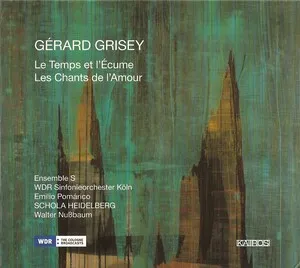
Le temps et l'écume; Les chants de l'amour
Gérard Grisey
Spectralism
2005
1
/5
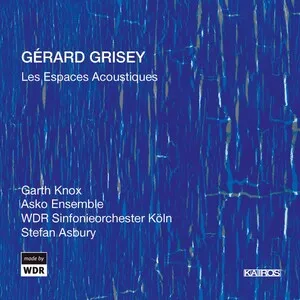
Les espaces acoustiques
Gérard Grisey
Microtonal Classical
Classical
2005
1
/5
Les espaces acoustiques
Gérard Grisey
Spectralism
Classical
2001
1
/5
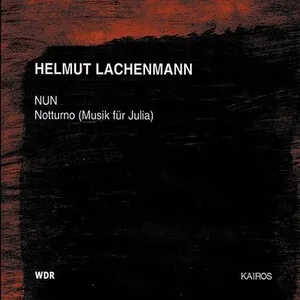
NUN; Notturno (Musik für Julia)
Helmut Lachenmann
Musique Concrète Instrumentale
Classical
1994
1
/5
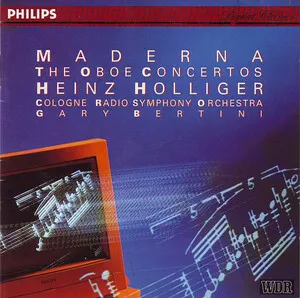
The Oboe Concertos
Bruno Maderna
Darmstadt School
1962
1
/5
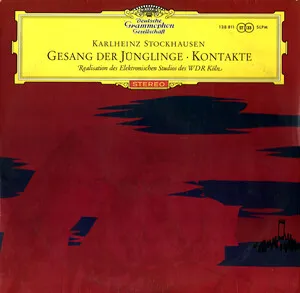
Gesang der Jünglinge; Kontakte
Karlheinz Stockhausen / Studio für elektronische Musik des Westdeutschen Rundfu…
Integral Serialism
Darmstadt School
Acousmatic
Similar artists
1
/5
Various Artists
Afro-Funk
Alternative Rock
Ambient
3
/5
BBC Symphony Orchestra
Classical
Opera
Orchestral
2
/5
Sylvain Cambreling
Classical
Spectralism
Avant-Garde
2
/5
Ensemble Intercontemporain
Avant-Garde
Chamber Music
Classical
4
/5
Wolfgang Amadeus Mozart
Classical
Requiem
Classical Period
4
/5
London Symphony Orchestra
Classical
Ballet
Concerto
4
/5
Berliner Philharmoniker
Classical
Romantic Classical
Romanticism
4
/5
Herbert von Karajan
Classical
Symphonic Poem
Symphony
4
/5
Wiener Philharmoniker
Classical
Romantic Classical
Romanticism
4
/5
Philharmonia Orchestra
Classical
Opera
Choral
Download our mobile app
Get the Melodigging app and start digging for new genres on the go
Download on the App Store
Get it on Google Play
© 2026 Melodigging
Give feedback
Legal
Melodding was created as a tribute to
Every Noise at Once
, which inspired us to help curious minds keep digging into music's ever-evolving genres.