Genres
Artists
Albums
Make Music
Sign in
Sign in
Artists
Compositional Ambient
Artists
Compositional Ambient
Jonny Greenwood
2015–2023
·
3 albums
Listen
3
/5
Genres
New Isolationism
New isolationism is a contemporary strain of isolationist ambient and post-industrial minimalism that emerged in the 2010s, particularly around Scandinavian experimental labels and studios. It foregrounds intimate, close-mic’d sound, negative space, and a quiet-but-present noise floor; its pieces feel both internal and architectural, like rooms built from reverb tails, tape hiss, and soft electronics. Sonically, the style blends glacial drones, fragile chamber timbres (strings, organ, piano), lo‑fi electronics, and field recordings into stark, slow-evolving tableaux. Melodic information is sparse—often only a few tones or gestures—while rhythm is either absent or reduced to distant pulses, heartbeats, or mechanical cycles. Vocals, when they appear, are murmured, diaristic, or abstracted by pitch and time manipulation. Aesthetically, new isolationism is post‑internet and diaristic: it captures solitude, memory, and dislocation with a palette that feels personal yet estranged, drawing as much from contemporary gallery sound practice as from classic dark ambient.
Discover
Listen
Compositional Ambient
Compositional ambient is a strand of ambient music that foregrounds written, motif‑driven structures and classical instrumentation while preserving the spaciousness and timbral subtlety of ambient sound design. It typically blends slow, consonant harmony with post‑minimalist processes, using piano, strings, and soft electronics to build gentle arcs, ostinati, and long decays. Unlike purely generative or texture‑only ambient, it emphasizes form, counterpoint, and thematic development—often with cinematic pacing and intimate production aimed at close, contemplative listening.
Discover
Listen
Classical Crossover
Classical crossover blends elements of Western classical music with popular styles to create accessible, cinematic, and vocally forward repertoire. It typically keeps classical vocal technique or orchestral timbres while adopting pop song structures, contemporary production, and ear‑catching hooks. Arrangements often feature lush strings, piano, and choir, with dramatic dynamic arcs and key changes. Repertoire may include pop-influenced originals, classical themes with new lyrics, and reinterpretations of opera arias or film melodies, frequently sung in English, Italian, or Latin. The genre is designed for broad appeal without abandoning the polish and gravitas of classical performance, bridging concert hall aesthetics and mainstream listening contexts.
Discover
Listen
World
World music is a broad, industry-coined umbrella for traditional, folk, and contemporary popular styles from around the globe that fall outside the Anglo-American pop mainstream. The label emerged in the 1980s as a retail and marketing category to group diverse regional musics for international distribution. Musically, it spans acoustic and electric instrumentation; modal, pentatonic, and microtonal pitch systems; and rhythms ranging from cyclical grooves and polyrhythms to asymmetrical meters. While the term can obscure local specificity, it also facilitated cross-cultural collaboration, festivals, and recordings that brought regional genres to wider audiences.
Discover
Listen
Arabic Pop
Arabic pop is the mainstream, commercial song style of the Arabic‑speaking world, blending Western pop structures with Arabic melodic modes (maqām) and regional rhythmic cycles (iqa‘āt). Arrangements typically pair traditional instruments like the oud, qanun, nay, strings, and darbuka with electric guitar/bass, keyboards, drum machines, and modern synthesizers. Vocals are highly ornamented (melisma, trills, turns) and delivered in widely understood dialects such as Egyptian and Levantine, as well as Khaliji and Maghrebi Arabic. Songs favor verse–pre‑chorus–chorus forms with catchy hooks, glossy production, and video‑forward presentation. Lyrically, themes of romance, longing, celebration, and everyday life dominate, spanning intimate ballads to up‑tempo dance anthems.
Discover
Listen
Pop
Pop is a broad, hook-driven style of popular music designed for wide appeal. It emphasizes memorable melodies, concise song structures, polished vocals, and production intended for radio, charts, and mass media. While pop continually absorbs elements from other styles, its core remains singable choruses, accessible harmonies, and rhythmic clarity. Typical forms include verse–pre-chorus–chorus, frequent use of bridges and middle-eights, and ear-catching intros and outros. Pop is not defined by a single instrumentation. It flexibly incorporates acoustic and electric instruments, drum machines, synthesizers, and increasingly digital production techniques, always in service of the song and the hook.
Discover
Listen
Rock
Rock is a broad family of popular music centered on amplified instruments, a strong backbeat, and song forms that foreground riffs, choruses, and anthemic hooks. Emerging from mid‑20th‑century American styles like rhythm & blues, country, and gospel-inflected rock and roll, rock quickly expanded in scope—absorbing folk, blues, and psychedelic ideas—while shaping global youth culture. Core sonic markers include electric guitar (often overdriven), electric bass, drum kit emphasizing beats 2 and 4, and emotive lead vocals. Rock songs commonly use verse–chorus structures, blues-derived harmony, and memorable melodic motifs, ranging from intimate ballads to high‑energy, stadium‑sized performances.
Discover
Listen
Electronic
Electronic is a broad umbrella genre defined by the primary use of electronically generated or electronically processed sound. It encompasses music made with synthesizers, drum machines, samplers, computers, and studio/tape techniques, as well as electroacoustic manipulation of recorded or synthetic sources. The genre ranges from academic and experimental traditions to popular and dance-oriented forms. While its sonic palette is rooted in electricity and circuitry, its aesthetics span minimal and textural explorations, structured song forms, and beat-driven club permutations. Electronic emphasizes sound design, timbre, and studio-as-instrument practices as much as melody and harmony.
Discover
Listen
Sawt
Sawt (Arabic: صوت) is an urban Gulf song tradition that crystallized in Kuwait and Bahrain at the turn of the 20th century. It is typically performed in intimate majlis settings by a lead singer accompanied by oud, the small frame drum mirwās, handclaps, and often violin. Musically, sawt draws on the maqām system (modal scales such as Rast, Bayāt, and Ḥijāz), features short instrumental taqsīm (improvisations) and cyclic rhythms, and sets Arabic poetic couplets (ghazal and Nabati verse) to song. The performance balances refined modal melody with driving, syncopated Gulf handclap patterns, producing a sound that is both contemplative and dance-inducing. Culturally, sawt became a hallmark of early 20th‑century port cities on the Persian/Arabian Gulf, reflecting Indian Ocean trade routes: Iraqi and Persian melodic aesthetics, local Bedouin/Najdi poetic practice, and lively social gatherings specific to the coastal Gulf.
Discover
Listen
Indian Classical
Indian classical music (Shastriya Sangeet / Mārga Sangeet) is the art-music tradition of the Indian subcontinent, organized around melodic frameworks called raga and cyclical meters called tala. It has two major streams: Hindustani music in the North, which foregrounds extended improvisation and raga exploration, and Carnatic music in the South, which is composition-centric with structured but highly sophisticated improvisation. A related eastern tradition is Odissi (from present-day Odisha), whose classical lineage spans roughly two millennia. Despite regional distinctions, these systems share common theoretical roots, performance aesthetics, and a spiritual-philosophical view of music as a vehicle for rasa (embodied aesthetic emotion).
Discover
Listen
Qawwali
Qawwali is a Sufi devotional vocal music from the Indian subcontinent that aims to evoke spiritual ecstasy and communal devotion. It is typically performed by a lead singer (qawwal) with a small ensemble of accompanying vocalists, harmoniums, handclaps, and percussion such as dholak and tabla. Musically, Qawwali blends raga-based melodic frameworks and flexible, improvisatory singing with driving rhythms and responsorial choruses. Texts are drawn from Urdu, Persian, Punjabi, and other North Indian languages, and include ghazals, kafis, hamds (praise of God), naats (praise of the Prophet), and manqabats (praise of Sufi saints). Performances traditionally take place at Sufi shrines (dargahs), where repetition, call-and-response, and gradual intensification lead listeners toward wajd (states of spiritual ecstasy). In the modern era, Qawwali is also heard on concert stages, recordings, and film.
Discover
Listen
South Asian Classical Music
South Asian classical music is the art-music tradition of the Indian subcontinent built around raga (melodic frameworks) and tala (cyclical rhythmic structures). It emphasizes microtonal nuance, ornamentation (gamaka), and a continuous drone, producing a highly expressive, meditative, and often devotional soundworld. The tradition cohered from ancient liturgical and courtly practices and later diverged into two major streams: Hindustani (North Indian) and Carnatic (South Indian). Both systems share the raga–tala grammar but differ in repertoire, performance format, instrumentation, and stylistic emphasis. Improvisation is central in both, balancing formal compositions with spontaneous exploration.
Discover
Listen
Sufi
Sufi is a devotional musical tradition rooted in Islamic mysticism that seeks to induce remembrance of the Divine (dhikr) and transport performers and listeners toward spiritual ecstasy (wajd). It is not a single uniform style, but a family of practices that vary across regions—most notably Persian/Iranian, Anatolian/Turkish (Mevlevi), Arab, and South Asian (qawwali, kafi). Musically, Sufi repertoire tends to revolve around repetitive, mantra-like refrains, call-and-response between lead and chorus, and gradual intensification over cyclical rhythms. Melodic language draws from regional modal systems such as the Persian dastgāh, Ottoman/Turkish makam, and South Asian raga, and is often supported by drones. Texts are central: poetry by mystic masters like Rumi, Hafez, Bullhe Shah, and Amir Khusrau is sung in Persian, Urdu, Punjabi, Arabic, Turkish, and other languages. Instrumentation varies by locale—harmonium, tabla/dholak, tanpura, and clapping in South Asia; ney, kudüm, bendir, and tanbur in Turkey; oud and frame drums across the Arab world—yet the unifying aim is spiritual uplift and inner transformation.
Discover
Listen
Arabic Classical Music
Arabic classical music is the art-music tradition of the Arabic-speaking world, built on the modal system of maqam and cyclical rhythmic modes called iqaʿat. It prioritizes ornate melody, nuanced intonation (including microtonal intervals), heterophonic ensemble texture, and a balance between composed forms and improvisation (taqsim). Core forms include the samaʿi (often in 10/8), longa (2/4), dulab (short prelude), muwashshah (strophic song), and the wasla (a multi-movement suite). The aesthetic of tarab—emotional ecstasy and deep musical rapture—guides performance and listening. Typical instruments include the ʿūd (fretless lute), qānūn (plucked zither), nay (end-blown flute), violin/kamanja, riqq (tambourine), and darbuka/tabla, often assembled as a takht (chamber ensemble) or, in later periods, the larger firqa (orchestra).
Discover
Listen
Show all 14 genres
Albums
2023
1
/5
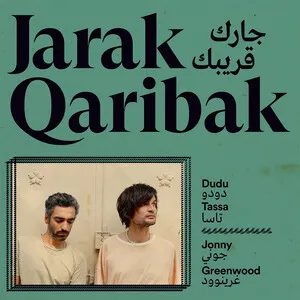
Jarak Qaribak
Dudu Tassa דודו טסה & Jonny Greenwood
Sawt
Arabic Pop
Electronic
2023
2
/5
Jarak Qaribak
Dudu Tassa דודו טסה & Jonny Greenwood
Arabic Classical Music
Electronic
Pop
2015
1
/5
Junun
Shye Ben-Tzur Jonny Greenwood & The Rajasthan Express
Sufi
Qawwali
Indian Classical
Similar artists
1
/5
Various Artists
Afro-Funk
Alternative Rock
Ambient
4
/5
Nusrat Fateh Ali Khan
Qawwali
World
Sufi
4
/5
Ryuichi Sakamoto
Drone
Japanese Classical
Ambient
3
/5
Dudu Tassa
Muzika Mizrahit
Sawt
Electronic
4
/5
Sameer Anjaan
Pop
Bollywood
Banjara Pop
4
/5
Manu Chao
World
Latin Alternative
Chill Pop
3
/5
Angelique Kidjo
Beninese Pop
Fon Music
Afrobeats
3
/5
Rachid Taha
Raï
Rock
Maghrebi Music
3
/5
Baaba Maal
Fula Music
Griot
Afropop
5
/5
TWICE
K-Pop
Pop
K-Pop Girl Group
Download our mobile app
Get the Melodigging app and start digging for new genres on the go
Download on the App Store
Get it on Google Play
© 2026 Melodigging
Give feedback
Legal
Melodding was created as a tribute to
Every Noise at Once
, which inspired us to help curious minds keep digging into music's ever-evolving genres.