Genres
Artists
Albums
Make Music
Sign in
Sign in
Artists
Electrocumbia
Artists
Electrocumbia
Flowering Inferno
2008–2010
·
2 albums
Listen
3
/5
Genres
Latin Afrobeat
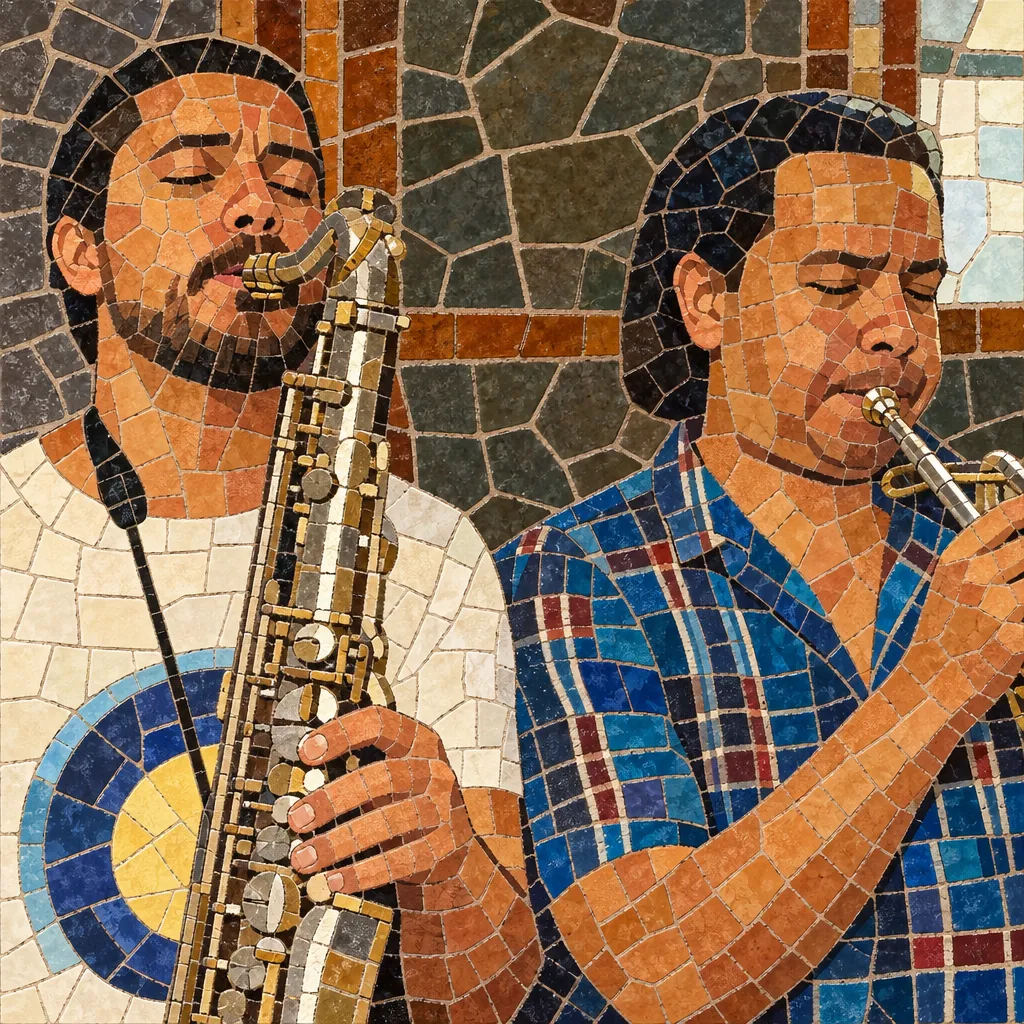
Latin Afrobeat is a contemporary fusion style that welds the polyrhythmic engine of West African Afrobeat with Latin American and Caribbean grooves. It often marries Afrobeat’s interlocking drum kit, shekere, and highlife‑style guitars with salsa/cumbia percussion sections, montuno piano figures, and bold horn arrangements. The result is a dance‑forward, big‑ensemble sound: long vamps, call‑and‑response vocals (frequently in Spanish or Portuguese), syncopated bass ostinati, and brass stabs—recorded with a warm, live, analog aesthetic. While it honors Fela Kuti’s Afrobeat blueprint, it colors that framework with Afro‑Cuban jazz harmony, salsa horn voicings, and coastal Colombia/Brazilian percussion idioms.
Discover
Listen
Latin Afrobeats
Latin Afrobeats is a hybrid of West African Afrobeats and Latin urban pop in which Spanish (and sometimes Portuguese) lyrics ride syncopated, polyrhythmic grooves. It marries Afrobeats’ swung shakers, off‑beat hi‑hats, guitar licks, and buoyant bass with dembow and dancehall drum patterns common to reggaeton and Latin pop. The result is a bright, dance‑forward style with catchy toplines, call‑and‑response hooks, and concise song forms tailored to streaming. Production tends to be minimal yet percussive, with Afro‑percussion (shekere, conga/bongo colors), plucked guitars or synth plucks, and warm sub‑bass supporting melodies that often draw on pentatonic or natural minor scales. Themes revolve around romance, partying, and feel‑good celebration, making the music equally at home in clubs and playlists.
Discover
Listen
Classify
Classify is a streaming-era microgenre that blends light classical technique with contemporary pop repertoire, typically presented as unobtrusive instrumental covers. It prioritizes soft dynamics, gentle tempos, and intimate recording to create a calm, elegant backdrop suitable for studying, working, or events. Most arrangements are for solo piano, string quartet, cello/piano duos, or small chamber ensembles. Harmonies remain diatonic and consonant, melodies are clearly voiced, and textures favor arpeggios, ostinati, and sustained legato lines. The overall aesthetic borrows from modern classical and new age moods while retaining the familiarity of pop song forms.
Discover
Listen
Electro Bailando
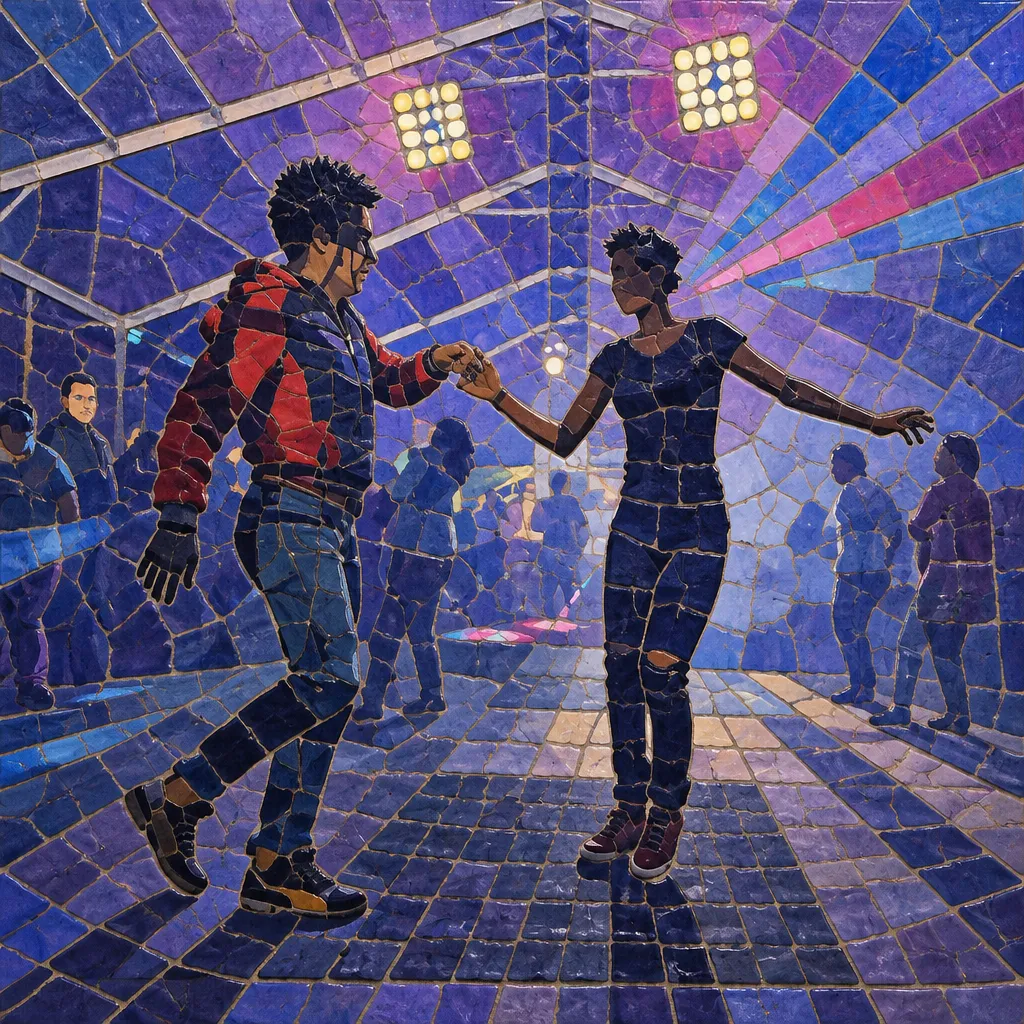
Electro bailando is a Spanish‑language, club‑ready dance‑pop microgenre that blends big‑room/electro‑house sonics with Latin pop songwriting and Caribbean rhythms. It favors four‑on‑the‑floor kicks, bright supersaw leads, handclaps, and festival‑style builds and drops, while keeping lyrics simple, catchy, and centered on dancing, romance, and summer nightlife. Typical tracks run in the 120–130 BPM range, use ear‑worm hooks in Spanish, and may weave in short dembow or merengue‑influenced percussion breaks. The overall feel is glossy, uplifting, and designed for mass‑appeal dance floors and radio.
Discover
Listen
Cumbia Editada
Cumbia editada (also seen as “kumbias editadas”) is a DJ‑driven offshoot of Mexican cumbia and the sonidero sound system tradition. It consists of re‑editing existing cumbia recordings—looping hooks, inserting stutters and rewinds, applying heavy echo and delay, and adding sound‑effects drops (sirens, air horns, lasers), DJ tags, and MC dedications. Born in dance floors, neighborhood street parties, and later on social video platforms, cumbia editada privileges crowd response and DJ functionality. Tracks often extend intros/outros for mixing, emphasize percussion breaks, and sometimes adopt the slowed, woozy feel popular in northern Mexico, while keeping the romantic and melodic core of classic cumbia.
Discover
Listen
Japanese Chillhop
Japanese chillhop is a mellow, sample‑centric branch of lo‑fi hip hop and chillhop associated with Japanese beatmakers, aesthetics, and source material. It typically runs at 70–90 BPM, features swung, understated drums, warm tape or vinyl hiss, and jazzy seventh and ninth‑chord harmonies. Producers often sample or emulate Japanese jazz, city pop, kayōkyoku, and environmental music (kankyō ongaku), as well as anime cues and everyday field recordings. The result is a cozy, nostalgic, and contemplative sound that feels equally at home in study playlists and late‑night headphone sessions, distinguished from broader chillhop by its specific palette of Japanese musical references and imagery.
Discover
Listen
Souldies
Souldies is a modern revival of classic lowrider “oldies” soul—slow, tender ballads rooted in 1960s and early-’70s sweet soul and doo‑wop aesthetics, reimagined by a new generation of largely Chicano/Latinx artists in Southern California. Characterized by warm, analog-leaning production, mellow backbeats, honeyed vocal harmonies, and heart‑on‑sleeve lyricism, the style favors mid‑slow tempos, tape‑like saturation, spring/plate reverb, and minimalist yet expressive arrangements. English and Spanish (or Spanglish) lyrics often explore love, longing, devotion, and cruising/lowrider culture. Souldies sits at the intersection of classic soul, rhythm & blues, northern soul selections, and Latin soul, offering a contemporary, community‑centered sound that feels both timeless and newly personal.
Discover
Listen
Electrocumbia
Electrocumbia (often called digital cumbia or nu-cumbia) is a contemporary, electronic reinterpretation of traditional cumbia. It merges cumbia’s signature off‑beat percussion, guacharaca/güiro textures, and tumbao bass with modern production elements such as synthesizers, drum machines, sampling, and dub-style effects. While rooted in Colombian cumbia, the style took shape across Latin America—especially within Buenos Aires’ club scene—where producers fused folkloric rhythms with downtempo, house, hip hop, and dub aesthetics. The result is a sound that can be both hypnotic and dance‑forward, oscillating between dreamy, psychedelic atmospheres and gritty, bass‑heavy grooves.
Discover
Listen
Dub
Dub is a studio-born offshoot of reggae that uses the mixing desk as a performance instrument. Producers strip songs down to their rhythmic core—drums and bass—and then rebuild them in real time with radical mutes, echoes, reverbs, and filters. Typically created from the B-sides (“versions”) of reggae singles, dub foregrounds spacious low-end, one-drop or steppers drum patterns, and fragmented vocal or instrumental phrases that drift in and out like ghostly textures. Spring reverb, tape echo, and feedback are not just effects but compositional tools, turning the studio into an instrument of improvisation. The result is bass-heavy, spacious, and hypnotic music that emphasizes negative space and textural transformation, laying the foundation for countless electronic and bass music styles.
Discover
Listen
Latin Funk
Latin funk is a hybrid style that fuses the hard-driving grooves of American funk and soul with Afro‑Latin and Caribbean rhythms such as boogaloo, salsa, and son cubano. It typically features syncopated bass lines, backbeat‑heavy drums, and a layered Latin percussion section of congas, timbales, bongos, cowbell, and güiro. Horns play a central role, supplying tight stabs, call‑and‑response riffs, and montuno‑like figures alongside guitar guajeos, wah‑wah textures, and clavinet or electric piano vamps. Vocals may be in Spanish, English, or Spanglish, often reflecting urban Latino life and dance‑floor culture. The result is a festive, danceable sound that is both gritty and polished, rooted in barrio street funk yet rich in Latin rhythmic sophistication.
Discover
Listen
Reggae
Reggae is a popular music genre from Jamaica characterized by a laid-back, syncopated groove, prominent bass lines, and steady offbeat “skank” guitar or keyboard chords. The rhythmic core often emphasizes the third beat in a bar (the “one drop”), creating a spacious, rolling feel that foregrounds bass and drums. Typical instrumentation includes drum kit, electric bass, rhythm and lead guitars, keyboards/organ (notably the Hammond and the percussive "bubble"), and often horn sections. Tempos generally sit around 70–80 BPM (or 140–160 BPM felt in half-time), allowing vocals to breathe and messages to be clearly delivered. Lyrically, reggae ranges from love songs and everyday storytelling to incisive social commentary, resistance, and spirituality, with Rastafarian culture and language (e.g., “I and I”) playing a central role in many classic recordings. Studio production techniques—spring reverbs, tape delays, and creative mixing—became signature elements, especially through dub versions that strip down and reimagine tracks.
Discover
Listen
Descarga
Descarga is the Cuban tradition of extended, largely improvised jam sessions built on Afro‑Cuban dance grooves and montuno vamps. Emerging in 1950s Havana and later flourishing in New York, it brought the spontaneity of jazz to Cuban popular forms such as son, mambo, and chachachá. Typically recorded by all‑star studio ensembles, descargas feature rotating solos over repeating guajeos (ostinatos), anchored by the clave and a driving percussion section. They are celebratory, high‑energy gatherings where arrangers set up simple harmonic frameworks and horn "moñas" (riffs), then let the players stretch out.
Discover
Listen
Latin
Latin (as a genre label) is a broad umbrella used by the recording industry to categorize popular music rooted in Latin America, the Caribbean, and the Iberian world, often characterized by syncopated Afro-diasporic rhythms, dance-forward grooves, and lyrics primarily in Spanish or Portuguese. As a marketplace category that took shape in the mid-20th century United States, it gathers diverse traditions—Afro-Cuban, Brazilian, Mexican, and Caribbean styles—into a shared space. In practice, "Latin" spans everything from big-band mambo and bolero ballads to contemporary pop, rock, hip hop, and dance fusions produced by artists of Latin American heritage.
Discover
Listen
Electronic
Electronic is a broad umbrella genre defined by the primary use of electronically generated or electronically processed sound. It encompasses music made with synthesizers, drum machines, samplers, computers, and studio/tape techniques, as well as electroacoustic manipulation of recorded or synthetic sources. The genre ranges from academic and experimental traditions to popular and dance-oriented forms. While its sonic palette is rooted in electricity and circuitry, its aesthetics span minimal and textural explorations, structured song forms, and beat-driven club permutations. Electronic emphasizes sound design, timbre, and studio-as-instrument practices as much as melody and harmony.
Discover
Listen
Cuban Music
Cuban music is the rich, syncretic musical tradition of Cuba, shaped by the meeting of Spanish/European song forms and West/Central African rhythms. Its heartbeat is the clave—a two-measure rhythmic cell (3–2 or 2–3) that organizes percussion, melody, and harmony across styles. From the contradanza and habanera of the 19th century to danzón, rumba, and son cubano in the early 20th century—and later mambo, cha-cha-chá, nueva trova, songo, and timba—Cuban music has continually reinvented itself while retaining its core Afro‑Cuban rhythmic language. Typical instruments include the tres (Cuban guitar), bongó, congas, timbales, güiro, maracas, cowbell, bass, piano (playing guajeos/montunos), and bright horn sections. Beyond the island, Cuban music has profoundly influenced global popular music—fueling the rise of salsa and Latin jazz and reshaping dance music worldwide—while continuing to honor deep connections to Yoruba/Lukumí religious drumming and Spanish lyrical traditions.
Discover
Listen
Cumbia
Cumbia is a syncretic dance-music tradition from Colombia’s Caribbean coast that blends African rhythmic heritage, Indigenous (especially gaita flute) melodic practice, and Spanish colonial instrumentation and forms. Traditionally performed in a moderate 2/4 (often felt in 4/4 today), it features interlocking hand-drum parts (tambora, alegre, llamador), guacharaca or maracas for steady texture, and long cane flutes (gaita hembra and gaita macho) carrying call-and-response melodies. As it spread in the 20th century, orchestras and dance bands added accordion, horns, piano, bass, and later electric guitar and synthesizers, creating urban and pan–Latin American variants. Harmonically simple and rhythm-forward, cumbia places groove, ostinati, and vocal refrains at the center, making it both ceremonial in origin and enduringly popular on social dance floors across the Americas.
Discover
Listen
Show all 16 genres
Albums
2010
1
/5
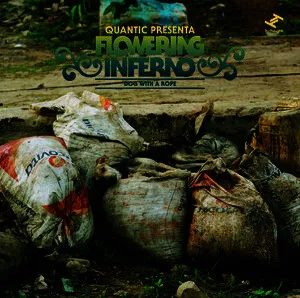
Dog With a Rope
Quantic Presenta Flowering Inferno
Descarga
Latin Funk
Cuban Music
2008
1
/5
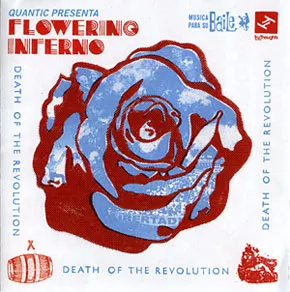
Death of the Revolution
Flowering Inferno
Latin Funk
Dub
Electronic
Similar artists
4
/5
Quantic
Electronic
Nu-Cumbia
Downtempo
3
/5
Los Amigos Invisibles
Latin Funk
Latin Afrobeat
Latin Alternative
3
/5
Lido Pimienta
Deep Latin Alternative
Electrocumbia
Electronic
1
/5
Various Artists
Afro-Funk
Alternative Rock
Ambient
5
/5
Bad Bunny
Latin
Reggaeton
Trap Latino
5
/5
Maluma
Latin
Reggaeton
Urbano Latino
5
/5
Don Omar
Reggaeton
Latin Hip Hop
Electro Latino
5
/5
Nicky Jam
Reggaeton
Latin
Latin Hip Hop
3
/5
Nidia Gongora
Electrocumbia
Latin Afrobeat
Electronic
3
/5
The Quantic Soul Orchestra
Funk
Acid Jazz
Latin Funk
Download our mobile app
Get the Melodigging app and start digging for new genres on the go
Download on the App Store
Get it on Google Play
© 2026 Melodigging
Give feedback
Legal
Melodding was created as a tribute to
Every Noise at Once
, which inspired us to help curious minds keep digging into music's ever-evolving genres.