Your digging level
Description
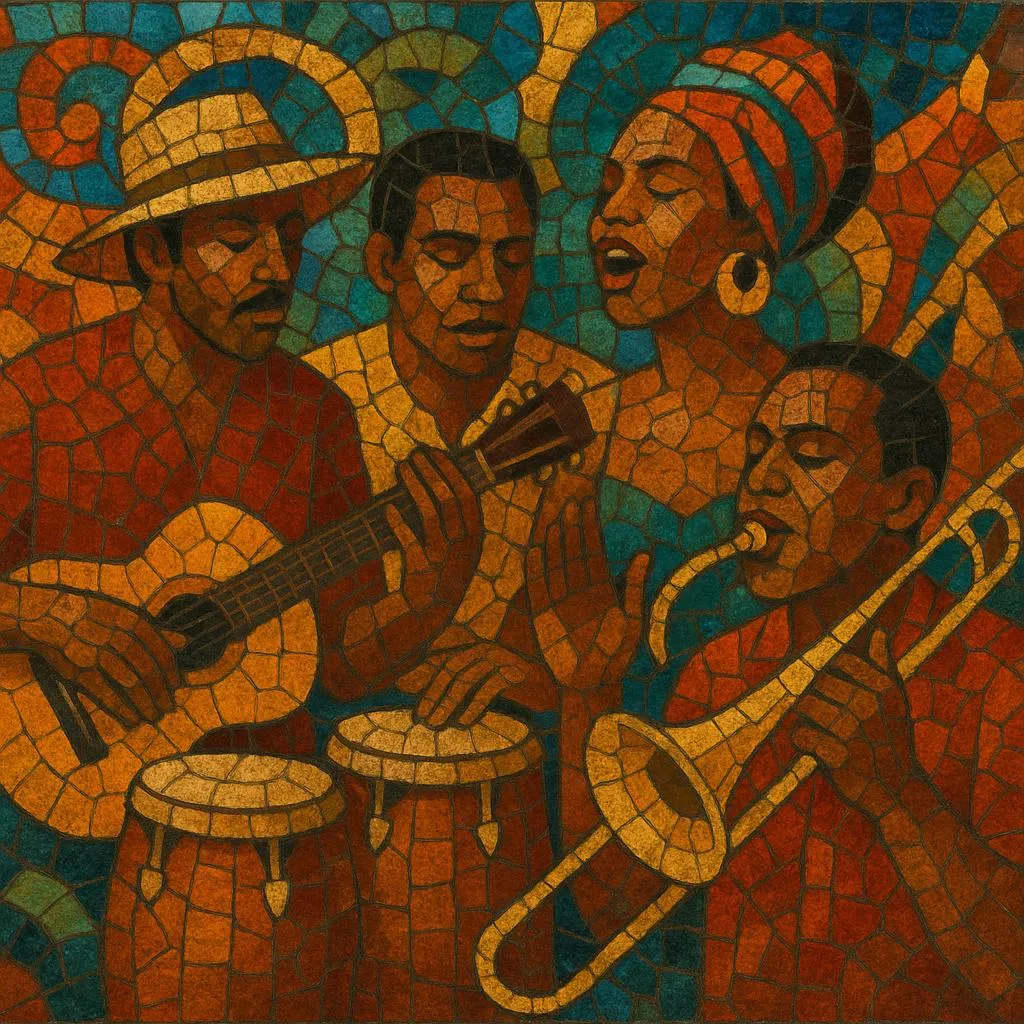
Latin Afrobeat is a contemporary fusion style that welds the polyrhythmic engine of West African Afrobeat with Latin American and Caribbean grooves. It often marries Afrobeat’s interlocking drum kit, shekere, and highlife‑style guitars with salsa/cumbia percussion sections, montuno piano figures, and bold horn arrangements.
The result is a dance‑forward, big‑ensemble sound: long vamps, call‑and‑response vocals (frequently in Spanish or Portuguese), syncopated bass ostinati, and brass stabs—recorded with a warm, live, analog aesthetic. While it honors Fela Kuti’s Afrobeat blueprint, it colors that framework with Afro‑Cuban jazz harmony, salsa horn voicings, and coastal Colombia/Brazilian percussion idioms.
History
Afrobeat emerged in late‑1960s/1970s Nigeria from Fela Kuti’s blend of highlife, funk, and jazz. Long before the term “Latin Afrobeat” circulated, Afro‑Caribbean and Afro‑Latin worlds had already been dialoguing with African popular music via Latin jazz, Afro‑Cuban jazz, salsa big bands, and pan‑African tours and collaborations. These exchanges normalized horn‑led dance ensembles, clave‑based syncopation, and extended groove‑centric arrangements across the Atlantic.
In the 2010s, a new cohort of Latin American and diaspora bands explicitly fused Afrobeat’s polyrhythms, ostinato bass lines, and guitar chank with Latin percussion batteries (congas, bongó, timbales), montuno piano, and Spanish/Portuguese lyrics. Urban hubs in Brazil (especially São Paulo), Colombia, Chile, and Latino communities in the United States became hotbeds for this synthesis, supported by independent labels, analog‑leaning studios, and global festival circuits. Horn sections drew equally from salsa and Afrobeat voicings; rhythm sections locked Afrobeat’s four‑on‑the‑floor momentum to clave and coastal cumbia/samba patterns.
Streaming platforms, crate‑digging culture, and cross‑Atlantic touring helped codify “Latin Afrobeat” as a tag and scene. Bands increasingly collaborate with rappers, singers, and DJs, and some adopt electronics (synths, dub techniques) without losing live, percussion‑heavy foundations. Today the style serves as a bridge between African‑rooted groove music and pan‑Latin dance traditions, sustaining a socially conscious, party‑ready, big‑band energy.


![THIS AFROBEATS IS ACTUALLY FIRE 🔥. [GUITAR AFRO BEAT TUTORIAL ON FL STUDIO ]](https://i.ytimg.com/vi/-BG3uK1FYSg/hqdefault.jpg)


Top albums