Genres
Artists
Albums
Make Music
Sign in
Sign in
Artists
Small Room
Artists
Small Room
Big Thief
2016–2025
·
11 albums
Listen
4
/5
Genres
5th Wave Emo
5th wave emo is a 2020s, internet-native evolution of emo that fuses midwest emo’s twinkly guitars and confessional lyricism with hyperpop/digicore production tricks, glitchy sound design, and DIY bedroom aesthetics. It tends to juxtapose emotive guitars, punk-derived vocal intensity, and mathy accents with digital drums, breakcore fills, Auto-Tune, bitcrushed synths, and loud/soft jump cuts. The result feels both nostalgic and forward-looking—anxious, diaristic music that speaks to online adolescence, depersonalization, and identity in the algorithmic era.
Discover
Listen
Pixie
Pixie is a Gen‑Z, internet‑native microgenre that sits at the bright, whimsical end of the hyperpop/digicore spectrum. It favors sparkling, “fairy‑like” sound design: glassy arpeggios, glittering supersaws, twinkling bells, and breathy, often pitched‑up or formant‑shifted vocals. Songs tend to be short and hook‑forward, balancing innocent, daydreamy textures with maximal drops and elastic rhythms. Lyrically it blends diaristic vulnerability, romance, and coming‑of‑age themes with online culture references and a playful sense of fantasy. Aesthetically, pixie borrows the cute/kawaii visual language (soft pastels, magical motifs) while keeping the DIY, Discord‑server ethos of the hyperpop underground. Production is fast, DAW‑focused (FL Studio/Ableton), and built for streaming, TikTok loops, and community playlists.
Discover
Listen
Rage
Rage is a high-energy, synth-forward trap production style characterized by bright, detuned supersaw leads, pounding 808s, and fast, looping drum patterns built for explosive rap performances. It emphasizes instant-impact hooks, minimal chord movement, and anthemic drops that feel closer to festival EDM crescendos than traditional hip hop breakdowns. The sound rose from the post–SoundCloud, punk-influenced branch of trap, drawing on the icy simplicity of Playboi Carti’s late-2010s palette and marrying it with trance/eurodance-styled leads and EDM trap dynamics. The result is a glossy, adrenalized bed for shouted, rebellious vocals—music designed for mosh pits, arena stages, and viral snippets alike.
Discover
Listen
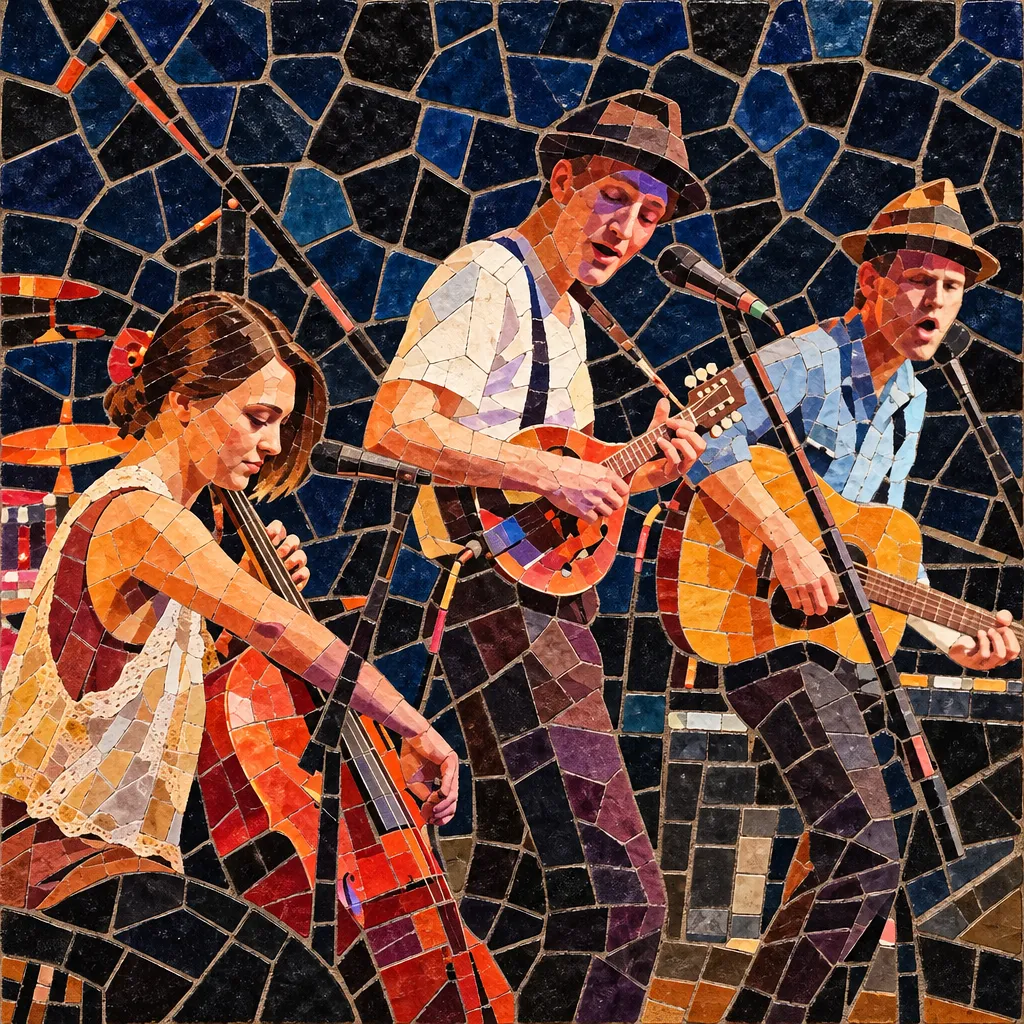
Small Room
Small room is a contemporary micro‑genre that sits near bedroom pop and intimate indie folk, defined by hushed, close‑miked vocals, minimal arrangements, and soft dynamics. Its recordings emphasize the natural, dry sound of a single space—often literally a small room—creating an intimate, confessional atmosphere. Typical instrumentations include gentle acoustic or clean electric guitar, soft piano, understated electronic drums, and airy pads or lo‑fi textures. Tempos are moderate to slow, harmonic movement is simple and diatonic, and lyrics focus on introspection, relationships, and everyday detail. The overall aesthetic privileges understatement, warmth, and proximity, as if the artist were singing a private demo directly to the listener.
Discover
Listen
Countrygaze
Countrygaze blends the twang, storytelling, and chord language of alt‑country/Americana with the hazy, textural walls of sound associated with shoegaze and dream pop. Expect pedal steel or slide guitar swimming in reverb and delay, saturated or blown‑out rhythm guitars, and soft, breathy vocals mixed as another texture rather than a dominant lead. The tempos often sit in a mid‑slow sway, while lyrics lean on small‑town imagery, highways, weather, memory, and bittersweet relationships. The result is music that feels both dust‑covered and cloud‑drifted: intimate, earthy narratives wrapped in a dreamy, saturated envelope.
Discover
Listen
Experimental Indie
Experimental indie is a broad, exploratory wing of independent rock and pop that prioritizes curiosity over convention. It blends DIY recording practices with off‑kilter song forms, unusual timbres, and a willingness to fold in ideas from avant‑pop, noise, electronic music, and psych. Rather than a fixed sound, it is a method and attitude: use the tools at hand (bedroom rigs, pedals, samplers, tape, software) to push past genre borders, while keeping the immediacy and intimacy of indie. Expect jagged rhythms, warped hooks, collage‑like arrangements, and production choices that foreground texture as much as melody.
Discover
Listen
Indian Indie
Indian indie is the umbrella for independent, non-film music made in India across languages such as Hindi, English, and numerous regional tongues. It is defined more by its DIY production and artist-led release model than by a single sound. Musically, it spans indie pop and rock, folk-fusion, singer‑songwriter ballads, dream‑pop/shoegaze textures, and electronic‑leaning productions. Artists often blend Western harmony and song forms with raga‑tinged melodies, Indian rhythmic feels, and occasional use of traditional instruments like tabla, bansuri, or sitar. The scene grew rapidly with college festivals, small venues, and digital platforms (YouTube, streaming services, Bandcamp), plus boutique labels and festivals such as NH7 Weekender that created national visibility. Lyrically, it tends to be intimate and contemporary—touching on romance, urban life, identity, and nostalgia—while maintaining accessible hooks and warm, organic sonics.
Discover
Listen
Modern Indie Folk
Modern indie folk is a 2010s-era evolution of indie folk that blends intimate, acoustic songwriting with contemporary production aesthetics. It keeps the core of folk—storytelling, fingerpicked guitars, and close-miked vocals—but expands the palette with ambient textures, chamber-style strings, subtle electronics, cinematic reverb, and spacious, headphone-first mixes. The result is a sound that feels both handcrafted and atmospheric: confessional lyrics carried by hushed deliveries, layered harmonies, and warm analog or tape-like saturation, often moving between 4/4 and swaying 6/8/12/8 meters. At its center are themes of memory, nature, relationships, and quiet self-reckoning, expressed through vivid imagery and minimalist arrangements that bloom into emotive crescendos.
Discover
Listen
Windmill Scene
The Windmill scene refers to the cluster of experimental indie, post‑punk, and art‑rock bands that coalesced around The Windmill pub venue in Brixton, South London. Emerging in the late 2010s, the scene is characterized by knotty rhythms, angular guitars, spoken‑sung or declamatory vocals, and frequent use of saxophone, violin, and synths. Bands associated with the scene blend post‑punk urgency with avant‑prog ambition, no wave abrasion, and jazz-informed spontaneity, often favoring raw, live‑in‑the‑room production aesthetics. Lyrically, the scene leans toward sardonic social observation, surreal storytelling, and metropolitan anxiety, while performances emphasize high energy, improvisational turns, and dynamic contrasts.
Discover
Listen
Pov: Indie
"pov: indie" is a social-media-native microstyle built around short, cinematic indie-pop/indie-rock snippets designed to accompany a first-person (POV) narrative. Instead of being defined by a single new musical technique, it is defined by context: the music is chosen or written to feel like the soundtrack to a specific moment (a crush, a late-night walk, moving to a new city, seasonal nostalgia). Sonically it typically uses bright but soft guitars or synths, intimate vocals, simple memorable hooks, and production that reads clearly on phone speakers. The emotional tone is often wistful, tender, and “coming-of-age,” with lyrics that can be understood quickly in a 10–30 second clip.
Discover
Listen
Beach House
Beach house is a sun‑drenched, laid‑back branch of house music that blends four‑on‑the‑floor rhythms with Balearic and tropical colors. It favors warm acoustic timbres (guitars, marimbas, steel‑pan‑like mallets), mellow sax or flute hooks, light percussion, and airy pads over aggressive drops. The style is designed for daytime listening—beach clubs, poolside sets, road trips—so tempos sit in the comfortable 104–118 BPM range, grooves are smooth and mid‑tempo, and harmonic language leans toward major keys, gentle extended chords, and nostalgic, feel‑good progressions. Production emphasizes clarity, headroom and soft side‑chain movement, creating a breezy, salt‑air atmosphere that’s both danceable and relaxing.
Discover
Listen
Indie Anthem-Folk
Indie anthem-folk blends the intimate storytelling and acoustic textures of indie folk with the big, festival-ready hooks and dynamics of anthemic pop-rock. You’ll hear stomping four-on-the-floor kick patterns, clap-and-tambourine backbeats, and rousing gang vocals that swell into shout-along choruses. Acoustic guitars, banjo, mandolin, and occasional fiddle carry bright, diatonic melodies, while floor toms, handclaps, and “whoa-oh” refrains turn small ideas into communal singalongs. Lyrically, it leans into themes of resilience, friendship, wanderlust, and hopeful nostalgia—music designed for campfire intimacy that scales to arena-sized catharsis.
Discover
Listen
Indie Folk
Indie folk blends the DIY ethos and sonic aesthetics of independent rock with the acoustic instrumentation, intimate storytelling, and melodic simplicity of traditional folk. Timbres are typically warm and organic—fingerpicked acoustic guitars, close-mic’d vocals, subtle percussion, and spare ornamentation from banjo, mandolin, harmonium, or strings. Production often favors natural room ambiance, tape hiss, and gentle compression over glossy polish, creating a sense of proximity and emotional candor. Lyrically, the style is reflective and poetic, focusing on personal narratives, place, nature, spirituality, and memory. Harmony tends to be diatonic and modal, with drones, open tunings, and layered vocal harmonies adding depth. While understated, arrangements can scale into lush, choir-like textures and chamber-folk swells, balancing fragility with grandeur.
Discover
Listen
Chamber Pop
Chamber pop is a style of pop that integrates small-ensemble, orchestral colors—strings, woodwinds, brass, harp, and occasionally harpsichord—into intimate, melodically driven songwriting. It favors sophisticated harmony, counterpoint, and meticulous arrangements over rock bombast, drawing on the poise of classical chamber music and the tunefulness of classic pop. The result is lush yet restrained: gentle dynamics, carefully layered timbres, and literate, often reflective lyrics that foreground storytelling and mood.
Discover
Listen
Americana
Americana is a contemporary umbrella term for U.S. roots music that blends folk, country, blues, bluegrass, gospel, and roots rock into a songwriter-centered, largely acoustic-leaning sound. Hallmarks include story-driven lyrics; warm, organic production; and traditional instrumentation such as acoustic guitar, mandolin, banjo, fiddle, harmonica, pedal steel, upright or electric bass, and restrained drums. Rhythms often draw on the train beat, shuffles, two-step, waltz time, and relaxed backbeats. Harmonically it favors diatonic progressions (I–IV–V, I–vi–IV–V), modal tinges (Mixolydian), and close vocal harmonies. Rather than a rigid style, Americana functions as a bridge among related roots traditions, emphasizing authenticity, regional imagery, and narrative songwriting over genre flashiness.
Discover
Listen
Indie Rock
Indie rock is a subgenre of rock and a branch of alternative rock that coalesced in the early–mid 1980s around independent labels and DIY practices in the United Kingdom, the United States, and New Zealand. Defined less by a single sound than by an ethos, indie rock favors non‑mainstream approaches, self‑recording and small‑label distribution, and an interest in pop‑informed melody and eclectic experimentation. Hallmarks include jangly or fuzzed guitars, intimate or deadpan vocals, off‑kilter song structures, and production that often preserves a raw, “authentic” feel rather than glossy studio polish.
Discover
Listen
Alternative Rock
Alternative rock is a broad umbrella for guitar-based rock that emerged from the independent and college-radio scenes as a counterpoint to mainstream, commercial rock. It blends the energy and ethos of punk with the textural and songwriting experiments of post-punk, new wave, jangle pop, and noise rock, often foregrounding introspective or socially aware lyrics. Across its many strains—from the melodic minimalism of college rock to the loud-quiet-loud dynamics of grunge and the artful experimentation of Radiohead-era modernism—alternative rock prioritizes authenticity, sonic individuality, and a do-it-yourself approach. Its sound ranges from chiming, chorus-laden clean guitars to abrasive distortion and feedback, supported by straightforward rock rhythms or off-kilter grooves, and production that can be either raw and live-sounding or polished yet unconventional.
Discover
Listen
Folk Rock
Folk rock is a fusion genre that blends the narrative lyricism, modal melodies, and acoustic timbres of traditional folk with the backbeat, amplification, and song structures of rock. It typically pairs acoustic or traditional instruments (acoustic guitar, mandolin, fiddle) with a rock rhythm section (electric guitar, bass, drums), often featuring chiming 12‑string guitar textures, close vocal harmonies, and socially conscious or storytelling lyrics. The result ranges from intimate, reflective ballads with a steady backbeat to more anthemic, roots‑driven rock. Emerging in the mid‑1960s through artists such as Bob Dylan and The Byrds, folk rock became a gateway for traditional and roots materials to enter mainstream popular music, and it seeded later movements from country rock and Americana to jangle pop and modern indie folk.
Discover
Listen
Contemporary Folk
Contemporary folk is a modern evolution of traditional folk aesthetics centered on intimate storytelling, clear melodies, and largely acoustic instrumentation. It favors voice-forward production, fingerpicked or gently strummed guitars, and arrangements that leave space for lyrics to resonate. While rooted in older folk ballad traditions, contemporary folk embraces current themes, production values, and song forms. Artists often blend guitar, banjo, mandolin, fiddle, upright or electric bass, light percussion, and close vocal harmonies, creating a warm, organic sound. The genre frequently addresses personal reflection, social issues, place, memory, and identity, balancing timeless simplicity with contemporary sensibilities.
Discover
Listen
Psychedelic Rock
Psychedelic rock is a style of rock music that seeks to evoke, simulate, and expand altered states of consciousness through sound. It typically features timbral experimentation (fuzz, wah, tape delay, phasing), drones, modal or raga-influenced harmony, extended improvisation, studio-as-instrument production, and surreal, mystical, or mind-expanding lyrics. Emerging from mid-1960s counterculture, it fused garage-band energy with folk, blues, and non-Western musical ideas—especially Indian classical ragas—while embracing new studio technologies and concert light shows. Both a live and a studio art, psychedelic rock ranges from jangly, kaleidoscopic pop to heavy, hypnotic jams and cosmic soundscapes.
Discover
Listen
Rock
Rock is a broad family of popular music centered on amplified instruments, a strong backbeat, and song forms that foreground riffs, choruses, and anthemic hooks. Emerging from mid‑20th‑century American styles like rhythm & blues, country, and gospel-inflected rock and roll, rock quickly expanded in scope—absorbing folk, blues, and psychedelic ideas—while shaping global youth culture. Core sonic markers include electric guitar (often overdriven), electric bass, drum kit emphasizing beats 2 and 4, and emotive lead vocals. Rock songs commonly use verse–chorus structures, blues-derived harmony, and memorable melodic motifs, ranging from intimate ballads to high‑energy, stadium‑sized performances.
Discover
Listen
Folk
Folk is a song-centered acoustic tradition rooted in community storytelling, everyday life, and social history. It emphasizes clear melodies, simple harmonies, and lyrics that foreground narrative, protest, and personal testimony. As a modern recorded genre, folk coalesced in the early-to-mid 20th century in the United States out of older ballad, work song, and rural dance traditions. It typically features acoustic instruments (guitar, banjo, fiddle, mandolin, harmonica), strophic song forms, and participatory singing (choruses, call-and-response).
Discover
Listen
Regional Music
Regional music is an umbrella term for locally rooted musical styles that are strongly tied to a specific place, community, and cultural practice. Rather than denoting one uniform sound, it encompasses many traditions whose instrumentation, rhythms, language, and performance customs reflect the history and daily life of a region. In the recording era, labels, radio programmers, and later streaming platforms used “regional music” to group market- or scene-specific traditions (for example, Cajun in Louisiana, son in Cuba, morna in Cape Verde, or Irish traditional music). The term highlights locality, vernacular identity, and continuity with folk or indigenous practices, even when these styles modernize or cross over into pop and rock contexts.
Discover
Listen
Northern American Music
Northern American music is an umbrella term for the diverse, syncretic musical traditions that developed across the United States and Canada. It emerged from the interaction of Indigenous musical practices, European settler and immigrant folk and sacred music, and West and Central African rhythmic and vocal traditions brought through the African diaspora. Rather than a single style, it is a landscape of practices—spirituals, work songs, fiddle tunes, shape-note hymnody, blues, jazz, country, gospel, rock and roll, R&B, and hip hop—that share core traits: narrative songwriting, emphasis on groove or backbeat, call-and-response, and a strong culture of performance and improvisation. This plural, hybrid character is the defining feature of Northern American music.
Discover
Listen
Show all 24 genres
Albums
2025
4
/5
Double Infinity
Big Thief
Small Room
Countrygaze
Chamber Pop
2025
1
/5
Los Angeles / Grandmother
Big Thief
Small Room
2025
1
/5
All Night All Day
Big Thief
Small Room
Countrygaze
2025
1
/5
Incomprehensible
Big Thief
Small Room
Countrygaze
Chamber Pop
2023
4
/5
Vampire Empire / Born For Loving You
Big Thief
Countrygaze
Small Room
Chamber Pop
2022
4
/5
Dragon New Warm Mountain I Believe in You
Big Thief
Americana
Indie Folk
Northern American Music
2019
3
/5
Not
Big Thief
Small Room
Countrygaze
2017
4
/5
Capacity
Big Thief
Small Room
Countrygaze
Indie Rock
2017
3
/5
Shark Smile (Edit)
Big Thief
Countrygaze
Small Room
Chamber Pop
2016
4
/5
Masterpiece
Big Thief
Small Room
Folk Rock
Indie Rock
2016
4
/5
Masterpiece (2023 Remaster)
Big Thief
Small Room
Countrygaze
Folk Rock
Similar artists
1
/5
Various Artists
Afro-Funk
Alternative Rock
Ambient
4
/5
Sufjan Stevens
Singer-Songwriter
Chamber Pop
Indie Rock
4
/5
Elliott Smith
Indie Rock
Singer-Songwriter
Melancholia
3
/5
Neutral Milk Hotel
Elephant 6
Indie Rock
Rock
4
/5
Father John Misty
Chamber Pop
Stomp And Holler
Folk Rock
3
/5
Whitney
Chicago Indie
Countrygaze
Indie Rock
3
/5
Devendra Banhart
Freak Folk
New Weird America
Chamber Pop
3
/5
Waxahatchee
Countrygaze
Alternative Country
Northern Gothic
4
/5
Regina Spektor
Anti-Folk
Piano Rock
Lilith
3
/5
The Decemberists
Indie Folk
Baroque Pop
Modern Indie Folk
Download our mobile app
Get the Melodigging app and start digging for new genres on the go
Download on the App Store
Get it on Google Play
© 2026 Melodigging
Give feedback
Legal
Melodding was created as a tribute to
Every Noise at Once
, which inspired us to help curious minds keep digging into music's ever-evolving genres.