Your digging level
Description
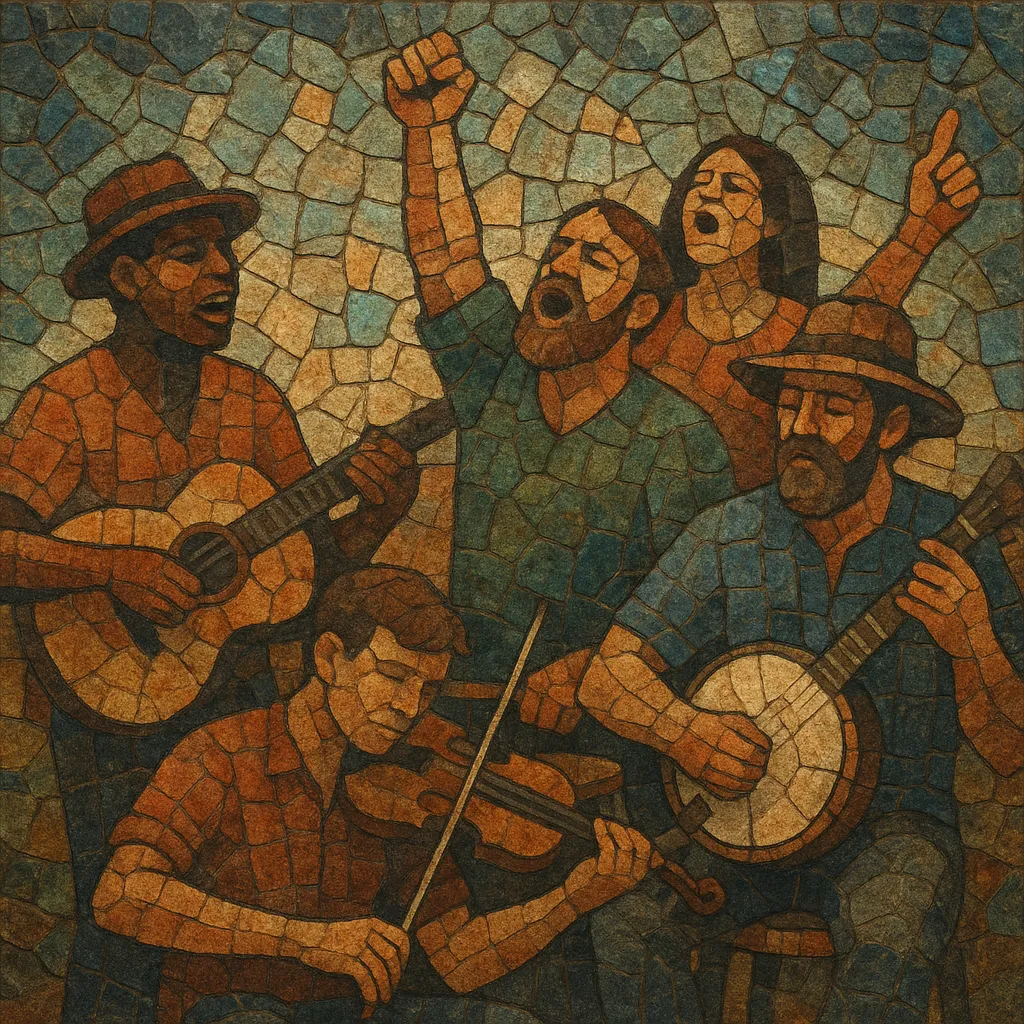
Stomp and holler is a modern folk/roots-leaning style marked by foot-stomping rhythms, handclaps, group vocal shouts, and anthemic, sing-along choruses. It blends the acoustic timbres of Americana and bluegrass with the immediacy of indie rock and pop songcraft.
Typical arrangements feature acoustic guitar, banjo or mandolin, upright or floor-tom style percussion (often a kick-driven, four-on-the-floor pulse), and layered gang vocals that surge from hushed verses to cathartic, shoutable hooks. Harmonies are simple and diatonic, while lyrics favor earnest themes of resilience, community, travel, love, and self-discovery.
The sound rose to mainstream prominence in the early 2010s through festival-ready bands whose performances emphasized communal energy—clapping, stomping, and call-and-response—bridging campfire intimacy and arena-scale uplift.

History
Stomp and holler emerged from the intersection of Americana, bluegrass, and indie rock at the turn of the 2010s. Coffeehouse folk and festival circuits nurtured a louder, more communal variant of indie folk that favored foot-stomp rhythms, handclaps, and gang vocals. US roots traditions (bluegrass, old-time, and singer-songwriter) supplied instrumentation and storytelling, while indie rock lent driving backbeats and dynamic builds.
Early 2010s releases by bands like Mumford & Sons, The Lumineers, and Of Monsters and Men crossed global charts, bringing acoustic-driven anthems and shout-along hooks to mainstream radio and large festivals. Their live shows amplified the genre’s participatory feel—audiences clapped, stomped, and sang in unison—cementing the style as a festival staple and playlist fixture.
As the sound saturated media, some listeners perceived formulaic tropes (kick-drum thump, claps, and “hey!” shouts). Many artists responded by broadening palettes—adding electric textures, percussion from pop/rock, or cinematic folk elements—while others leaned further into bluegrass or alt-country. The core aesthetics (acoustic drive, communal choruses) persisted even as individual acts diversified.
Stomp and holler helped normalize folk instrumentation and gang-vocal hooks in contemporary pop and indie contexts. It influenced acoustic-leaning pop hits, encouraged festival-friendly arrangements across genres, and re-energized interest in Americana and bluegrass among younger audiences, leaving a durable blueprint for anthemic, communal folk-pop.