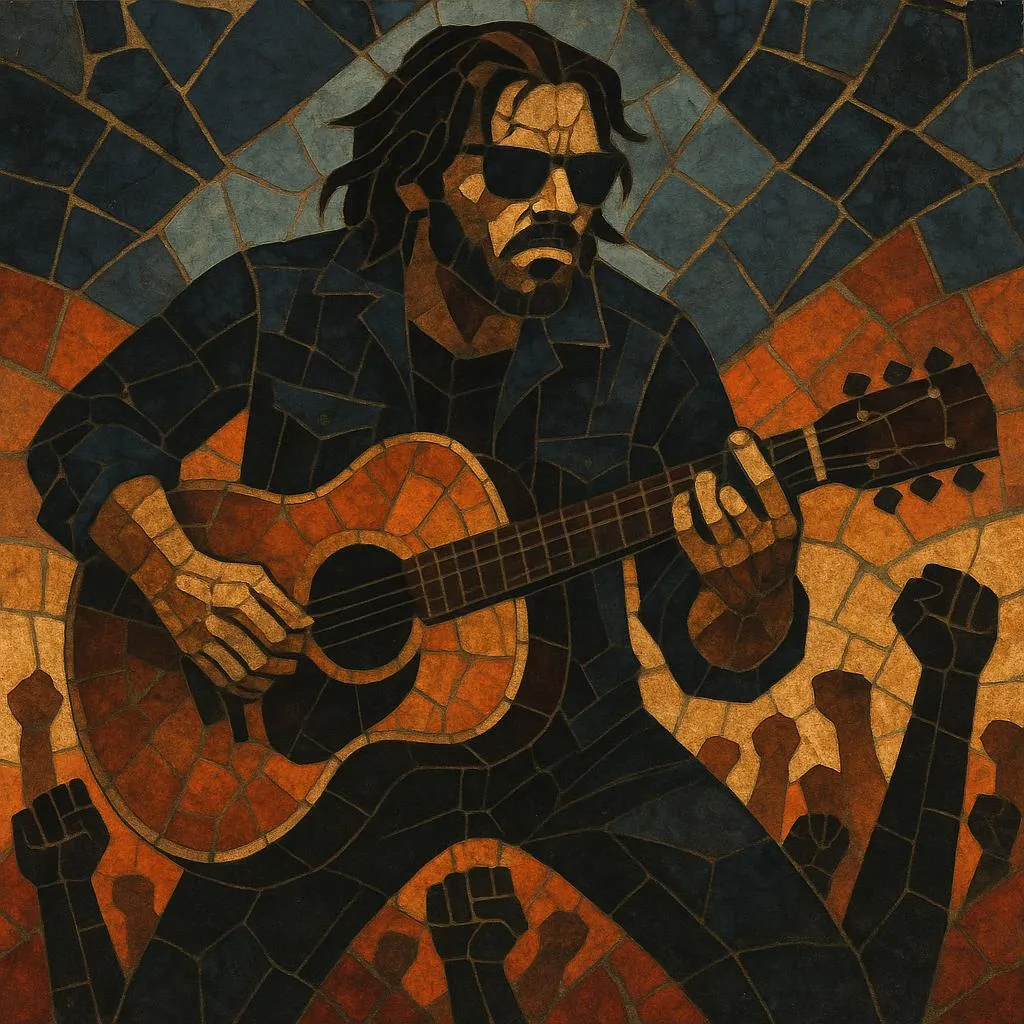
Your digging level

For this genre
0/8
🏆
Sign in, then listen to this genre to level up

Description

Rebel blues is a modern, sync‑ready strain of blues‑rock built for maximum swagger and impact. It fuses raw Delta and electric blues riffing with arena‑scale rock production, stomp‑and‑clap percussion, and chantable hooks designed to energize crowds and cut through on broadcasts.

Typical tracks feature overdriven or slide guitars playing muscular, pentatonic riffs; a heavy, four‑on‑the‑floor kick and toms; handclaps, foot stomps, and gang shouts; and gritty, chest‑voice vocals delivering concise, rebellious slogans. Arrangements emphasize big intros and risers, clear edit points, and climactic endings, making the style a staple of sports, trailers, promos, and action‑forward advertising.


Sources: Spotify, Wikipedia, Discogs, RYM, MB, user feedback and other online sources

History

Roots and Precedents

Rebel blues grows out of mid‑20th‑century American blues and its electrified offshoots. The distorted riff language of electric blues, the drive of blues‑rock, and the Southern swagger of swamp and Southern rock provided the vocabulary: pentatonic motifs, call‑and‑response phrasing, slide guitar, and backbeat grit.

In the late 1990s and 2000s, garage‑leaning duos and blues‑centric rock bands revived raw tones and minimalist drums, proving that a primal riff plus a big beat could dominate arenas and airwaves. That “big, simple, and stomping” aesthetic set the table for the next phase.

Emergence in the 2010s

During the 2010s, music‑for‑picture (sync) culture accelerated. Editors and music supervisors sought high‑octane, hooky cues that felt authentic yet instantly anthemic for sports, trailers, and brand campaigns. Producers began hybridizing rootsy blues riffing with stadium‑rock dynamics, chantable choruses, and pronounced stomp‑clap percussion. The resulting sound—raw yet hyper‑focused for broadcast impact—gained a colloquial identity as “rebel blues.”

Aesthetic Codification

By the mid‑to‑late 2010s, the style’s toolkit was clear: fuzzed slides and cigar‑box timbres; 80–110 BPM stomp grooves; gang vocals and whoops; simple I–IV–V or minor‑blues progressions; risers, drops, and edit points engineered for picture. Lyrical framing leaned into defiance, outlaws, and perseverance, aligning perfectly with sports narratives and action promos.

Today

Rebel blues remains a go‑to palette for high‑energy sync—sports broadcasts, highlight reels, game promos, action trailers, and product launches—while also informing the live sets and studio work of contemporary blues‑rock acts that favor concise, riff‑first songwriting with arena‑scale sonics.

How to make a track in this genre

Core Groove and Tempo
•   Aim for 80–110 BPM with a heavy, stomping backbeat. Use four‑on‑the‑floor kick patterns accented by toms, claps, and foot stomps. •   Layer handclaps and group shouts on 2 and 4 to create a crowd‑ready “gang” feel.
Riff Writing and Harmony
•   Build around short, memorable pentatonic riffs (E, A, or D are common guitar keys). Keep motifs 1–2 bars long and repeat with variation. •   Harmony can be minimal: I–IV–V in major, or minor‑blues (i–bVII–bVI flavors). Use power chords and open‑string drones for weight. •   Employ slide or bottleneck licks (open tunings like Open G/D are effective) for gritty, vocal‑like inflections.
Instrumentation and Tone
•   Guitars: Overdriven amps (fuzz or light fuzz+overdrive stacking), single‑coil bite or P‑90 crunch; add a sub‑octave for thickness on choruses. •   Drums/Percussion: Big, dry kick; roomy toms; rimshots; layers of claps, stomps, and found percussion (chains, sticks) for texture. •   Bass: Simple root‑fifth patterns locking to the kick; occasional bluesy walk‑ups into section changes. •   Extras: Harmonica or baritone guitar for color; gang vocals, whistles, and whoops to telegraph attitude.
Vocals and Lyrics
•   Deliver in a gritty chest voice with tight phrasing. Use call‑and‑response between lead and gang shouts. •   Write concise, slogan‑like lines about defiance, resilience, independence, and “outlaw” swagger. Keep verses lean and choruses chantable.
Arrangement for Sync
•   Front‑load impact with a riff+drums intro; add edit points every 4–8 bars. •   Use dynamic ramps (drops, risers, and breaks) to support picture cuts. Finish with a decisive button ending. •   Mix for punch: controlled low‑end (kick/bass), forward midrange for guitars and vocal, and clear transient definition on claps/stomps.

Top tracks

Locked
Share your favorite track to unlock other users’ top tracks

Upcoming concerts

in this genre
Influenced by
Has influenced
No genres found

Download our mobile app

Get the Melodigging app and start digging for new genres on the go
© 2026 Melodigging
Melodding was created as a tribute to Every Noise at Once, which inspired us to help curious minds keep digging into music's ever-evolving genres.
Buy me a coffee for Melodigging